
South Carolina Supreme Court Disbars Attorney Jason F. Taylor Over Financial Misconduct and Firearms Incidents
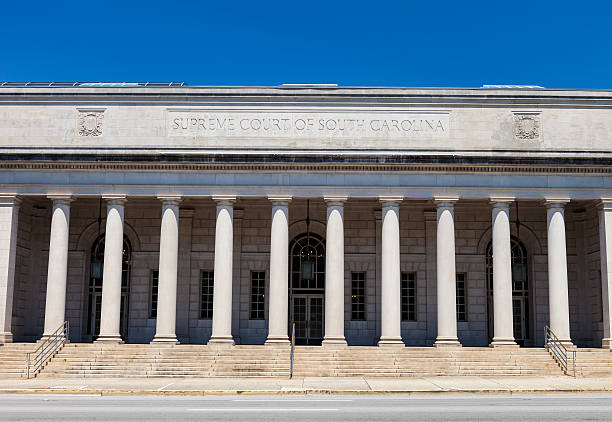
Attorney Jason F. Taylor has been formally disbarred by the South Carolina Supreme Court, concluding a years-long disciplinary process stemming from financial malpractice and two separate incidents involving a firearm. In a ruling handed down on October 21, 2026, the state’s highest court accepted an Agreement for Discipline by Consent, making Taylor’s disbarment retroactive to November 3, 2020—the date he was first placed on interim suspension following his arrest.
The decision, detailed in Appellate Case No. 2026-000382 published on Law.Justia.com, addresses four distinct disciplinary matters involving Taylor, who was admitted to the South Carolina Bar in 2012. The findings outline a pattern of mishandled client funds, unauthorized fee appropriations, and alarming confrontations with process servers and law enforcement.
Financial Mismanagement in Client and Co-Counsel Matters
Two of the four disciplinary matters center on financial discrepancies and breached fiduciary duties. In Matter A, dating back to March 2018, Taylor associated with another bar member, W.L., on a products liability case involving a minor. Taylor agreed to find an expert witness and split the cost 50/50. Although a pyrotechnics expert was consulted who declined the engagement and charged no fee, Taylor allegedly forwarded the expert’s materials to co-counsel and requested a $5,000 check to replenish a retainer.
🚨South Carolina Supreme Court THROWS OUT Alex Murdaugh murder convictions for killing his wife and son"The justices say it's because of a local court clerk who placed her fingers on the scales of justice and denied Murdock's right to a fair trial by tainting the jury." pic.twitter.com/RoUSaEIU7W
Taylor deposited the check into his operating account rather than holding it for expenses. Later, in May 2019, when the case settled, Taylor represented to a federal court that he had incurred $2,500 in expert witness fees along with unauthorized administrative costs. Financial records reviewed by the Office of Disciplinary Counsel (ODC) revealed he spent only $60 on process service, yet transferred the entire disputed sum to his operating account for personal and business use, failing to disburse the agreed-upon split to W.L.
In Matter B, involving an incarcerated client named S.M., Taylor accepted a $27,500 settlement in January 2019. He deposited the check into his firm’s trust account but failed to disburse the funds to the client, using the proceeds for personal and business expenses instead. By August 2020, Taylor’s trust account balance had plummeted to just $50.
When a court-appointed Receiver stepped in following Taylor’s November 2020 interim suspension, the missing funds had still not reached S.M. It was not until August 2021—after the ODC issued a formal notice of investigation—that Taylor paid all amounts owed to S.M. and co-counsel S.L.L.F. using his own personal funds.
Confrontations Involving Firearms Draw Disciplinary Action
The remaining two matters examined by the South Carolina Supreme Court involved weapons charges and aggressive confrontations at Taylor’s home.
In Matter C, on the evening of December 10, 2019, a personal process server attempting to deliver notice of an emergency domestic hearing walked down Taylor’s driveway to find him.
Ten months later, on October 6, 2020, a Charleston City Police Officer and a Police Cadet trainee investigating a noise complaint near Taylor’s downtown home encountered a second weapon-pointing incident. Seeing the cadet on the sidewalk—who never entered Taylor’s property—Taylor unholstered his handgun, advanced while pointing the weapon, and demanded an explanation. Officers ordered Taylor to drop the weapon, which he did. He was arrested the following day and charged with one felony count of pointing and presenting a firearm.
The criminal charge was ultimately dismissed after Taylor successfully completed a pre-trial intervention program administered by the Ninth Circuit Solicitor’s Office. However, the Supreme Court ruled that the conduct violated Rule 8.4(b) of the Rules of Professional Conduct, which prohibits criminal acts reflecting adversely on a lawyer’s fitness to practice.
Restitution, Conditions, and Mitigation
Throughout the proceedings, Disciplinary Counsel William M. Blitch, Jr., and Assistant Disciplinary Counsel Connor J. Parker represented the ODC, while attorney Barbara Marie Seymour of Columbia represented Taylor. Under the terms of the consent agreement accepted by the court, Taylor admitted to multiple violations of the Rules of Professional Conduct, including rules governing safekeeping property, expediting litigation, and conduct involving dishonesty, fraud, deceit, or misrepresentation.
As conditions for any future consideration of reinstatement, Taylor must pay the full costs of the investigation and prosecution incurred by the ODC and the Commission on Lawyer Conduct. He is also required to complete the Legal Ethics and Practice Program Trust Account School.
In mitigation, Taylor submitted an affidavit highlighting personal obstacles he overcame early in life to enter the legal profession, alongside his prior community service supporting veterans and first responders.
Related reading

As Above, So Below Distillery | Santa Fe Spirits – New Mexico Magazine
Magic, Botanicals, and High-Rye Bourbon in Santa Fe Caley Shoemaker never expected a surplus of neighborhood fruit to...

Amick Farms expands South Carolina footprint with new Edgefield County operations
Amick Farms Invests $54.78 Million to Build Trenton Hatchery Amick Farms is expanding its South Carolina footprint with...

Log in | Nevada Portal
A Centralized Digital Hub for Case Management Litigants, attorneys, and the public now have access to a centralized...

SNHU Men’s Soccer Claims NE10 Regular Season – Northeast 10 Conference
Southern New Hampshire University has secured the No. 1 seed in the Northeast 10 Men's Soccer Championship for...