
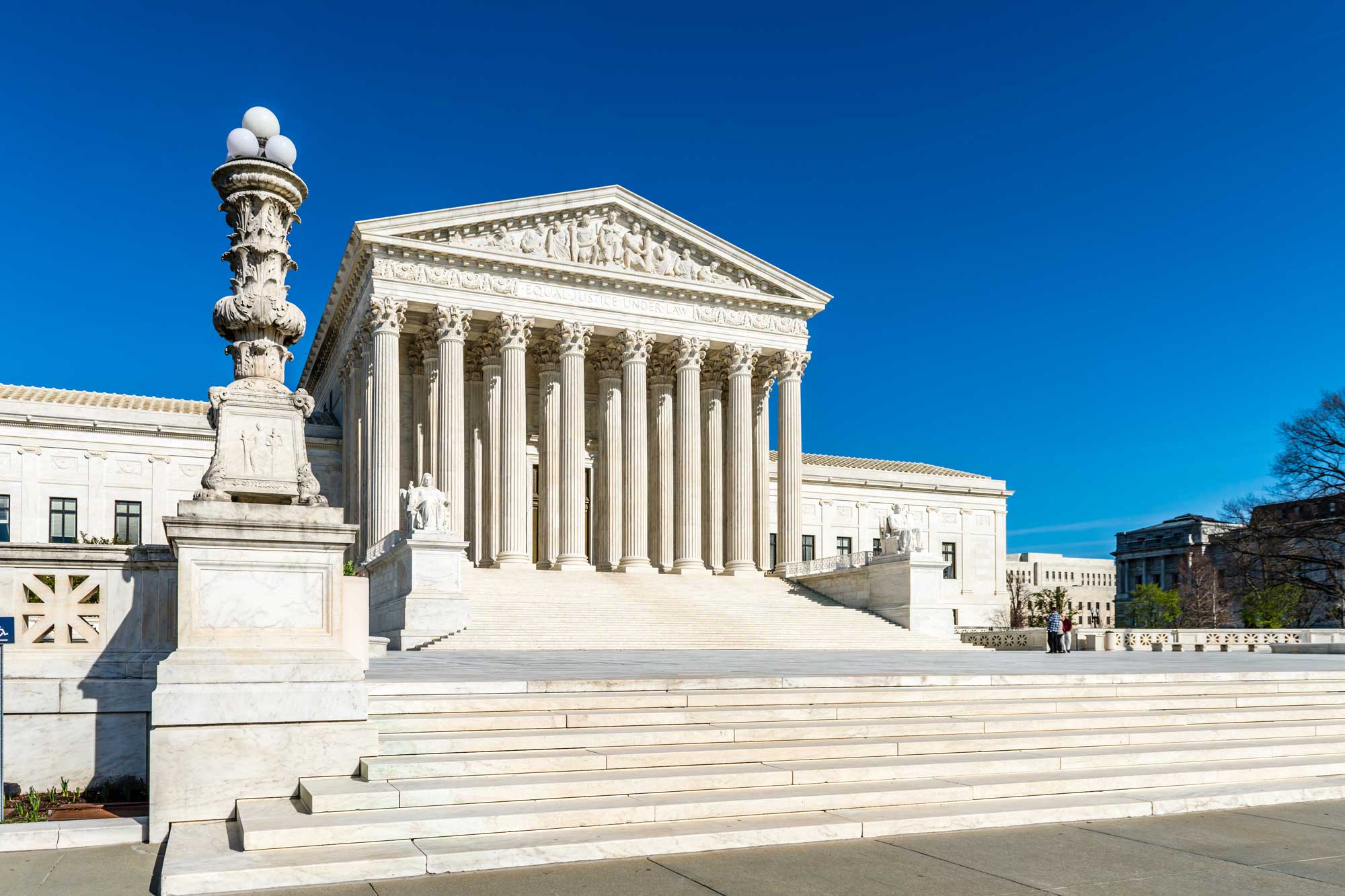
As the state Supreme Court heard final comments in Pierre, the merger of the fourth and seventh judicial circuits reaches its final obstacle.
With a decision nearing, the statehouse was filled with mostly opposition opinions regarding the structural shift. Under the plan, the reshaped Fourth Circuit would account for 29 percent of South Dakota’s judges, nearly equaling the Minnehaha-based Second Circuit’s 30 percent share.
State Court Administrator Greg Sattizahn was the lone proponent at a public comment session at the Capitol on Monday. He acknowledged the concerns of opponents while noting that the demands of the largest counties in the two districts, Meade and Pennington, are notable considerations.
Ultimately, he said the move finds balance between growing urban need and maintaining rural services. He then posed a question to the court: Are the current boundaries serving the people of the two districts effectively?
Several speakers argued that the answer is yes. Rapid City-based attorney Lora Waeckerle used data gathered from a survey of attorneys from across the state to make her case.
Of the respondents, the vast majority opposed the circuit merger, a difference sharply pronounced in rural circuits. Both the fourth and seventh districts show the deepest opposition to the proposal, while the only court with a plurality of support is the Sioux Falls-based Second Circuit.
Judge Eric Strawn presides in Deadwood. While expressing contentment operating under whatever framework the Supreme Court puts in place, he wondered aloud about the benefits of merging and characterized the initiative as fighting smoke.

Shane Penfield, chief prosecutor for Corson County, told the court that a massive circuit further overlooks the needs of the sparsely populated northwest corner of the state. He noted major cultural and economic differences between Rapid City, Lemmon, Deadwood, Sturgis, and tribal communities.
In Harding County, State’s Attorney Dusty Ginsbach said that if the state is serious about protecting rural communities and lifestyles, consolidation accelerates the problem. He warned that a distant Rapid City-based judge could be as unapproachable as the moon.
Chief Justice Steven Jensen of the state Supreme Court said there are two priorities in the decision-making process. First is the obligation to ensure access to the courts, and second is the obligation to responsibly manage the administration of those courts. Jensen did not provide a timeframe for the decision.
- APPLICATIONS OPEN FOR 2026 CHARLESTON CHRISTMAS PARADE – Charleston, WV
- 93 Pets Find Forever Homes in a Week of Heartwarming Adoptions
- Crédit Agricole proposes merger of Banco BPM and Crédit Agricole Italia (newsarchyuk.com)
- Former Arkansas Supreme Court Employee Nancie Givens Charged With 65 Counts (world-today-news.com)
APPLICATIONS OPEN FOR 2026 CHARLESTON CHRISTMAS PARADE – Charleston, WV
Applications for the 2026 Charleston Christmas Parade are now open online, city officials in Charleston, West Virginia announced....

93 Pets Find Forever Homes in a Week of Heartwarming Adoptions
93 Pets Find Homes at Richmond SPCA Ninety-three pets found lasting, loving homes last week through the Richmond...

Rural economic stability and agricultural policy analysis shape the core of the academic work
Rural economic stability and agricultural policy analysis shape the core of the academic work driven by Dr. Sajid...

Vermont Apostille Services Filed in Montpelier, VT
Filing Vermont Apostille Services in Montpelier Getting a document recognized across international borders requires a specific sequence of...