
South Dakota Aquifers Decline as Drought and Growth Strain Water Supplies
If you visit Bear Butte State Park near Sturgis today, you don’t need a degree in hydrology to understand South Dakota’s worsening water crunch. The lake that typically anchors the 215-acre state park—a scenic expanse reaching 15 feet deep and teeming with walleye, crappie, catfish, and waterfowl—is nearly gone. Prolonged drought has combined with plunging levels in underground aquifers to shrink the body of water to a narrow strip of surface moisture measurable in inches. A local fishing pier now sits isolated, surrounded by hundreds of yards of baked-out lakebed and dead vegetation.
For the past several years, a volatile mix of rising population, long-range drought, and heavier residential, commercial, and agricultural water consumption has ignited shortages across the state. Scientific monitoring confirms that many underground aquifers are holding less water than normal or suffering from reduced water pressure. The strain is visible across the region, from drawdowns at the Angostura, Bell Fourche, and Pactola reservoirs to the central Black Hills, where stretches of Spring Creek have completely dried up.
In rural areas of the western half of the state, homesteaders and ranchers are watching their private wells run low or go dry entirely. Meanwhile, rural water systems in East River areas are turning away new residential, commercial, and agricultural customers. The local aquifers they depend on are either tapped out or fully committed under existing water rights contracts.
Even parts of northeastern South Dakota that enjoyed heavy rainfall this year are feeling the regional anxiety. Shortages are beginning to materialize within the Big Sioux Aquifer, which supplies drinking water to Sioux Falls and surrounding communities.

“It’s definitely a statewide issue,” said Jay Gilbertson, manager of the Brookings-based East Dakota Water Development District. “If we continue to draw too much water, we’re going to be in trouble.”
Gilbertson and other water experts warn that ongoing drought conditions prevent aquifers from recharging properly at the exact moment new well drilling accelerates. Without a shift in consumption, population growth will eventually max out available resources. New arrivals to the state might soon find themselves forced to bring their own water.
Municipal Dependence and the Massive Price Tag of New Infrastructure
State lawmakers are scrambling to confront the crisis. State Sen. Helene Duhamel, a Rapid City Republican, has spearheaded legislative pushes for alternative water sources, including expansions of East River systems and a proposed Missouri River pipeline destined for the Black Hills.
“As a state, we’ve got to start to recognize that we’re in trouble if the aquifers can’t recharge fast enough and our lakes and reservoirs start to dry up,” Duhamel said. “It’s scary with our population growth and these cycles of drought that appear to be increasingly severe.”
Duhamel participated in an informational water resources meeting in Sioux Falls where rural water system operators detailed expansion projects projected to cost $13 billion over the coming decades. While East River areas increasingly look to the Missouri River as a nearly inexhaustible source of fresh water, West River municipalities have historically relied on deep-drilled wells into the Madison, Inyan Kara, or Minnelusa aquifers.
The reliance on these underground formations has skyrocketed over the decades. According to the U.S. Geological Survey, fewer than a dozen municipal wells in four major Black Hills counties tapped into the aquifers in 1960. Today, that number approaches 100 municipal wells, accompanied by a surge in smaller systems and individual private wells.
Contested Water Rights and Industrial Proposals in the Black Hills
Compounding the municipal strain is a fierce debate over industrial water use in the southern Black Hills. Powertech USA, a subsidiary of enCore Energy, has pursued the Dewey-Burdock in-situ uranium mining project northwest of Edgemont for roughly 15 years through various legal hurdles.
The project would pull billions of gallons of water annually from the Inyan Kara and Madison aquifers across more than 12,000 acres to extract subsurface uranium using a closed-loop system treated with oxygen and carbon dioxide. Water-use applications filed with the South Dakota Department of Agriculture & Natural Resources (DANR) indicate the company plans to drill 1,000 wells into the Inyan Kara aquifer to use nearly 2.4 billion gallons per year, resulting in a net removal of 89 million gallons annually. Two additional wells proposed for the Madison aquifer would remove approximately 83 million gallons per year.

While the company states it will restore the aquifers by circulating clean water until quality returns near pre-existing conditions, local opposition remains intense. The chief engineer of the state water rights program has recommended approval for both proposals. A public comment window runs through Nov. 9, with a formal hearing before the South Dakota Water Management Board scheduled for Dec. 2.
Weighing Growth Against Finite Supplies
While deep Black Hills aquifers like the Madison, Minnelusa and Inyan Kara still maintain adequate volume, shallower alluvial sources are drying up fast. Jeremy Kientz, a fisheries supervisor for the South Dakota Game Fish and Parks Department, notes that low precipitation starved Bear Butte Lake and dried up a creek-fed pond behind the GFP Outdoor Campus West in Rapid City this summer.
“We’ve definitely seen less water flow from springs,” Kientz said. “There’s less pressure from the aquifer coming up from those upwellings.”
Mark Anderson, an adjunct geology professor at South Dakota Mines and a former director with the U.S. Geological Survey, points to observation wells along Rapid Creek that register consistent downward trends in water table heights. Because the high-elevation Black Hills feed surface and subsurface water systems stretching all the way to the Missouri River, regional dryness carries statewide consequences.
“It’s not a pending disaster, but if we have another year of drought like this, we’re going to have big concerns in South Dakota,” Anderson said. “We can survive a tough year, but if we have these conditions persist, the succession of low precipitation years is certainly a problem.”
State lawmakers like Republican Representative Mike Derby have co-chaired ad hoc legislative work groups to prep the General Assembly for upcoming funding battles. Duhamel was the prime sponsor of Senate Bill 231 during the 2026 session, creating a Water Infrastructure Development Fund seeded with $3 million in general funds. Duhamel plans to push for more money into that fund in the upcoming session, targeting sources like the contractor’s excise tax or unclaimed property to bankroll multi-billion-dollar pipelines.
“Water is life and there’s nothing more basic,” Duhamel said. “It’s also the fuel for economic development because if we want to grow this state, we can’t do it without water.”

Lewis County Child Dies From Measles in First NY Death in 30 Years
Measles death in Lewis County marks first in New York in three decades State and Lewis County health...

Ventura Enterprises Brings Small Commercial Condos to Centennial
In the industrial corridors near Centennial Airport, a 7-acre parcel at 6507 S. Racine Circle is preparing for...
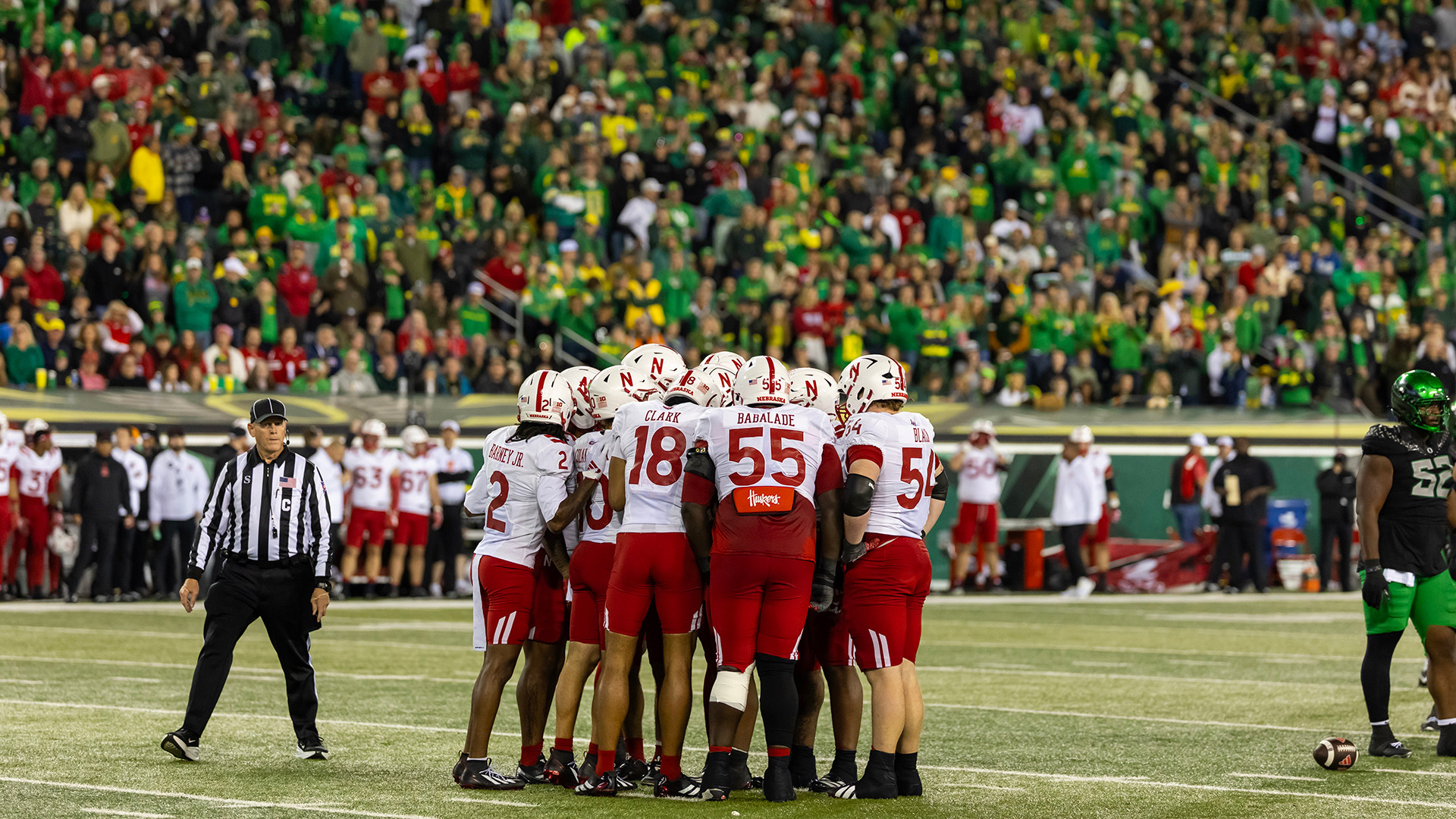
Nebraska Faces Illinois in Friday Night Big Ten Clash at Champaign
Nebraska enters the final month of its regular season facing a familiar challenge under the lights. This Friday,...

Dr. Ariana Greenwood Specializes in Gastroenterology and Hepatology
Dr. Ariana Greenwood provides specialized gastroenterology and hepatology services in Louisville Dr. Ariana Greenwood, MD, FACP, is providing...