
South Dakotans voted Tuesday in the 2026 general election for two members of Congress, governor and other statewide offices, four ballot measures and 105 state legislators, KELOLAND.com reported. Polls had closed across the state Tuesday evening, with results becoming available county by county as local officials submitted their final counts throughout the night.
South Dakotans voted to fill two seats in Congress, elect a governor and other statewide officers, decide on four proposed constitutional amendments, and choose all 105 members of the state Legislature. The legislative elections alone would determine the partisan makeup of the 35 senators and 70 representatives who craft the state’s laws and budget, with each of the state’s 35 legislative districts electing one senator and two representatives to serve two-year terms.
A Senate Incumbent Faces a Military Veteran
In the race for the U.S. Senate, Republican incumbent Mike Rounds campaigned for a third six-year term, drawing on his previous service in the South Dakota Legislature and as the state’s governor before his initial election to Washington. His opponent, Independent Brian Bengs, brought a background as a U.S. Navy and Air Force veteran to the contest, setting up a contrast between Rounds’ extensive tenure in elected office and Bengs’ military service record, according to South Dakota News Watch. The winner would serve a six-year term representing South Dakota in the upper chamber of Congress.
An Open House Seat Reshapes the Congressional Map
South Dakota’s lone U.S. House seat stood without an incumbent for the first time in years after Republican Dusty Johnson left Congress to pursue the governor’s office. That opened a contest for a two-year term between Democrat Nikki Gronli, who had served as the state director for the U.S. Department of Agriculture’s Rural Development program, and Republican Marty Jackley, the sitting attorney general who previously worked as the state’s U.S. attorney. Unlike the Senate race, where Rounds ran for a third six-year term, the House contest offered voters a choice between Democrat Nikki Gronli and Republican Marty Jackley for the open seat.
Governor’s Race Pits New Incumbents Against Challengers
The fight for the governor’s mansion featured Republican Larry Rhoden and Lieutenant Governor Tony Venhuizen, who had taken office in January 2025, seeking a full four-year term against Democratic challenger Dan Ahlers and running mate Steven McCleerey. Rhoden and Venhuizen, who took office in January 2025 and lead the executive branch of state government in Pierre, were challenged by Democratic Dan Ahlers and running mate Steven McCleerey for the four-year term.
Elected Officials Handle State Functions
Beyond the marquee races, KELOLAND.com projected that Lance Russell would become the state’s next attorney general. Voters also selected other constitutional officers who serve four-year terms and handle functions separate from the legislative, executive, and judicial branches: legal representation for the state, official filing duties, election administration, processing of state payments, receipt of payments to the state, and administering school and public lands. Three public utilities commissioners in South Dakota were elected to staggered six-year terms—without term limits—to oversee regulation of electric, natural gas, and telephone utilities, as well as grain storage warehouses.
Legislature Votes Confirm Amendments
The ballot included four proposed constitutional amendments referred by the Legislature for voter approval, alongside elections for the entire state Legislature. Each of the 35 districts elected one senator and two representatives to two-year terms, meaning all 105 lawmakers faced voters simultaneously on the same night. The ballot also included the 105-member state Legislature, with 35 districts each electing one senator and two representatives every two years.
Worth a look
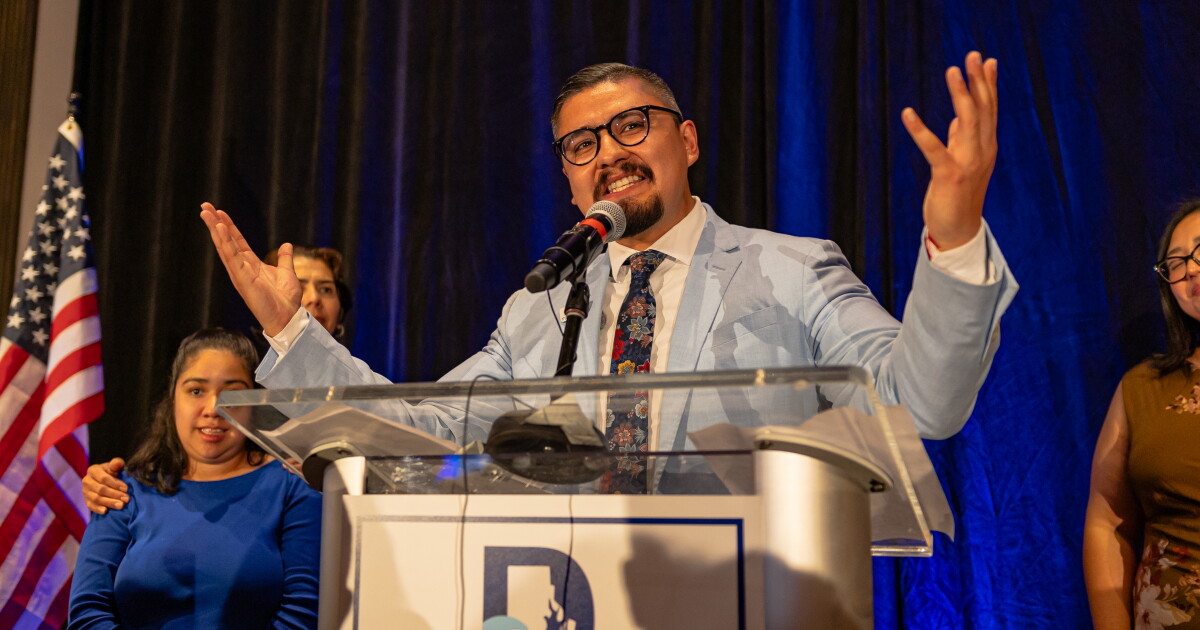
David Morales becomes Providence’s youngest mayor elected
As David Morales stepped up to the microphone to claim victory in Providence's mayoral race Tuesday night, he...

Spinach and Feta Stuffed Chicken Breasts Bake at 350°F
A boneless chicken breast, pounded flat, rolled around a spinach-and-feta filling, and baked until tender — that is...

Evergreen States Program Welcomes Governor Shapiro’s Re-election
Governor Josh Shapiro defeated State Treasurer Stacy Garrity on Tuesday to win a second term in Pennsylvania's corner...
Shannon Singleton Secures Majority in Preliminary RCV Results
Shannon Singleton received more than 50% of the votes in this round of counting, according to preliminary ranked-choice...