Reflecting on a Divided America at Concord’s Old North Bridge
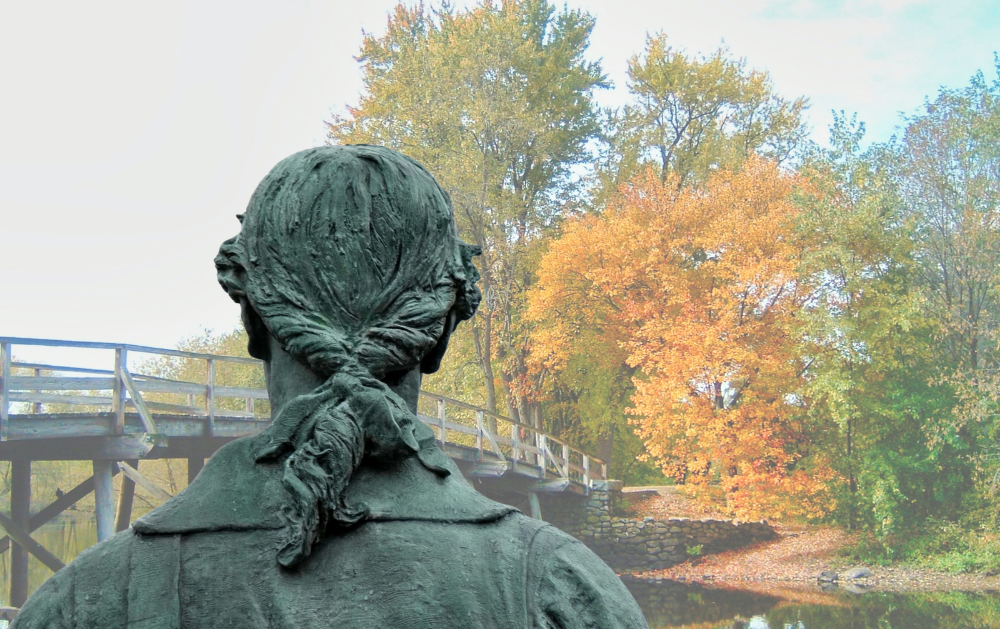
As the United States nears the close of its 250th year, the nation finds itself fractured into two deeply entrenched factions, neither of which commands widespread confidence or a unifying vision. In a reflective essay published on Catholicism.org, the author examines this contemporary political malaise by returning to Concord’s Old North Bridge, the site of the opening clash of the Revolutionary War.
Against the backdrop of muted 250th-anniversary celebrations compared to the Bicentennial, the essay explores the complicated legacy of the American founding through a lens rarely featured in standard patriotic narratives. Rather than viewing the events of 1775 through a simple hero-and-villain dichotomy, the piece highlights the forgotten human cost borne by those who remained loyal to the British Crown.
The Forgotten Grave at the Bridge
Visitors walking across Concord Bridge or other Colonial or Revolutionary sites often remember the past as they reflect on the questions raised by the conflict.
The essay points to this marker as a reminder that the Revolutionary War was fundamentally America’s first civil war. It was part of a larger global struggle involving the Anglosphere and a series of world wars between Britain and France that decided the ownership of the North American continent. Millions of ancestors, on both sides of the conflict, became entangled in these sweeping geopolitical dramas.
From Ticonderoga to Quebec
This tangled history echoes through other monumental sites, such as Fort Ticonderoga. Originally built as Fort Carillon in 1755 to anchor French control of Lake Champlain, the fort witnessed a fierce battle on July 8, 1758, where French forces successfully repulsed a much larger British assault, suffering 400 casualties against 2,000 British losses. Yet, by 1759, the fort fell to the British without a shot.
On May 10, 1775, Ethan Allen and his Green Mountain Boys seized the stronghold “in the name of the Continental Congress and the Great Jehovah,” capturing cannon that were subsequently hauled south to break the siege of Boston. Meanwhile, French Canadians largely remained loyal to King George III, influenced by the Crown’s support for Quebec’s Catholic clergy and the passage of the Quebec Act, which protected religious liberties for Catholics.
The Catholic Dilemma and Loyalist Fragmentation
King George III initially pursued policies favoring Catholic Emancipation, winning the loyalty of the Catholic Committee of Ireland. However, when France and Spain entered the war on the side of the American rebels following the Patriot victory at Saratoga, the British monarch turned permanently against emancipation.
This geopolitical pivot forced the Continental Congress to alter its own rhetoric, suppressing overt anti-Catholicism to appease its new French allies. For Catholic Americans living through the conflict, the community split. Wealthy figures in Pennsylvania and Delaware frequently aligned with the rebellion, while poorer communities and Scots Catholic settlers in the Mohawk Valley remained steadfastly loyal to the Crown.
Figures like Sandwich, Massachusetts judge Timothy Ruggles and the residents of Cambridge’s Brattle Street found themselves systematically purged or driven from their homes years before the first shots were fired.
Weighing the Past in a Polarized Present
For contemporary Catholic Americans, these historical complexities offer fertile ground for moral reflection. The essay suggests that just as one might accept an imperfect parent with gratitude, citizens must grapple with the flawed and revolutionary origins of their nation while striving to imbue it with enduring moral principles.
Walking the historic trails of Boston and Concord forces modern citizens to confront the same enduring questions of conscience, loyalty, and the price of political change.
Keep reading

Building for Tomorrow is Better for Business Today – New York YIMBY
New York State is doubling down on a simple premise: building multifamily housing that barely touches the planet...

New York Governor Kathy Hochul responds after rapper Nicki Minaj calls her ‘evil
Rapper Nicki Minaj and New York Governor Kathy Hochul Trade Sharp Words in Final Days of Campaign New...

As Above, So Below Distillery | Santa Fe Spirits – New Mexico Magazine
Magic, Botanicals, and High-Rye Bourbon in Santa Fe Caley Shoemaker never expected a surplus of neighborhood fruit to...

Amick Farms expands South Carolina footprint with new Edgefield County operations
Amick Farms Invests $54.78 Million to Build Trenton Hatchery Amick Farms is expanding its South Carolina footprint with...