
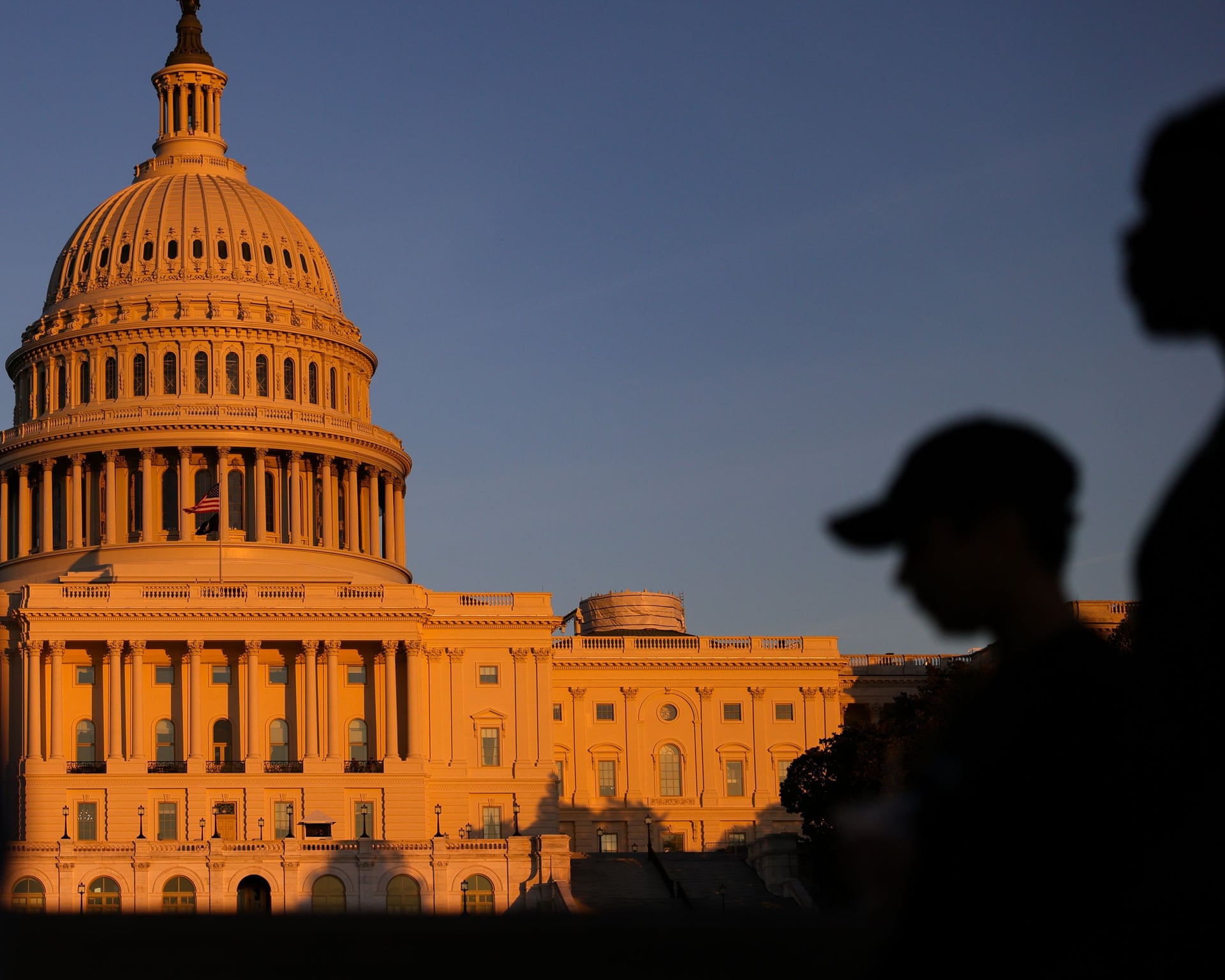
Democrats seized control of both the Senate and the House in the November 3, 2026 midterm elections, a result that caught many investors off guard and sent global markets into a volatile overnight session before stabilizing Wednesday morning, rte.ie reported. The blue wave, which saw the party win in districts long considered safely conservative, immediately fueled fears that rapid AI sector growth could face tighter regulatory scrutiny under a Democratic-controlled Congress. U.S. stock futures initially plunged by as much as 2% overnight, but by the European morning they had clawed back into positive territory, with the S&P 500 futures up 0.35% and Dow Jones Industrial Average futures rising 0.84%, according to Fox Business.
-
The Bottom Line:
- The benchmark 10-year Treasury yield fell three basis points to 4.92% as investors piled into safe-haven bonds, pricing in legislative gridlock and slower AI-driven growth.
- The dollar index slid 0.32% to a one-month low, with the euro climbing to $1.133 and the Swiss franc gaining 0.6% against the greenback.
- Shares in Elon Musk’s Tesla and SpaceX dropped roughly 4.5% to 5% on European trading platforms amid expectations of Democratic antitrust pressure and doubts over his planned merger.
The 10-Year Yield as the Canary in the Coal Mine
The single most telling number in this market reaction is the move in the 10-year Treasury yield, which slid to 4.92% on the day after falling as much as six basis points overnight to 4.89%. This basis-point compression signals a classic flight to quality: investors are betting that divided government in Washington will block new spending and tax cuts, effectively imposing fiscal tightening without a single vote. “Bonds are coming out as the clear winner as markets put the AI trade on the chopping block and embrace the higher possibility that further tax cuts are put on ice and government spending slows,” Prashant Newnaha, senior rates strategist at TD Securities in Singapore, told rte.ie.
The yield curve dynamics here matter because the 10-year note anchors everything from mortgage rates to corporate borrowing costs. When that yield drops, it reflects both lower inflation expectations and reduced pressure on the Federal Reserve to hike rates—a combination that typically supports equity valuations even as it signals slower growth ahead.
Most Stocks Rise, Dollar Drops As Democrats Take Control Of Congress Stock markets mostly rose Wednesday as investors assessed the impact of a Democratic sweep of Congress that dealt a blow to Donald Trump’s economic agenda as he heads into his final two years as president.… pic.twitter.com/dbGAym5U93
Gridlock Rallies Bonds While the Dollar Slides
Reading the raw market data from the European open, the recovery was broad but uneven. MSCI’s All-World index rose 0.13%, while Europe’s STOXX 600 climbed 0.5%, acting as a hedge against AI-specific risks. The dollar weakened across the board, leaving the pound up 0.5% at $1.348 and the yen gaining 0.4% to 158.12 per dollar, the Guardian reported. The Swiss franc was the standout safe-haven performer, with the dollar down 0.6% against it.
“That typically creates a blockade against new legislation—an environment which broad financial markets traditionally view favourably as variables decrease,” said Deborah Cunningham, chief investment officer of global liquidity markets at Federated Hermes, in comments cited by rte.ie. The logic is straightforward: with Democrats controlling Congress and President Donald Trump in the White House, major legislation requires bipartisan compromise that rarely materializes, reducing policy uncertainty.
Polymarket: 87% probability of a Democrat sweep tonight in the Midterms (winning back the House & the Senate), the highest odds to date. "It's the inflation, stupid." pic.twitter.com/EzloZz7KGH
Musk-Backed Firms Face Political Scrutiny
Not all sectors shared in the relief rally. Shares in Tesla and SpaceX, which Elon Musk intends to merge, fell around 4.5% to 5% on Europe’s Tradegate platform—far steeper than the 0.3% to 0.9% declines seen across other Big Tech names. The Guardian noted that Musk, who pumped $446 million into the midterms funding Republican-aligned groups, is viewed unfavorably by most Democrats, and investors expect a Democratic Congress to apply heavier scrutiny to AI companies and potentially block the merger. “This is bad news for Tesla and SpaceX today, but the semiconductor names, the backbone of the AI trade, could brush off concerns about AI regulation and continue to move higher,” said Kathleen Brooks, research director at XTB, in remarks to rte.ie.
Asian markets had already felt the pain during their trading session, with Japan’s Nikkei falling 3% and South Korea’s KOSPI dropping 1.6% as AI-related shares tumbled on regulation fears. Gold, meanwhile, rose 2.2% past $4,000 an ounce as traders sought traditional safe havens, the Guardian reported.
What This Means for Main Street Portfolios
The drop in the 10-year Treasury yield came as investors moved into safe-haven Treasuries amid expectations of political gridlock. US stock futures fell by as much as 2% overnight before recovering into positive territory. A weaker dollar also means imported goods, from electronics to oil, could cost more at the retail level, though Brent crude was actually down 0.4% at $103.17 a barrel amid choppy trading.
Smart Money Tracks the Policy Reality
Charu Chanana, chief investment strategist at Saxo in Singapore, told Reuters via Fox Business that markets appear to be pricing in a stronger-than-expected Democratic showing, which could reduce expectations for further fiscal stimulus. Prediction markets had already pointed toward Democratic control, with more than $1.48 billion wagered on the outcome. Historically, this isn’t unprecedented: according to Ned Davis Research data cited by Fox Business, the S&P 500 rose through year-end in five of eight midterm cycles since 1930 when the president’s party lost the House.
Investors are keeping a close eye on the elections today. I’m curious myself to see how these results could shake up business. https://t.co/e0cojZ2XoU
“Investors will be parsing what this all means,” said Chris Turner, global head of markets at ING, in comments to the Guardian.
Disclaimer: The information provided in this article is for educational and market analysis purposes only and does not constitute financial, investment, or legal advice. Always consult with a certified financial professional before making investment decisions.
More on Democrats
Worth a look

Democrats win Texas US Senate seat and governor’s office
In a state that had not sent a Democrat to the U.S. Senate since 1988, voters on Tuesday...

Utah Voters Reject Amendment B to Raise Tax Initiative Threshold
SALT LAKE CITY — What lawmakers and their allies framed as a common-sense safeguard for taxpayers, Utah voters...

Educators Rising and STEA Support Aspiring Tennessee Teachers
For a high school student in Tennessee weighing a career in teaching, the path from first curiosity to...

Republican Mike Rounds Wins Reelection to South Dakota U.S. Senate
"It was complicated," said 46-year-old Democrat Heather Reed of Sioux Falls, declining to say at her polling place...