
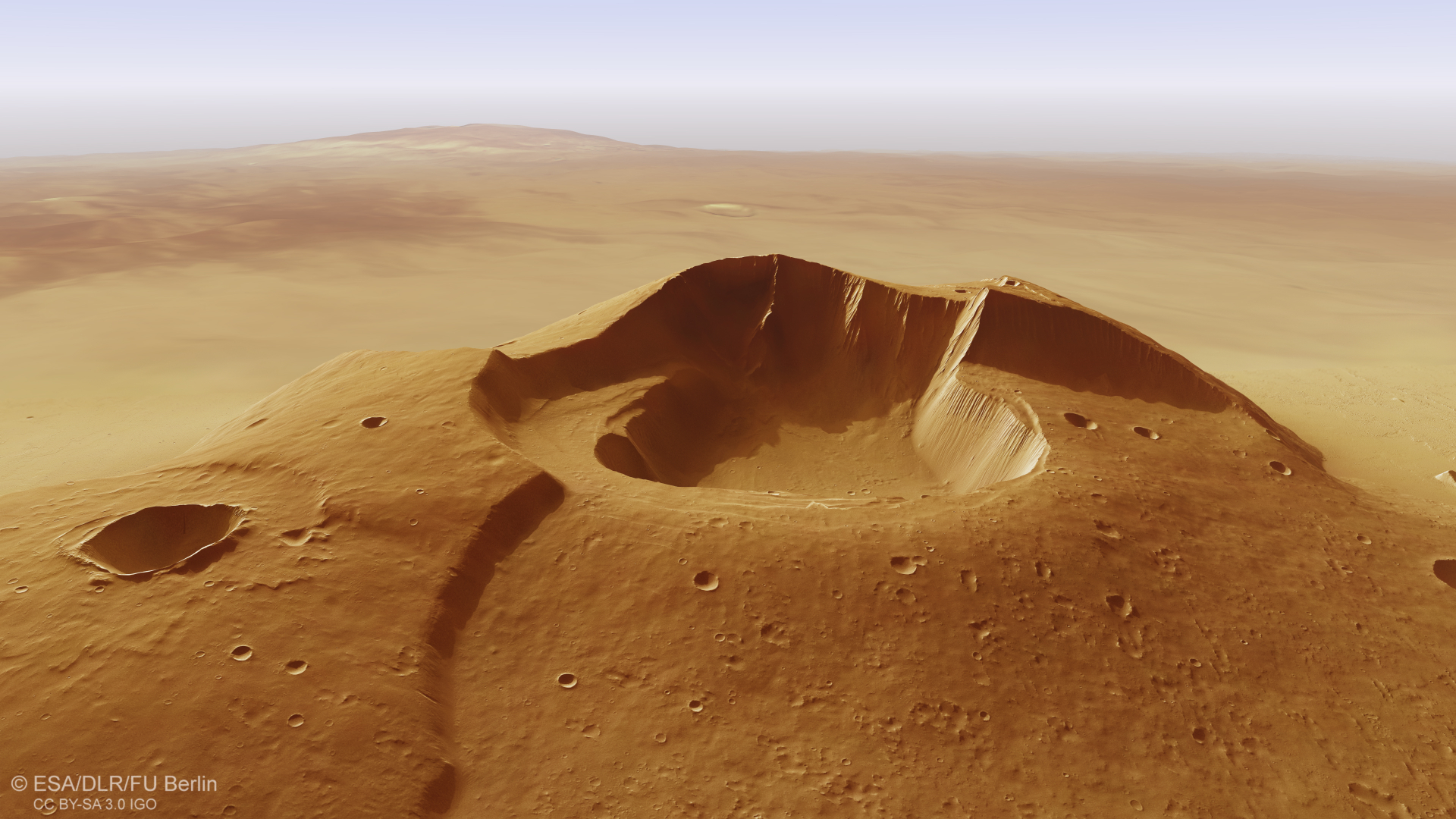
Mars Express orbiter has released new images of Tharsis Tholus, an 8-kilometre-high volcano whose summit collapsed twice, leaving a double caldera nearly three kilometres deep.
The European Space Agency and the German Aerospace Center published the imagery on 18 November, captured by the High Resolution Stereo Camera on 15 June 2026 during orbit 28,331 at a ground resolution of about 18 metres per pixel. The spacecraft has circled Mars since 2003.
Collapse shaped Tharsis Tholus more than eruption
Tharsis Tholus stands roughly 8 kilometres tall — comparable to the highest Himalayan peaks — yet ranks as only a medium-sized volcano on Mars, where Olympus Mons reaches 21.3 kilometres. Its structure is defined by two overlapping calderas, an older outer ring and a younger inner depression, formed when the magma chamber emptied and the overlying rock collapsed. The combined depression is almost three kilometres deep.
Steep cliffs radiate outward in pairs from the summit, created as the volcano’s flanks settled. Faults and grabens trace the sinking of the massive edifice into the subsurface, while impact craters pepper the slopes and narrow lava flows extend across the surrounding plains. The vertical scale in the released 3D views is exaggerated by a factor of three to make the topography clearer.
Steeper than Mauna Kea, built on a different timeline
The volcano’s flanks slope at about 10 degrees from horizontal, making Tharsis Tholus steeper than Hawaii’s Mauna Kea, though not as steep as Vesuvius.
Mars Express has been mapping the planet’s geology for more than two decades. The new imagery adds detail to the Tharsis volcanic province, where smaller domes such as Uranius Tholus and Ceraunius Tholus sit in the shadow of giants like Ascraeus Mons, which rises 18 kilometres.
High-resolution stereo camera captures volcano in detail
Mars Express captured new imagery of Tharsis Tholus using its High Resolution Stereo Camera. Researchers exaggerated the vertical scale in the 3D views by a factor of three to showcase the volcano’s structure and topography more clearly, ESA said.
The colour-coded topographic view released alongside the imagery is based on a digital terrain model of the region from which the topography of the landscape can be derived, DLR said. Site editor Nikita Sheikin noted the spacecraft’s ongoing role in imaging Martian geology.
This month, #MarsExpress takes us over Tharsis Tholus. At 8 km high, this volcano is modest by Mars standards, but comparable to the highest peaks of Earth's Himalayas! Discover more, including 3D views and an interactive tour of the image below 👉 https://t.co/wwUi8zgVQ1 pic.twitter.com/dT9mXs0RVh
Volcano’s history reveals sequential collapses and steep slopes
Tharsis Tholus stands about 8 kilometres high, rising up to eight kilometres above the surrounding lava fields and up to nine kilometres above the Martian reference level, DLR said. The volcano flanks have developed gradually from surrounding lava flows and have been battered by impacts from space and affected by different geological mechanisms, DLR said.
While Tharsis Tholus might not be the tallest volcano on Mars, it is incredibly steep, with flanks sloping at about 10 degrees from horizontal, making it steeper than Mauna Kea in Hawaii, Space.com and The Science Beat said.
ESA’s Mars Express orbiter imaged Tharsis Tholus on 15 June 2026 during orbit 28,331 at 18 metres per pixel resolution, adding new detail to this intermediate shield volcano on the eastern edge of the Tharsis quadrangle at 13.5°N, 91°W.
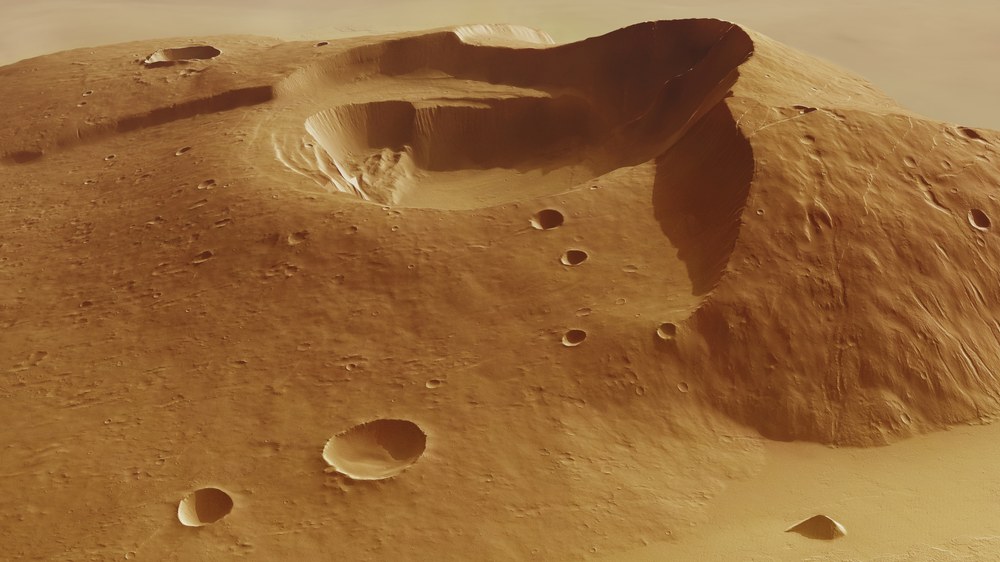
The feature lies about 800 km east-northeast of Ascraeus Mons and is surrounded by younger Amazonian-aged lava flows from the Tharsis Montes that bury its base, while its double caldera complex and radial fault systems record at least four deformation episodes.
Whether Mars is still volcanically alive remains open
Orbital imagery hints that some Martian volcanoes may have been active within the last few million years, and seismometers have detected marsquakes. No lava flows or eruptions have been observed directly.
A recent study using ESA’s Trace Gas Orbiter detected hydrogen chloride in the atmosphere and traced it to fresh fissures around Alba Mons, suggesting magmatic gases may still rise through the crust — a sign the planet may not be geologically dead. Mars Express has orbited since 2003.
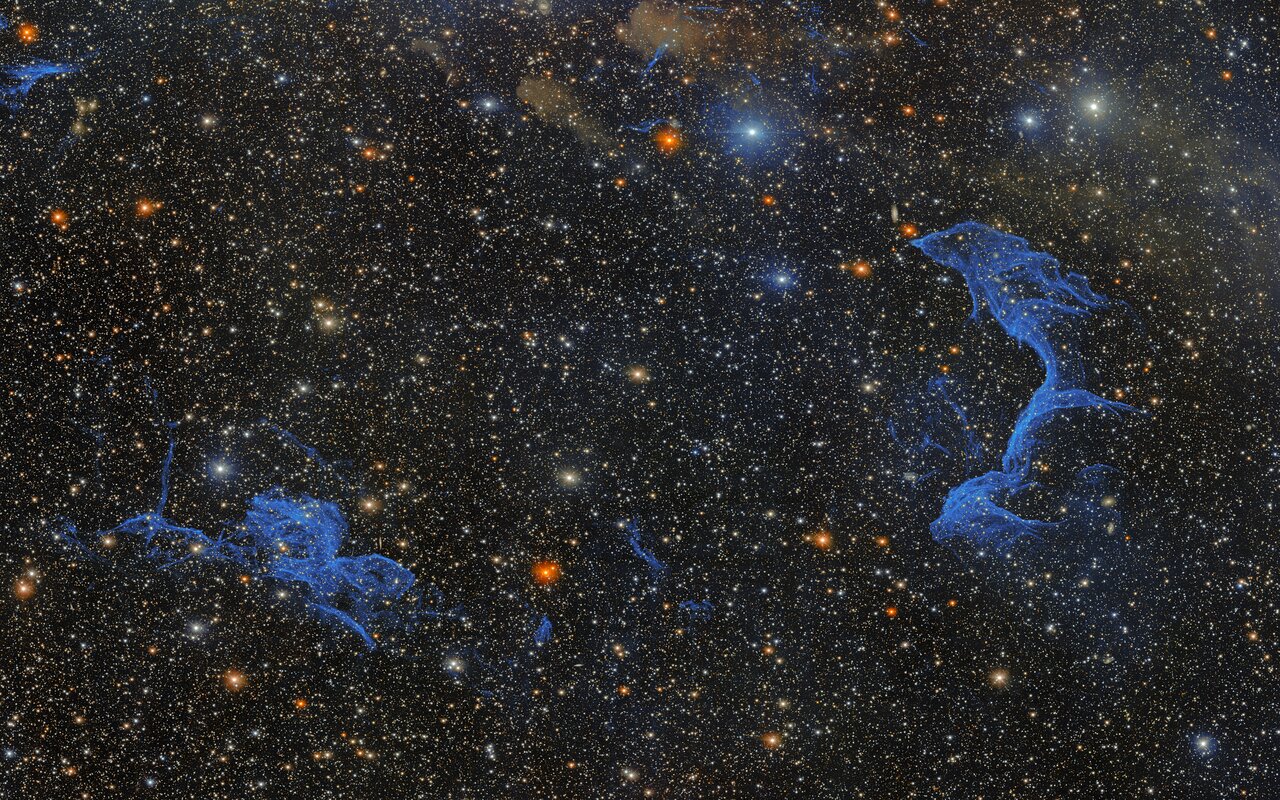
NSF NOIRLab Releases 570-Megapixel View of Supernova Remnant SNR G295.5+09.7
NSF NOIRLab released the most detailed view yet of supernova remnant SNR G295.5+09.7 on Monday captured by the...
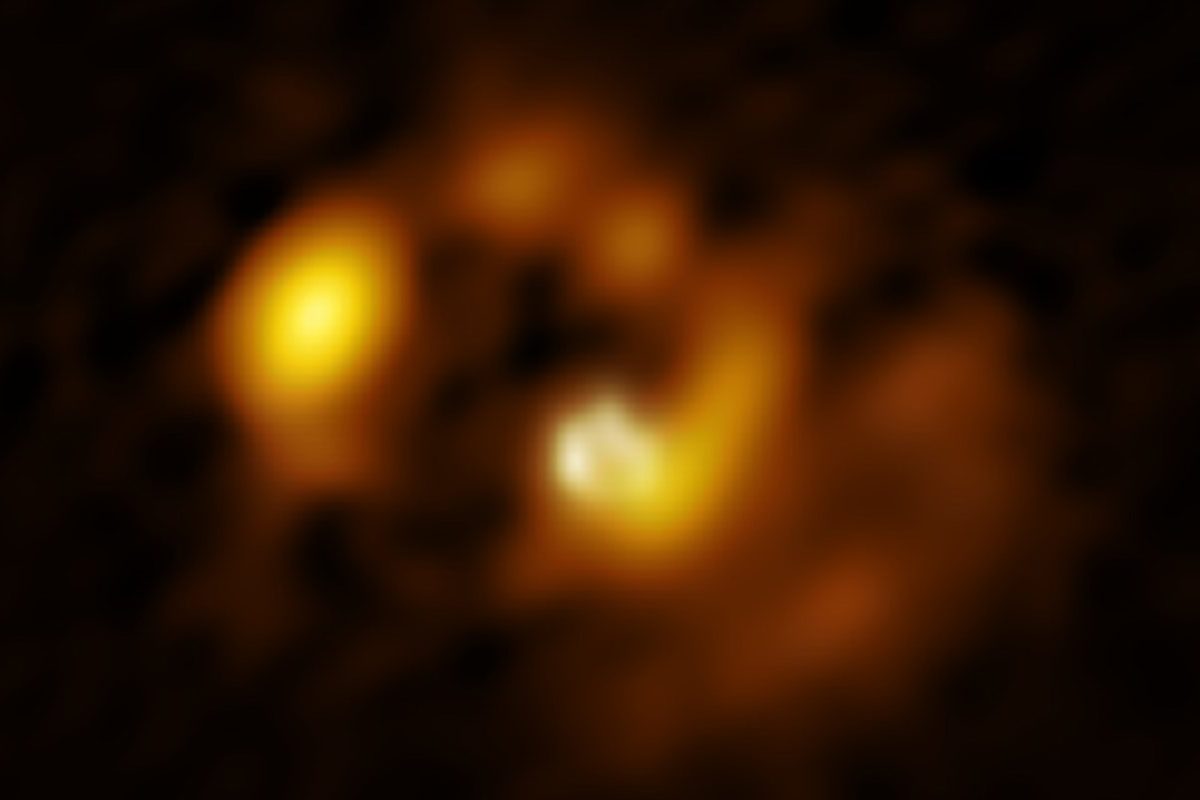
Chalmers Team Finds Magnetic Loop Drives Star’s Stellar Wind
That changes a fundamental part of the origin story of the atoms we ourselves are made of, said...
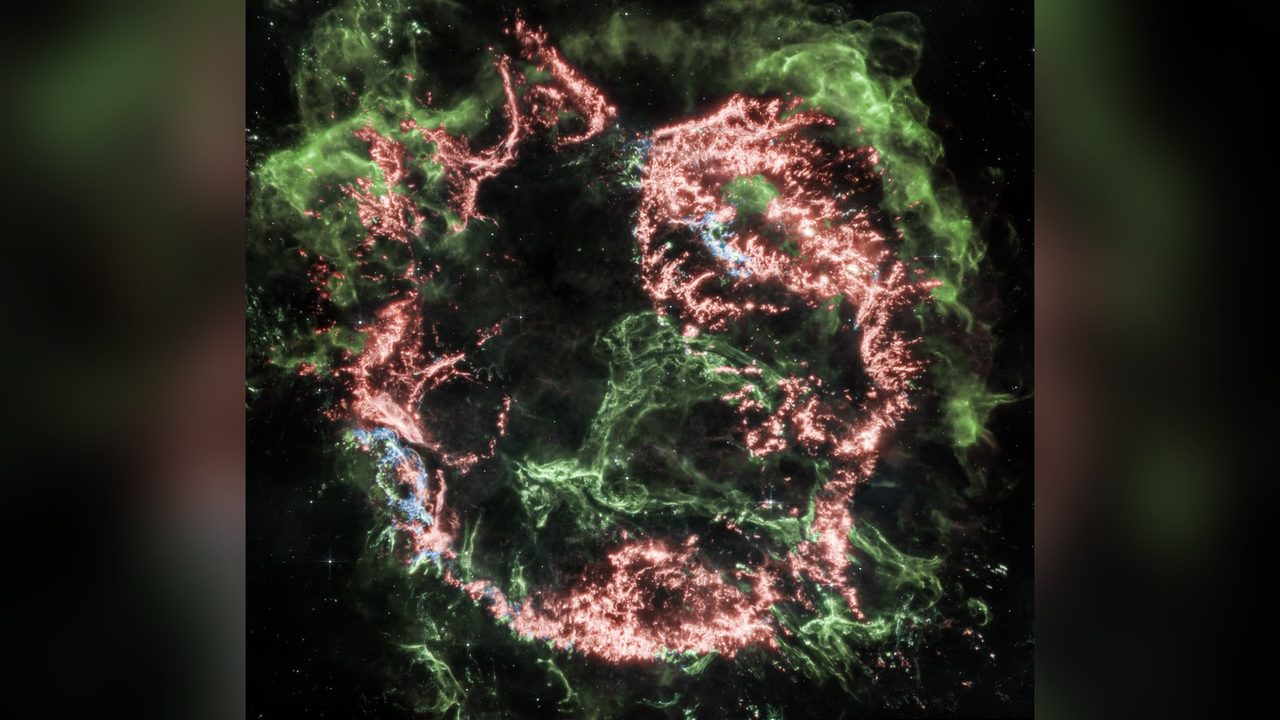
NASA Webb Maps Cas A Dust, Finds Shells Merged Hours Before Blast
NASA's James Webb Space Telescope has mapped the dust inside Cassiopeia A and found evidence that the star's...
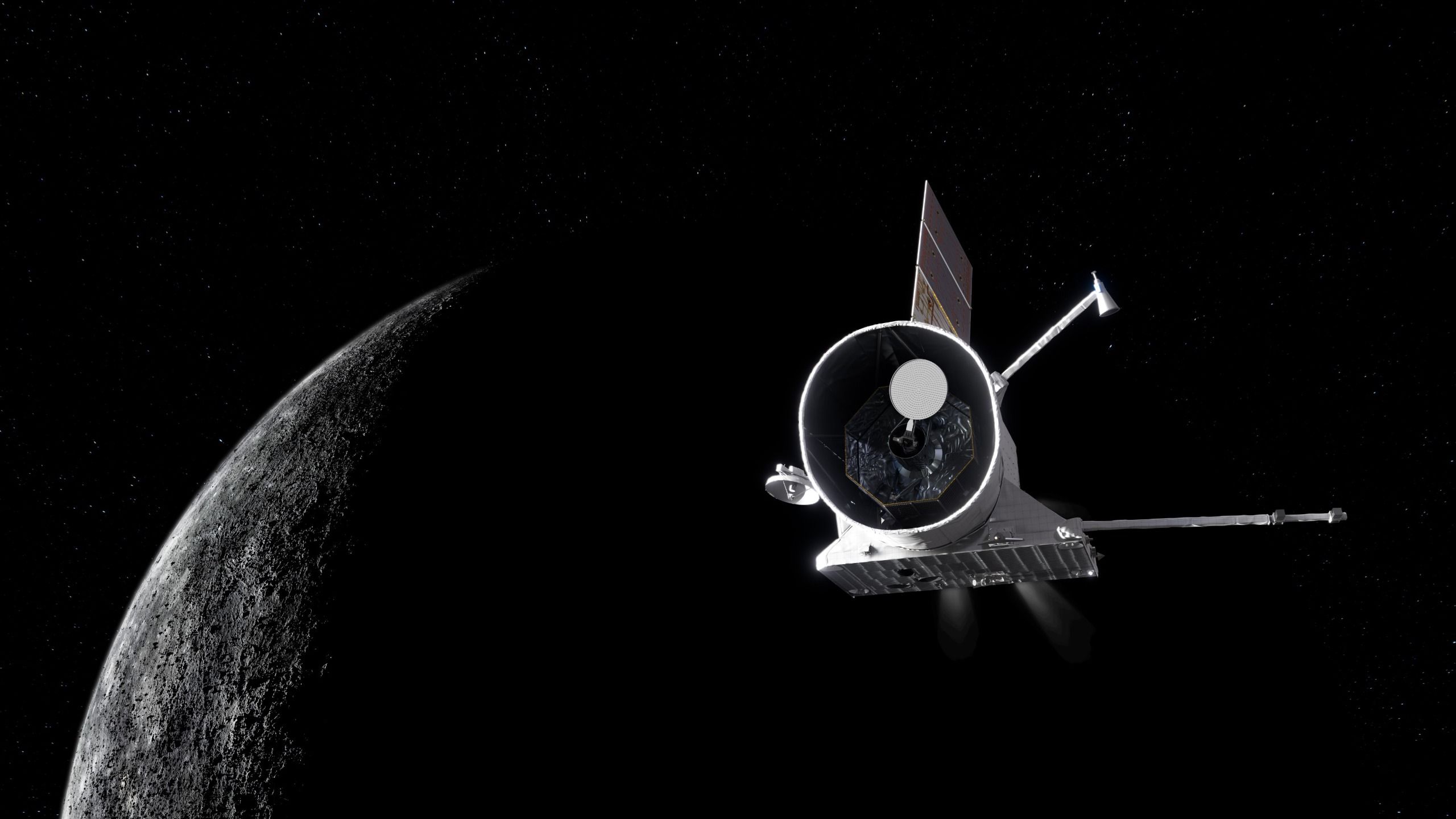
Japan-Europe BepiColombo Enters Mercury Orbit After 10-Billion-Km Journey
BepiColombo slipped into orbit around Mercury on Saturday after an eight-year, 10-billion-kilometer cruise, becoming only the second spacecraft...