
Swiss voters decide Sunday whether to ease arms-export restrictions and raise the value-added tax to fund a 13th monthly pension payment, a referendum that pits the country’s neutrality tradition against pressure to keep its defence industry in European supply chains.
The vote, held under Switzerland’s system of direct democracy, centers on amendments to the War Materiel Act that parliament approved last year with government backing.
If accepted, the changes would allow exports to 36 designated partner countries — including all EU members, the United States, the United Kingdom, Australia, Japan, Canada, Argentina and New Zealand — even when those nations are involved in armed conflicts, provided the exports do not confer a military advantage. Purchasing countries would also no longer automatically need Swiss permission to re-export Swiss-made weapons to third states, though existing commitments would remain binding.
Opinion polls published November 18 showed a tight race. A gfs.bern survey for the Swiss Broadcasting Corporation put support for easing export rules at 49 percent, with 46 percent opposed and 5 percent undecided. A separate Tamedia poll found 49 percent in favour and 48 percent against.
Three surveys cited by other outlets gave the “yes” camp 49 percent, 49 percent and 42 percent respectively. Polling stations close at noon (11:00 GMT) with initial projections expected shortly after; most ballots were cast by post.

Neutrality, Ukraine and the 36 Partner Countries
The government argues that Russia’s 2022 invasion of Ukraine fundamentally altered Europe’s security environment and that current restrictions have put Swiss manufacturers at a competitive disadvantage. Germany has excluded Swiss firms from some defence procurement contracts, while Denmark and the Netherlands have suspended orders.
“If Switzerland wants to be able to source supplies should the need arise, it must supply military equipment itself,” President Guy Parmelin told a press conference. State Secretary for Security Policy Markus Mäder said export rules were written “in a too restrictive way, before the full-scale invasion of Russia into Ukraine.”
Despite the security-policy shift, direct weapons deliveries to Kyiv would remain prohibited. Because Switzerland maintains an embargo on military equipment against Russia, “it may not supply such equipment to Ukraine either,” the economy ministry says. Indirect transfers to Ukraine would also stay restricted. If the amendments pass, some partner countries could in certain cases ship Swiss-made weapons to Ukraine more easily in the future, Mäder indicated.
What was originally a ‘Ukraine law’ — that’s how it was presented — has become an ‘arms lobby law’ designed to send weapons in all directions, but not to Ukraine.
Lisa Mazzone, Greens leader, via AFP
Critics, including around 20 NGOs such as Amnesty International Switzerland, condemn what they call “the dismantling of the main safeguards governing Swiss arms exports.” Patrick Walder, an arms-control expert at Amnesty, warned that “Swiss arms could thus more easily end up in the hands of actors likely to use them against civilian populations,” citing Gaza and Sudan as examples.
Caritas Switzerland president Monika Maire-Hefti argued the reform “significantly increases the risk that Swiss weapons could indirectly end up in civil wars or in the hands of regimes that violate the law.”

Industry Stakes and the VAT Question
After two years of decline, Swiss arms exports surged 43 percent in 2025 to 948.2 million francs ($1.13 billion), driven largely by ammunition, armoured vehicles and spare parts shipped to Germany. The sector still accounts for only about 0.2 percent of total Swiss goods exports.
Supporters, including centrist and right-wing parties, say the reform is essential to retain “the expertise essential to our independence and security,” as Swiss People’s Party member Yvan Pahud put it. France’s defence minister warned that industrial collaboration opportunities would shrink if restrictions stayed in place.
On the same ballot, voters decide whether to raise the standard VAT rate from 8.1 percent to 8.5 percent starting in 2028 at the earliest, with the special accommodation rate rising from 3.8 percent to 4 percent and the reduced 2.6 percent rate for food, medicines and books unchanged.
The additional revenue would help finance the 13th monthly Old Age and Survivors’ Insurance (OASI) payment that voters approved in March 2024. The gfs.bern poll found 46 percent backing the VAT increase, 51 percent opposed and 3 percent undecided, with support strongest among centre-left and older voters and opposition highest among Radical-Liberal and Swiss People’s Party supporters.
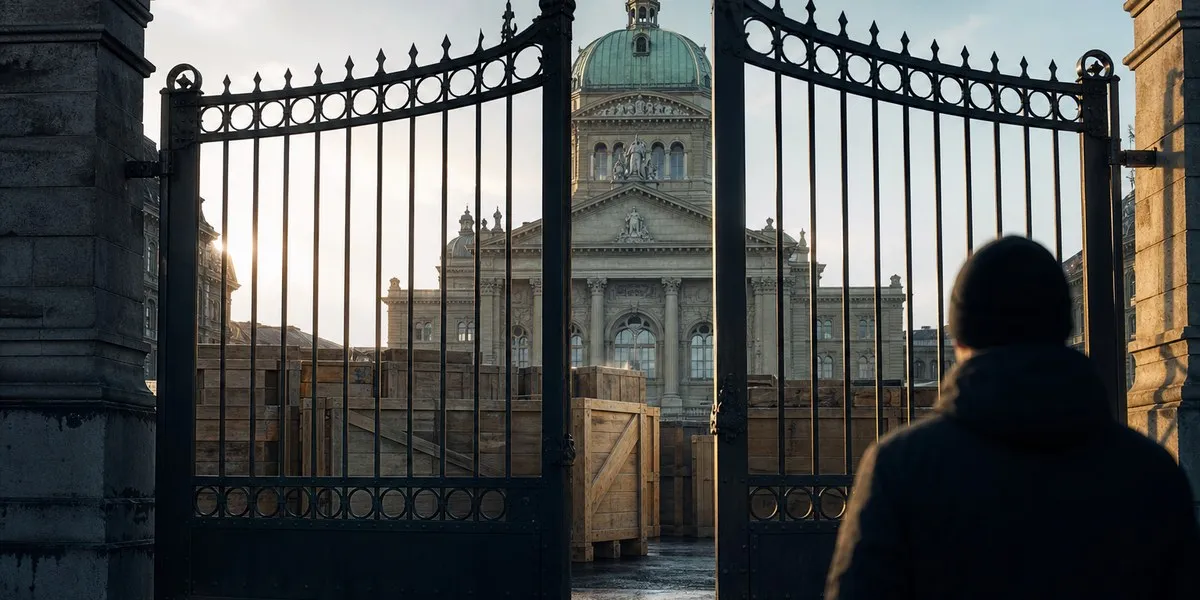
Switzerland’s tradition of armed neutrality since the 16th century and its absence from international war since 1815 underpin the current debate over the War Materiel Act amendments. The government argues that Russia’s 2022 invasion of Ukraine altered Europe’s security environment, prompting President Guy Parmelin to state that Switzerland must supply military equipment to remain integrated in European supply chains.
However, the embargo on military equipment against Russia means direct deliveries to Kyiv remain prohibited, while indirect transfers to Ukraine would also stay restricted under the proposed changes.
Critics, including Amnesty International Switzerland and around 20 NGOs, contend the reform dismantles main safeguards governing Swiss arms exports.
Voters Rejected Stricter Neutrality Initiative
Evelyn Schmid, a professor of international law at the University of Lausanne, said Switzerland has struggled to develop a consistent strategy since the war in Ukraine began, unable to simultaneously maintain permanent neutrality and supply weapons when it serves its interests. The referendum comes two months after voters rejected, by more than 70 percent, a separate initiative to enshrine a stricter interpretation of neutrality in the constitution.
Keep reading
Jharkhand Govt Cancels Job Results For 3,000
The Jharkhand state government canceled the results of government recruitment exams in August, affecting 3,000 people, including 25-year-old...
Ukraine Releases Declassified Archives on Holodomor Genocide
Ukrainians marked the 93rd anniversary of the Holodomor this Saturday with candlelight vigils, religious services and newly declassified...

Iran Denies Drone Strike, Calls Allegations a Cover for War
The incident is suspicious and looks like a precooked recipe for war, Iranian Foreign Minister Abbas Araghchi wrote...

Iran Used Starlink to Attack US, Report Says
Iran used Elon Musk’s Starlink satellite service to help wage attacks against the United States during the early...