
“They are in the midst of elections and are claiming that these islands are now part of Texas,” said Claudia Sheinbaum, the president of Mexico. “But they are not.”
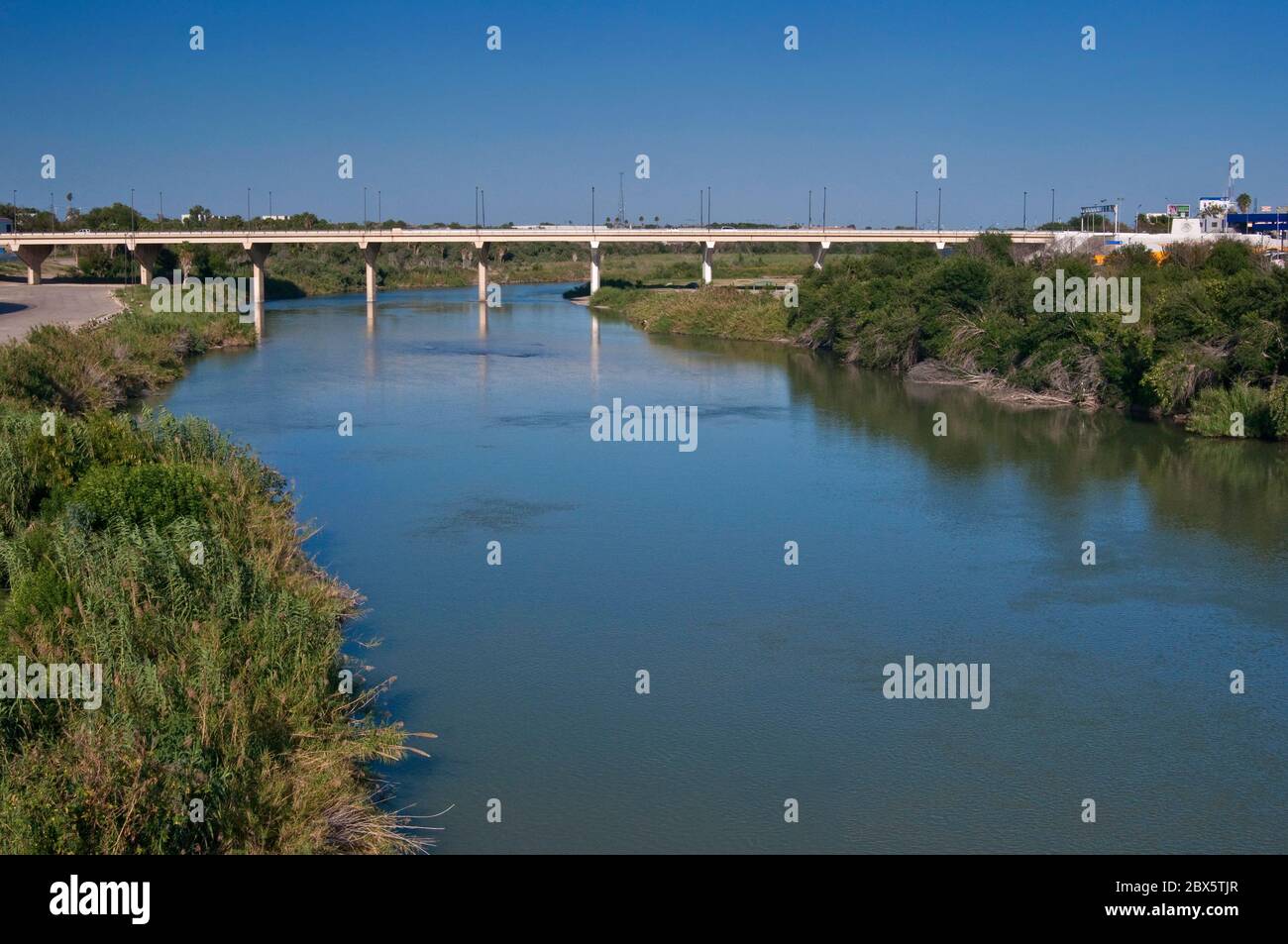
Texas General Land Commissioner Dawn Buckingham asserted state ownership over nine islands in the Rio Grande late last month, The Atlantic reported, upending a border understanding that had held since the Treaty of Guadalupe Hidalgo in 1848. The islands total roughly 66 acres, overgrown with carrizo cane, and sit in a river whose shifting course has moved the international line back and forth for more than a century.
Buckingham said her office acted after U.S. Customs and Border Protection asked her to review 28 islands “whose ownership had not been definitively established.” She told The Atlantic the request “brought an important issue to our attention” regarding law-enforcement authority.
CBP declined to comment. Mexican members of the International Boundary and Water Commission, the binational body that has settled such disputes since 1889, were caught by surprise, one Mexican official told The Atlantic.
The move matters because it replaces a quiet, technical process with a unilateral political claim. More than $1 million in freight crosses the border every minute, and the IBWC has resolved shifting riverbeds — adding or eroding hundreds of acres — without major incident for over a century.
“The way we have resolved these issues over land has worked the same way for 137 years,” a Mexican official told The Atlantic. “In an instant, that appeared to be changing.”
History offers a precedent. In the 1880s, the two nations clashed over 20-acre Beaver Island near Roma, Texas, prompting the creation of the International Boundary Commission. The 1848 treaty fixed the border at “the middle of that river, following the deepest channel,” but the river ignored the diplomats.
Dr. Thomas Webb, one of the original surveyors, wrote that “much of this country … is a sterile waste, utterly worthless for any purpose than to constitute a barrier or natural line of demarcation between two neighboring nations.”
Border Patrol agents have long viewed the islands as a nuisance. Smugglers use the cane for cover; armed escapees from a Mexican prison once hid on one island; soldiers raided a “narco camp” on another; agents rescued an 11-year-old Salvadoran girl from a third.
Rudy Karisch, a former chief of the Border Patrol’s Rio Grande Valley sector, recalled his first thought: “Why can’t we dredge them out and get rid of them?”
Buckingham, a physician from Austin who took office in 2023, has made the border a signature priority. In 2024 she purchased 1,400 acres of border land for a potential deportation processing facility. She has also opposed a border wall in the Big Bend region.
In late October she shared satellite imagery appearing to show the nine islands north of the river’s midway point, citing the images as proof of U.S. ownership. “We are establishing the State of Texas’s ownership interest in property based on the records available to our agency,” she told The Atlantic. “We are not attempting to redraw the international boundary or replace the role of the IBWC.”
It is unclear how Texas can own land that is not already American without moving the boundary. If agents patrol islands that Mexico still claims, the action could violate the treaty.
The islands are difficult to reach: from Houston, drive south on U.S. 77 past the Sarita checkpoint, 85 miles north of the river, then cross the border wall — often hundreds of meters north of the water — walk the no-man’s-land, and swim.
Texas voters upended the politics this month. Buckingham lost her election to Benjamin Flores, a pig farmer raised in Mexico City.
The White House has not addressed the islands directly. Miller has pressed the U.S. ambassador in Mexico City over crossing numbers while celebrating a “sealed” border in social-media posts filmed near the disputed islands.
“To say that these islands belong to Texas now, without respect for a bilateral agreement, is pretty cavalier,” said Benjamin Flores. “There’s a process to resolve these things, and I’ll respect the process.”
Buckingham, a seventh‑generation Texan born in 1968, worked as an oculoplastic surgeon before entering politics. She won a 2016 Republican primary runoff with over 60% of the vote to become a state senator, then was elected Land Commissioner in November 2022, becoming the first woman to hold the office. She took office on January 10, 2023.
“The way we have resolved these issues over land has worked the same way for 137 years,” a Mexican official told The Atlantic. “In an instant, that appeared to be changing.”
Keep reading

Needham Upsets Top-Seeded Concord-Carlisle Behind Laporte Hat Trick to Reach D1 Final
Needham junior Viv Laporte scored three goals for the third consecutive tournament game as the fourth-seeded Rockets upset...
USACE Boat Pilot Earns Secretary of Army Valor Award; Citation Credits Him With Saving Seven Lives
“Ken, your courage and judgment gave seven people the chance to reach safety,” Lt. Gen. William H. “Butch”...
Michigan Regulators Hold Detroit Workshop on Energy Costs and Assistance Access
Michigan utility regulators convened a public workshop in Detroit on Tuesday to hear directly from residents grappling with...
Father, Son Dead After Gasoline Fireplace Explosion Ignites House Fire Southwest of Lincoln
A father and son are dead after a gasoline-fueled explosion tore through their home southwest of Lincoln Wednesday...