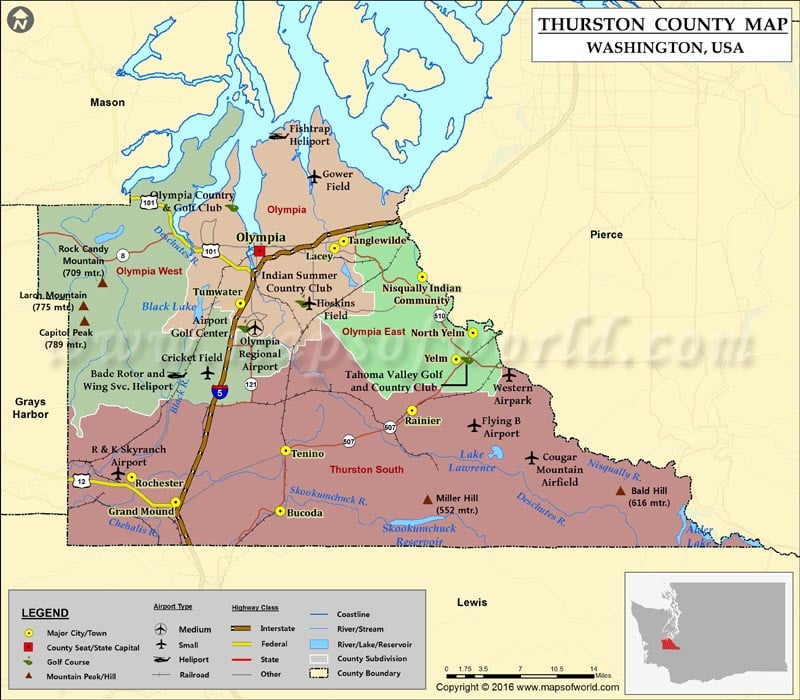
Thurston County homeowners can now build up to two accessory dwelling units on a single urban lot, a shift that doubles the housing potential locked inside existing neighborhoods across Olympia, Lacey, Tumwater and four smaller urban growth areas.
The change flows from state law (RCW 36.70A), which mandates that ADU size limits must allow a gross floor area of 1,000 square feet within UGAs. Thurston County’s updated code, adopted under Ordinance 16575, aligns with that floor while layering on local rules for septic and water.
A county planner familiar with the ordinance rollout said that the county is moving away from the single-family-only model that shaped the county for decades. The planner said that the state provided the minimum requirements, and the county built the guardrails.
Rural zones operate on a different math. Property owners outside the urban growth areas remain limited to one ADU per lot. An attached unit cannot exceed 50 percent of the size of the main house. A detached unit caps at 1,000 square feet — 1,200 if the owner purchases a transferable development right — and must sit within 100 feet of the main house.
Urban lots in Grand Mound, Yelm, Rainier, Tenino, Lacey, Tumwater and Olympia can now mix and match: one attached and one detached, two attached, or two detached units spread across one or two structures. The state’s 1,000-square-foot minimum applies to each unit’s gross floor area, basements and habitable attics included.
Water and septic approvals remain the practical bottleneck. The county’s Department of Commerce guidance flags that each new unit requires proof of adequate potable water and sewage disposal.
The Board of County Commissioners opened the door for rural ADUs on December 15, 2020, with Ordinance 15952. Urban rules followed later, but the Municode database still lagged as of December 16, 2025, meaning builders and lenders often reference outdated code language unless they check the ordinance directly.

Shoreline Master Program (SMP), Critical Areas Ordinance (CAO), Health Code, and Sanitary Code may also apply. Fire rules for ADUs also apply.
The county’s permitting portal publishes step-by-step guides for property information sheets, accessory building conversions, and inspection drawings.
Thurston County was carved from Lewis County by the Oregon Territorial Legislature on January 12, 1852, and originally encompassed the entire Puget Sound region and the Olympic Peninsula. Within the same year, four new counties — Pierce, King, Island, and Jefferson — were split from its northern reaches, and by 1873 its boundaries settled into their modern form.
The county is named for Samuel R. Thurston, the Oregon Territory’s first delegate to Congress, who never visited the area. Today it anchors the Olympia–Lacey–Tumwater Metropolitan Statistical Area along the I-5 corridor and, as of the 2020 census, is home to 294,793 residents.
Ordinance 16575 is the current controlling document for ADU rules; Municode will reflect it once the six-month update cycle completes.
Worth a look
Tennessee Officials Cite Litigation in Refusing Answers on License Denials
Democratic lawmakers pressed the Tennessee Department of Homeland Safety & Security on Wednesday for answers about a policy...

Downtown Austin Scavenger Hunt Adventure: 2.5-Mile Smartphone Game from Capitol to Lady Bird Lake
Urban Adventure Quest turns downtown Austin into a game board that starts at the Texas State Library &...

1976 Grocery Ads Show Philadelphia Thanksgiving Dinner Cost More Than Controller Reported
Philadelphia's City Controller said a Thanksgiving dinner costs nearly four times what it did in 1976. Controller Christy...

Ohio State Flips In-State Edge Damion King From Appalachian State for 23rd 2027 Commitment
Westerville North edge Damion King flipped from Appalachian State to Ohio State on Wednesday, giving the Buckeyes their...