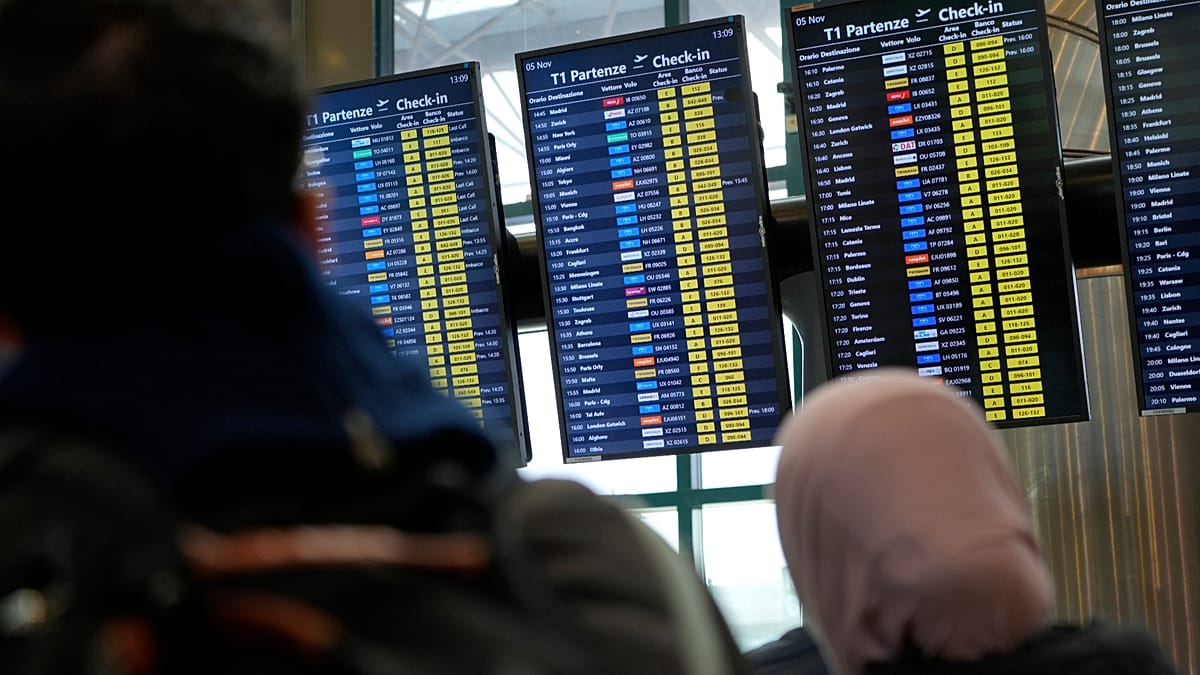
A wave of hoax bomb threats forced more than a dozen European flights into emergency landings and military diversions on Thursday, following a spate of incidents earlier this week. Authorities scrambled fighter jets from Italy, France, and Bulgaria to escort planes as they landed, while bomb disposal teams conducted inspections that, in all cases, found no explosives. The EU acknowledged the chaos but cautioned that any connection between the incidents remains unproven.
Chaos in the Skies: A Day of Diversions
The scale of Thursday’s disruption was immense, with at least 14 flights affected, according to authorities and airlines. The hoaxes targeted carriers and flights to or from Bulgaria, the Czech Republic, and Italy. Three flights were diverted, but all landed without incident.
Among the most high-profile incidents was an Aer Lingus flight from Dublin to Rome, which was rerouted to a military airbase in northern France. The French prime minister’s office confirmed the A320 aircraft, carrying 151 passengers and six crew, landed safely at the Évreux airbase in Normandy after transmitting a standard emergency signal. “The flight landed safely and Aer Lingus will work to reaccommodate customers to their final destination as soon as possible,” the airline said in a statement. In a separate incident, a phone threat to Cork Airport in Ireland caused a 90-minute delay for a flight, though no threat was ultimately found.
Ryanair emerged as a target. On Thursday, three Ryanair jets bound for Sofia—one from London Stansted, one from Copenhagen, and one from Madrid—were targeted. Bulgarian authorities confirmed the incidents, stating that while two planes landed in the capital, the flight from London was diverted to Plovdiv Airport. All three were escorted by Bulgarian air force jets, a mission the defense ministry described as designed to “detect, identify and escort the aircraft.” No explosives were found after inspections, an interior ministry spokesperson told AFP.
Finnair and Wizz Air Flights Face Bomb Alerts
Finnair also faced a double threat, with flights from Helsinki to both Rome and Vienna receiving bomb alerts. The Helsinki-Rome flight was escorted by an Italian air force jet to Rome’s Fiumicino Airport. “Nothing unusual was found,” a Finnair spokesperson, Stiina Tuunanen, confirmed. The airline emphasized its established protocols, stating it “always works closely with the local authorities” during such events. Similarly, Wizz Air reported two of its flights were targeted: a Milan-to-Warsaw flight was diverted to Vienna as a precaution, while a Milan-to-Bucharest flight landed safely.
In Prague, the situation was marked by uncertainty. Four planes bound for the Czech capital—operated by Ryanair, EasyJet, and Sky Express—were the subject of threats received via anonymous emails. Czech police publicly assessed the credibility of the threats as low, stating, “We perceive the credibility of the threats as low… Nevertheless, we are not underestimating the situation and all necessary security measures have been activated.” Likewise, planes arriving at Copenhagen were also targeted, with Copenhagen police concluding there was “no danger” to passengers or anyone else at the airport.

The Geopolitical Backdrop: Hybrid Attacks on the Rise
While the origin and motives of the current wave of threats remain unknown, they unfold against a backdrop of a rise in hybrid attacks in Europe. French authorities, in particular, have pointed to a trend of hybrid attacks in all their diversity. “The massing of hybrid attacks in all their diversity — sabotage, cyber, drones, espionage of course —that we are seeing take shape in Europe,” was the warning issued last month by France’s secretary general for defence and national security, Nicolas Roche. These incidents are sometimes linked by authorities to Russia or Iran, though no nation has officially claimed responsibility for this week’s aviation chaos.
This week’s events follow previous incidents. On Tuesday, 10 flights were targeted, forcing the closure of a Warsaw airport and prompting Italian air force deployments. On Monday, a Wizz Air flight from London’s Luton airport to Sofia was diverted to Budapest due to a similar threat. This latest wave of disruptions comes just days after those prior incidents, creating a climate of persistent uncertainty for European travelers and airlines alike.
“It is ‘too early’ to draw any definitive connection between bomb threats made to several airlines across Europe disrupting air travel this week,” EU Transport Commissioner Apostolos Tzitzikostas said. “Any threats against civilians are unacceptable.”
More on Europe
Related reading
Professor Proposes Hubs To Save Indonesian Expertise
Australia’s Indonesian Language Expertise Faces Extinction by 2031 Australia is confronting a quiet but profound collapse in its...

Ireland braces for keener Trump eye on foreign affairs
Democratic Midterm Wave Shifts Washington’s Global Strategy The results of the 2026 U.S. midterm elections, which saw the...

Vietnam says China-Laos military cooperation must follow international law
China Opens Joint Military Training Facility in Laos China has formally inaugurated a joint military support and training...

41st Trade Expo Indonesia Records US$ 22.94 Billion in Potential Transactions
Trade Expo Indonesia Closes with $22.94 Billion in Potential Transactions The 41st Trade Expo Indonesia (TEI) concluded its...