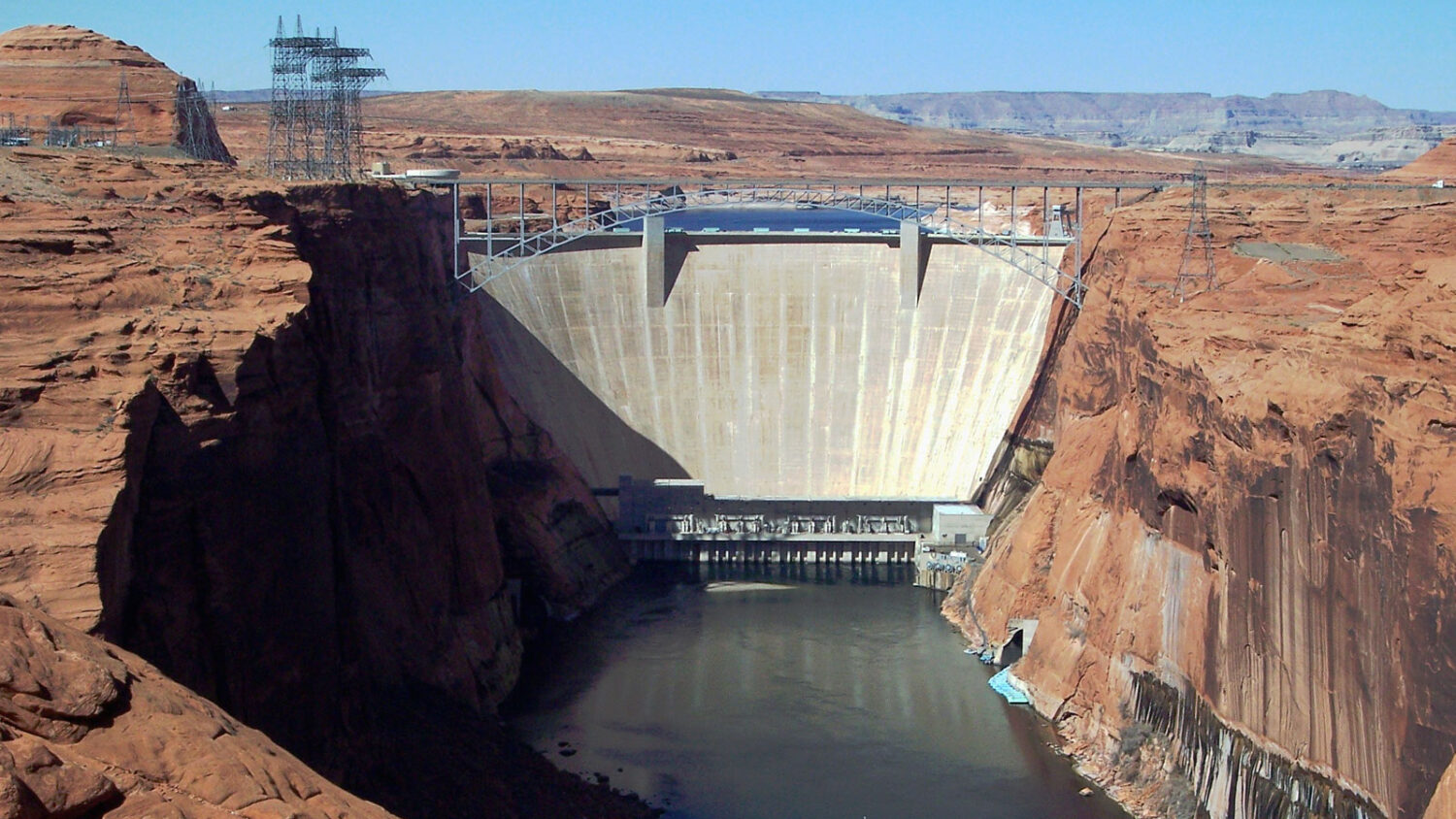
Powell Climbs 17 Feet Off Record Low
“It’s going to put off dead pool for a little bit, right?” Mike Crimmins said. The climate science extension specialist at the University of Arizona was explaining what a wet October and early November mean for the Colorado River’s two largest reservoirs, and KTAR News reported the development: Lake Powell has climbed 17 feet from the lowest level ever recorded.
As of Tuesday, the water level at Lake Powell stood at 3,533 feet above sea level. That marks a significant rebound from the 3,516-foot nadir the reservoir hit in mid-September. That September low had left the reservoir just 26 feet above the minimum power pool, the threshold at which Glen Canyon Dam in Page, Arizona, can no longer produce hydropower. It also sat 146 feet above dead pool, the critical elevation at which water could no longer flow by gravity through the dam’s outlets.
Mead’s Modest Rise Follows Upstream Releases
Downstream, Lake Mead reached its all-time low on Oct. 22 but has since risen 2 feet in under two weeks. The smaller increase reflects how the river system is managed: Mead’s level is largely determined by releases from Lake Powell, so its recovery depends on upstream conditions and dam operations rather than local rainfall alone.

Crimmins spoke to KTAR News 92.3 FM on Friday, before widespread weekend storms swept through the state, and described the rain as creating tangible breathing room. “We were getting dangerously low to that issue with Lake Powell. So, this actually creates a little bit more margin,” he said.
Saturated High-Country Soils Prime the Watershed
Beyond the reservoir gauges, the storms have saturated soils across Arizona’s high country. Crimmins said this will improve short-term drought conditions and set up the watershed to better capture spring snowmelt. “This is going to recharge that soil moisture and is going to improve those short-term drought conditions,” he said.
He pointed to research showing that when fall rain fills soil moisture, subsequent snowpack runoff is more efficient, allowing more water to reach the Colorado River rather than being absorbed by parched ground. Fall rain moistens the ground so that winter snowmelt runs into the river rather than being absorbed by dry soil.
Years of Deficit Won’t Wash Away in Weeks
Still, Crimmins cautioned that a few wet weeks cannot reverse years of accumulated deficit. The drought affecting the basin has built up over many years, and hydrological shortfalls of that scale do not disappear quickly. “Water resources are different when you have droughts accumulate over years to many years. You really can’t just erase those deficits in a couple of weeks,” he said.
That distinction matters for the infrastructure that depends on these reservoirs. When water levels hover near minimum power pool, the region loses hydroelectric generation capacity; when they approach dead pool, the physical ability to move water downstream through the dam is compromised. The 17-foot rise at Powell provides a meaningful cushion against those thresholds, but water managers remain focused on the long-term trajectory rather than short-term fluctuations.
El Niño Hopes Meet Long Road to Spring
Looking toward winter, Crimmins is hoping a strong El Niño pattern will deliver additional moisture to the Southwest. “We can be optimistic, cautiously optimistic, but I do still think the issues that we’re struggling with on the levels in Lake Mead and Lake Powell are not going to be completely solved by the time we get to spring,” he said.

Idaho Democrats Pick up six legislative seats, unofficial results show
As a blue wave swept congressional midterm races across the country on Tuesday, Democrats in Idaho flipped six...

3 Industrial Giants With Record Backlogs and Growing Dividends
Three industrial giants posted their strongest order books on record this week, and the numbers paint a clear...

Democrats on track to gain six seats in Hawaii Legislature as five Republicans trail
Heading into Tuesday night, Hawaii Republicans were bracing for a difficult midterm cycle without a presidential race at...

Hartford, Sumner reject RSU 10 withdrawal despite Buckfield approval
Buckfield residents voted 599-538 on Tuesday in favor of withdrawing from Regional School Unit 10, but the effort...