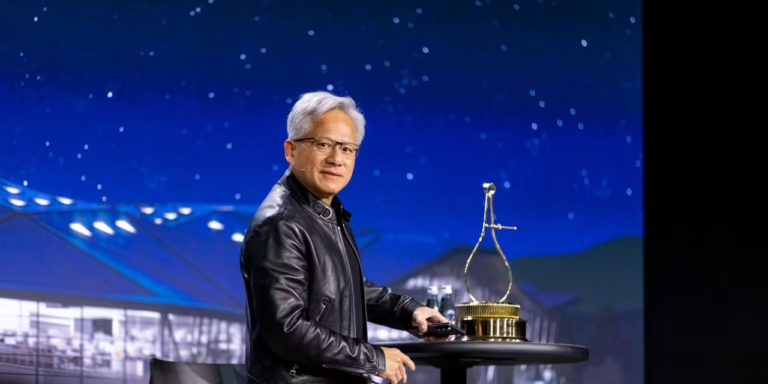
When University College Dublin awarded the Ulysses Medal to astrophysicist Dame Jocelyn Bell Burnell, it added her name to an elite roster that includes author Margaret Atwood, former Ireland president Mary McAleese, and Geoffrey Hinton.
From a Muddy Field to Global Recognition
The honor marks the latest chapter in a scientific life defined by perseverance. Born in Northern Ireland in 1943, Bell Burnell faced systemic barriers early in her education when her gender precluded her from engaging with STEM subjects in school, as they were aimed primarily at young men. She persevered, ultimately topping her physics class before heading to the University of Glasgow and later pursuing a PhD at the University of Cambridge.
It was at Cambridge in 1967 where she worked on a radio space telescope designed to explore the furthest reaches of space. While analyzing data from the new instrument—which took up a space roughly equivalent to 57 tennis courts—she spotted an anomalous “scruff” on her paper charts. That scruff turned out to be a pulsar, or pulsating radio star, fundamentally altering our understanding of the universe.
When I was a PhD student at the University of Cambridge, I was working towards a PhD in radio astronomy, detecting radio waves from stars and galaxies and things,
Bell Burnell recalled. I spent the first two years building the equipment, and the third and final year analysing the data from the new radio telescope. This proved rather more exciting than anybody had anticipated, because we found a totally new kind of star.
Despite her central role in the discovery, Bell Burnell was notably excluded when the Nobel Prize in Physics was awarded in 1974 to her PhD supervisor, Antony Hewish, and fellow Cambridge professor Martin Ryle. That omission has long stood as a prime example of how the achievements of women were so often disregarded in favor of their male co-workers and supervisors.
Philanthropy and the Next Generation
Rather than retreating from the scientific community, Bell Burnell built a decades-long career defined by research, university leadership, and advocacy for equity. In 2018, she received the Special Breakthrough Prize in Fundamental Physics. Instead of keeping the windfall, she donated the entire £2.3 million award to establish the Bell Burnell Graduate Scholarship Fund, which supports students from underrepresented backgrounds pursuing physics.
UCD professor of astronomy Lorraine Hanlon noted that Bell Burnell has been peerless in transforming her discovery into lifelong advocacy for curiosity-driven research and global science diplomacy.
Over the years, her accolades have accumulated. She became the second woman to receive the Copley Medal from the Royal Society, and in January 2024, Met Éireann named Storm Jocelyn in her honor. Now, her Ulysses Medal from UCD further cements her ties to Ireland, bridging a career spent largely in Great Britain since moving there at age 13 with her enduring roots in Northern Ireland.
Multimedia Engagement
Her scientific legacy has also been shared through digital storytelling, including a multimedia piece titled “Journey of Discovery” that recounts her time building radio telescope antennae in a muddy field in Cambridgeshire. As of February 28, the accompanying article recorded 17,300 page views while the film garnered 11,500 views on YouTube.

Worth a look

Amazon Cuts Price of Pokémon TCG Lucario Collection to Record Low
Collectors can now purchase the Pokémon TCG 30th Celebration Tech Sticker Collection (Lucario) for $49.95 at Amazon, marking...

Why More Parents Are Choosing Accelerated Measles Vaccination Schedules
Measles cases are accelerating in the US, with twice as many confirmed cases as last year. A Shift...
Italy and Indonesia Strengthen Strategic Ties in Trade and Defense
"National prosperity relies on trade openness rather than protectionism." Speaking at the Indonesian Embassy in Rome for the...