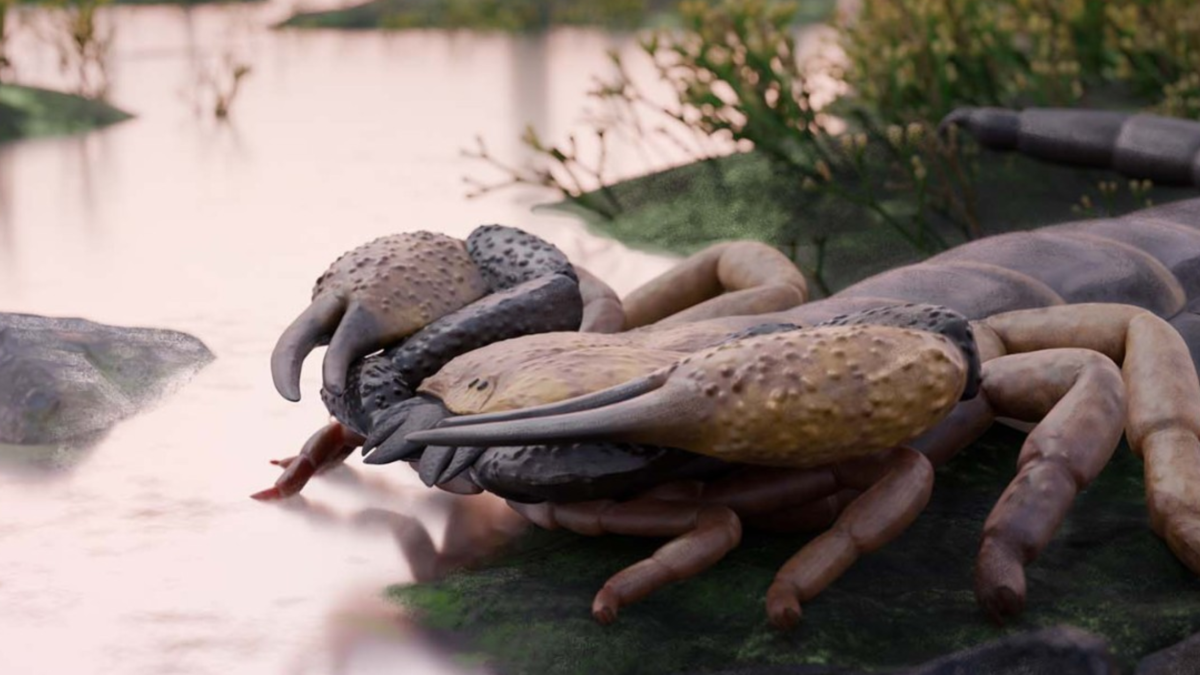
Scientists have identified the world’s largest known scorpion, a dog-sized predator that lived 415 million years ago in the United Kingdom.
The creature, named Praearcturus gigas, stretched past a meter (3.3 feet) in length. Its pincers alone measured 16 centimeters (6.3 inches) long—longer than the entire body of many modern scorpions. The discovery resolves a century-long debate over fossils first described in the 1870s. It confirms the animal as a gigantic scorpion that roamed both land and water.
- Size: Over 1 meter long; pincers measured 16 cm (6.3 in)
- Age: 415 million years ago (Lower Devonian)
- Habitat: Likely amphibious, hunting on land and in water
- Fate: May have gone extinct 40 million years after these fossils
A Giant Among Predators
Praearcturus gigas dominated its environment when life on land was just beginning. Lead researcher Richie Howard, a paleontologist at the UK’s Natural History Museum, said the scorpion’s immense size was possible because there were no other large predators to compete with. Land at the time was not a developed ecosystem. There was little up there to feed a large hunter.
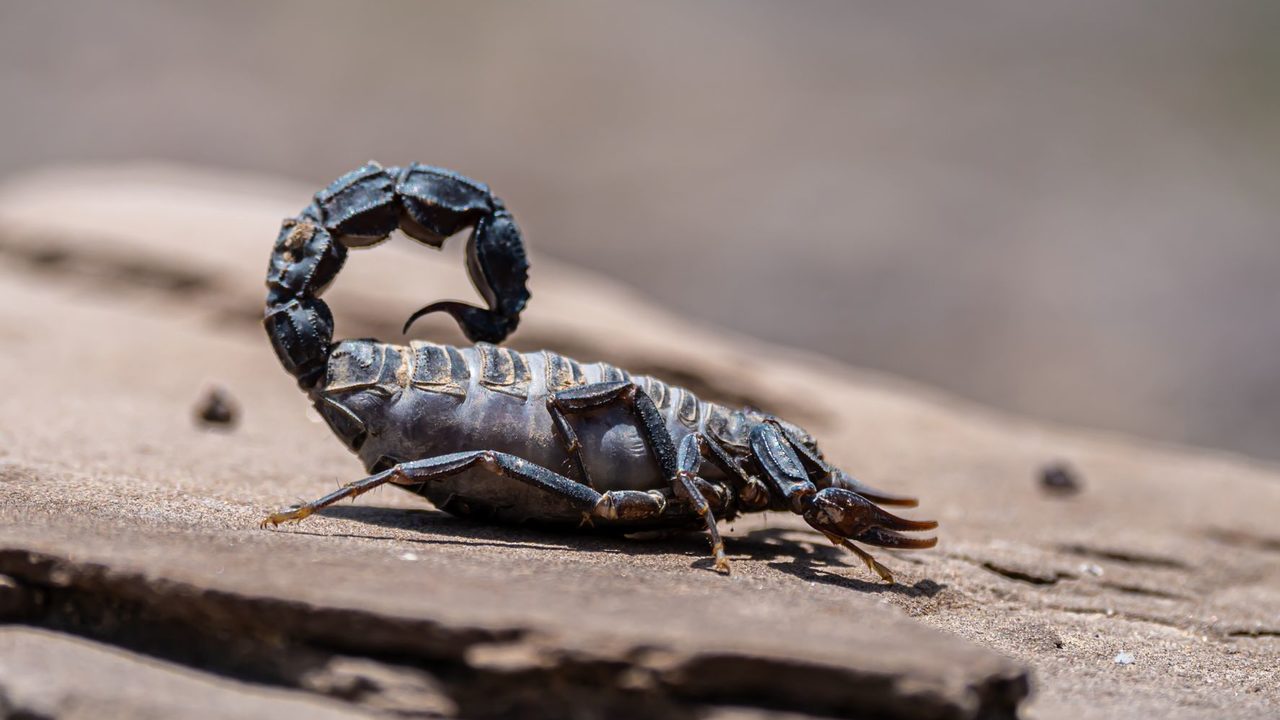
This species might have grown so big because there weren’t any other large predators, allowing it to dominate its environment.
Richie Howard, paleontologist, Natural History Museum
The study, published in the journal Palaeontology, used CT scans and traditional camera lucida tracings to analyze the fossils. Researchers compared the British specimens with Eramoscorpius from Canada. This solidified P. gigas's place in the scorpion family tree.
A Life Between Land and Water
Unlike modern scorpions, Praearcturus appears to have been amphibious. Fossils from Wales show flap-like structures called epimera. These are similar to features on modern lobsters and crabs. The creature likely hunted in water as well as on land.
The team also found ridge patterns on one of its limbs. This suggests it may have produced sound by rubbing body parts together—a behavior called stridulation. Some scorpion species still do this today. This adaptation could have helped it communicate or intimidate prey.
An Evolutionary Puzzle
The discovery raises questions about how scorpions ended up living in water. Scorpions are believed to have descended from air-breathing ancestors. Paleontologist Greg Edgecombe, also of the Natural History Museum, notes that DNA evidence places scorpions close to other arachnids with book lungs, such as spiders.
“Our best family trees from DNA sequences suggest that scorpions are closely related to other arachnids with which they share book lungs, such as the spiders,” says paleontologist Greg Edgecombe, also from the Natural History Museum in the UK. “This predicts that they are descended from an air-breathing ancestor. If this is the case, then Praearcturus is an example of an animal that likely returned to the water after its ancestors moved onto land.”
Greg Edgecombe, paleontologist, Natural History Museum
Despite its early dominance, the giant scorpion’s reign was short-lived. Millions of years later, land ecosystems filled with larger competitors. These included millipedes the size of cars and dragonflies as big as birds of prey. Rising competition may have pushed Praearcturus into extinction. Researchers believe it survived for another 40 million years beyond the age of its fossils before disappearing completely.
Related reading
Mendelian Randomization Identifies Eight Brain Imaging Markers Causally Linked to Cerebral Palsy Risk
A genetic analysis has identified eight brain imaging measures with causal links to cerebral palsy risk, the authors...

Harte Lawyers Argue for Transparency on Special Criminal Court Verdict
Harte (45) was sentenced to 30 years by the Special Criminal Court in December 2021. His lawyers argue...

Rockstar Games Staff in UK Vote Rejects Union Recognition by 75 Percent
Rockstar Games staff in the UK have voted against formal union recognition by a wide margin, with 75...

Palace Says Duterte ICC Turnover Aligns With Philippine Law Not Sovereignty Claim
The Palace has dismissed Vice President Sara Duterte’s assertion that national sovereignty was at the core of her...