
“Marine observations are hard, few and far, and hard to come by,” said Steve Pfaff, meteorologist in charge of the National Weather Service forecast office in Wilmington.
Earlier this month, the University of North Carolina Wilmington’s Coastal Ocean Research Monitoring Program deployed two wave-monitoring buoys in waters adjacent to the deep-water channel off the Port of Savannah in Georgia, bringing its total array to 25 offshore platforms.
The expansion, reported by Coastal Review, adds critical real-time eyes to a stretch of coastline where forecasters have long worked with sparse data. CORMP’s network now runs from Onslow County south to Fort Pierce, Florida, supplemented by four land-based weather towers along North Carolina’s southern coast.
The program traces its roots to a federal earmark more than 20 years ago, when NOAA funding first allowed UNCW researchers to track water quality and ecosystem health off the state’s southern coast.
Those early efforts eventually linked with similar programs up the East Coast to form the regional associations that now feed NOAA’s Integrated Ocean Observing System — essentially the weather service for the nation’s coastal oceans and Great Lakes.
Dr. Lynn Leonard, associate director for research and innovation at UNCW’s Center for Marine Science and CORMP director, said the buoys collect core variables — wind speed and direction, gusts, air pressure, air temperature, and temperature and salinity just beneath the surface — every hour, year-round.
“All of these are core variables that are used by the majority of our stakeholders or our end users because this is the data that the National Weather Service relies on to basically help inform some of their forecasts and some of their alerts,” she told Coastal Review.
“For example, when a hurricane hunter flies over during a storm, they’re making estimates of wind aloft. But if they fly over a buoy, the data that we’re providing at the sea surface can help them verify if their interpretation of what the wind is at the surface from the hurricane hunter is accurate.”
That verification role matters most when storms hug the coastline. Pfaff said his office uses CORMP data to verify marine forecasts across three zones: nearshore waters, coastal waters out to 20 nautical miles, and a newer offshore zone stretching from 20 to 60 nautical miles.
“You can imagine if you’re trying to manage a program, you need observations to tell how well or what challenges you’re facing with forecasting,” he told Coastal Review.
The buoys also serve as ground truth for satellite-derived measurements and help forecasters gauge the intensity of fast-moving squall lines and nor’easters in what Pfaff called “short-fused situations.” SECOORA, the Southeast Coastal Ocean Observing Regional Association, funds CORMP and passes its data into the national observing system.
Additional NOAA funding approved recently will place a third buoy off the Savannah port, deepening collaboration with port operators who need precise conditions for commercial shipping traffic.
Leonard said CORMP is also working with Camp Lejeune to establish a more permanent weather buoy off the base’s ocean shore to support training exercises. “We’re very committed and driven to finding partners, whether they’re researchers or they are just more operationally motivated entities that need data,” she said.
The program maintains a public dashboard where users can scroll over a map and see real-time conditions at any station, and teachers can download datasets for classroom use. Maintaining 25 platforms in a harsh marine environment remains the central challenge — one that Pfaff said CORMP has “dialed in really well.”
Located 18 miles up the Savannah River from the Atlantic, the Port of Savannah was the nation’s fastest-growing seaport between 2000 and 2005, with a compounded annual growth rate of 16.5 percent. By 2018 it handled a record 4.35 million twenty-foot equivalent units, making it the third-busiest container port in the United States. The Garden City Terminal, the largest single-operator container terminal in North America, spans 1,345 acres with 9,693 feet of continuous berthing.
The next buoy off Savannah is slated for deployment in the coming months, and talks with Camp Lejeune continue toward a long-term installation.
Keep reading
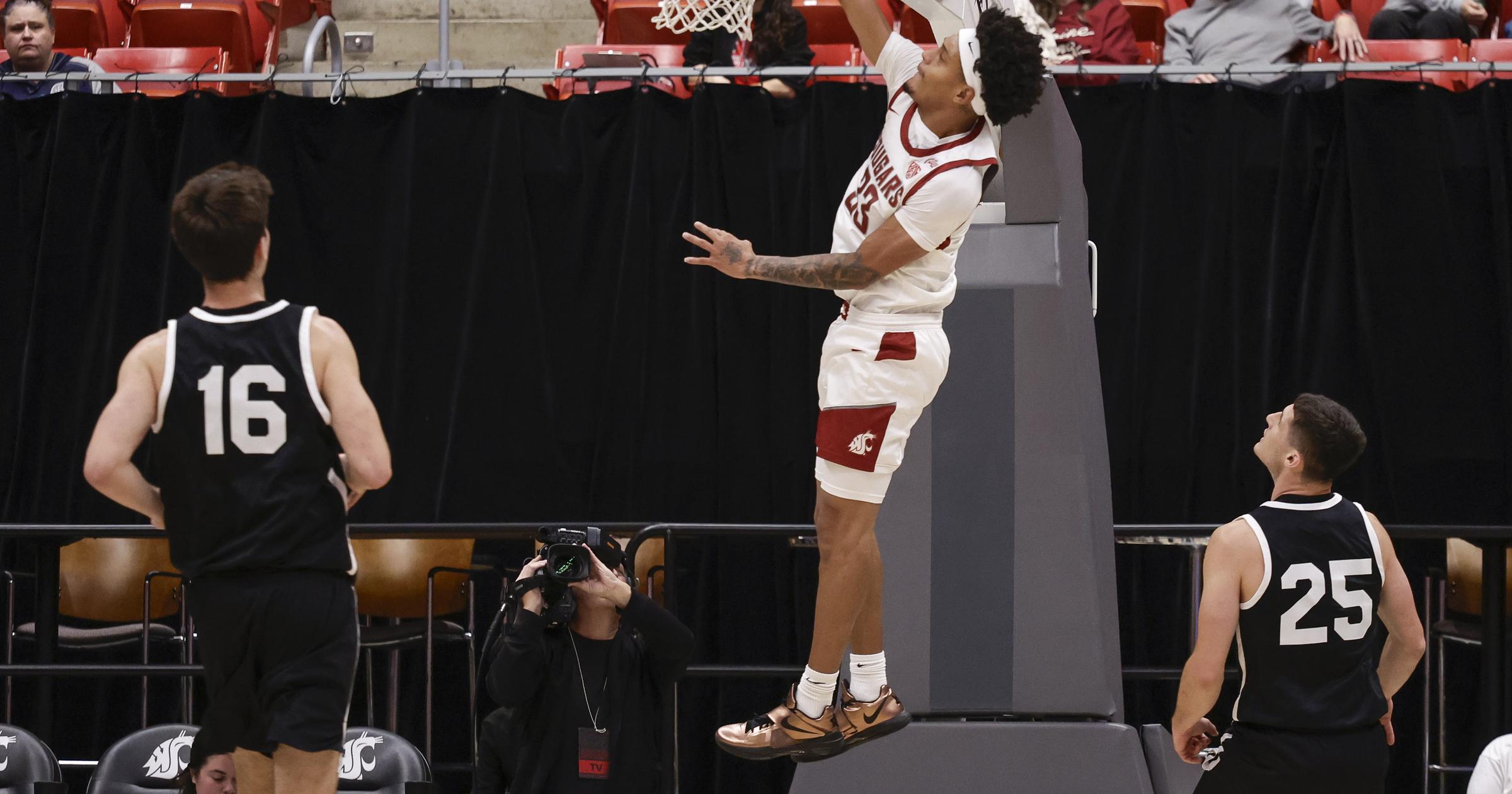
Washington State Beats Hawaii 79-63 for First Division I Win at Angel of the Winds Arena
Washington State beat Hawaii 79-63 Wednesday night at Angel of the Winds Arena in Everett, securing the program's...

Ky. AG, UofL Foundation Seek to Rewrite Dead Donors’ Wills; Judges Split on Race Restrictions
Kentucky Attorney General Russell Coleman and the University of Louisville Foundation asked judges to rewrite the wills of...

The Company Said the Core Problem for New York Businesses Is Rarely Too Little Marketing
The company said the core problem for New York businesses is rarely too little marketing; it is marketing...

Illinois Names Jennifer Soble First State Public Defender
Illinois named Jennifer Soble its first state trial-level public defender Wednesday, entrusting a veteran advocate who helped free...