When the University of Rhode Island pulled archival records to assess its holdings under federal repatriation law, it faced a complicated reality. Inside containers marked simply as “Box 1,” “Box 2,” and “Box 3,” the institution housed human remains representing at least six individuals, lacking any baseline documentation detailing their geographic origin, archaeological context, or acquisition history for the remains. The National Park Service published an administrative notice outlining these holdings, setting the stage for a potential transfer.
The timeline for potential resolution is already drawing near. According to administrative filings published under the National Park Service, repatriation of these human remains may officially occur on or after November 30, 2026, provided a qualified and verified request is submitted.
The Path to Identification and Consultation
Reaching this juncture required careful scientific review and extensive tribal outreach. University archives offered no clues regarding the history of the remains. To build a clearer picture, an initial osteological inventory was conducted in 2022, which initially estimated the minimum number of individuals at seven. Later, consulting parties requested a non-invasive analysis. Conducted on campus in 2026, that examination confirmed Native American ancestry for six of the individuals while determining that the remains of one individual were not of Native American ancestry, prompting their removal from the count.
Following these findings, invitations to consult were sent to the Mashantucket Pequot Indian Tribe (2026); Mashpee Wampanoag Tribe (2026); Mohegan Tribe of Indians of Connecticut (2026); Narragansett Indian Tribe (2026); and the Wampanoag Tribe of Gay Head (Aquinnah) (2026). An invitation to consult was also sent to the Assonet Band of the Wampanoag Nation (2024), a non-federally recognized Indian group. Active participation in the consultation process came from the Mashpee Wampanoag Tribe; the Mohegan Tribe of Indians of Connecticut; the Narragansett Indian Tribe; and the Wampanoag Tribe of Gay Head (Aquinnah).
Weighing Biological Data Against Tribal History
Despite the biological analyses, expert opinions, and Native American traditional knowledge gathered during consultation, the institutional review identified no earlier group connected to the human remains, no Indian Tribe or Native Hawaiian organization connected to the human remains, and no relationship of shared group identity between the earlier group and the Indian Tribe or Native Hawaiian organization that can be reasonably traced through time.

Under the statutory framework of the Native American Graves Protection and Repatriation Act—detailed further in 25 U.S.C. 3003 and its implementing regulations at 43 CFR 10.10—this leaves the university holding physical remains of six individuals of Native American ancestry without a clearly identified lineal descendant or culturally affiliated tribe.
Requirements for Upcoming Repatriation Requests
With the administrative notice now public, the university has outlined the precise mechanism for any future claims. Written requests must be directed to Kristine M. Bovy, Department of Sociology & Anthropology, University of Rhode Island, 507 Chafee Bldg., Kingston, RI 02881, or to The Office of the General Counsel, 35 Campus Avenue, Kingston, RI 02881. Any lineal descendant, Indian Tribe, or Native Hawaiian organization submitting a claim must establish by a preponderance of the evidence that they meet the statutory criteria.

If competing requests for repatriation are received, the University of Rhode Island must determine the most appropriate requestor prior to repatriation. Joint repatriation requests are considered a single request and not competing requests. The University of Rhode Island is responsible for these determinations.

Whatcom County Businesses Hit by $64M Loss as Canadian Shoppers Stay Away
Border Towns Count the Cost as Cross-Border Shopping Plummets Whatcom County businesses along the U.S.–Canada border lost an...

Wyoming Area visits Pittston Area in week 10 rivalry football game
Wyoming Area Visits Pittston Area in Week 10 Rivalry Clash Some rivalries need no introduction, and Friday night...

Milwaukee Gears Up for Brewers World Series Championship Parade
Downtown Milwaukee Prepares for the Brewers World Series Parade The Milwaukee Brewers secured their World Series victory against...
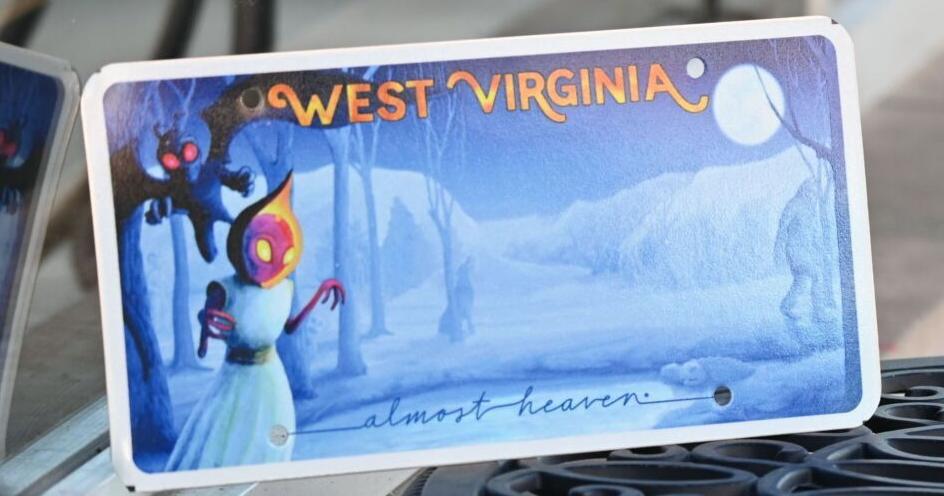
West Virginia Unveils New License Plate Featuring State Cryptids
“Now, contrary to popular belief, the DMV does have a sense of humor!” West Virginia Division of Motor...