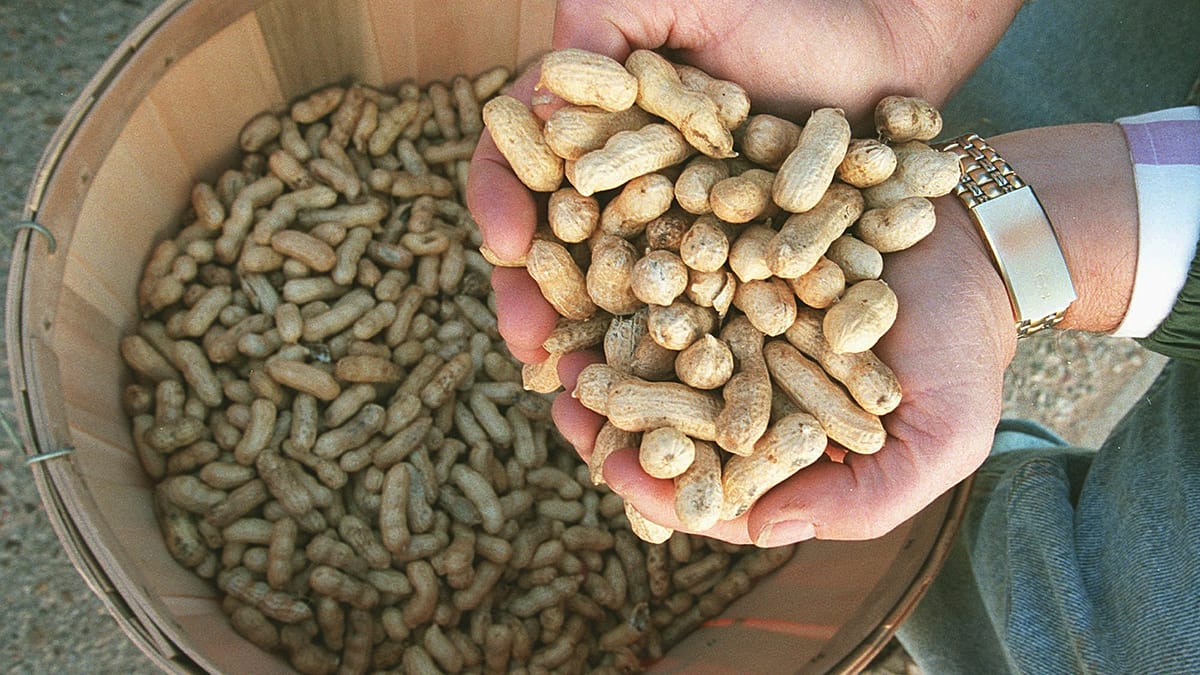
According to a recent study published in the journal Food & Function, investigators at the Maastricht University medical centre in the Netherlands observed that volunteers who consumed 60 grams of unsalted, roasted peanuts with their skins daily across a 16-week duration exhibited enhanced insulin sensitivity in specific right-hemisphere brain zones, encompassing regions of the hippocampus, parahippocampal gyrus, lingual gyrus, and posterior cingulate gyrus—all of which play key roles in memory operations and alternative cognitive tasks.
If you have ever wondered whether a simple afternoon handful of nuts does anything more than satisfy a craving, a new clinical trial offers a specific physiological answer. Researchers tracking the daily habits of 31 healthy adults aged 60 to 75 found that regular peanut consumption measurably alters how aging brains process insulin, a hormone critical for memory and nerve cell communication.
How Maastricht Researchers Tracked Brain Blood Flow
The experiment, conducted at the medical centre at Maastricht University, required participants to consume 60 grams of roasted peanuts daily with their skins and without salt for a strict 16-week period. Scientists then compared these outcomes against a separate control period when participants abstained from eating peanuts entirely. To capture the shifts in neural activity, the team delivered insulin directly to the participants through the nose and deployed magnetic resonance imaging based on arterial blood labelling.
This imaging technique measured real-time changes in blood flow across specific regions in the right hemisphere of the brain. The results mapped noticeable improvements in insulin response within the hippocampus, the parahippocampal gyrus, the lingual gyrus, and the posterior cingulate gyrus. These distinct anatomical zones govern human memory processes and vital cognitive functions. As people age, the brain’s sensitivity to insulin frequently declines, a physiological shift closely tied to age-related cognitive decline.
Building on Earlier Vascular and Verbal Memory Data
These findings do not appear in isolation. They directly build upon previous research published by the same team in the journal Clinical Nutrition in 2025. That earlier intervention tracked identical dietary protocols and revealed a 3.6% increase in total blood flow to the brain alongside a 5.8% improvement in verbal memory over the same 16-week stretch.
Scientists point to the complex nutritional composition of peanuts to account for these physiological shifts. Beyond plant proteins, peanuts supply unsaturated fats, fibre, vitamins, minerals, and biologically active plant compounds. They also serve as a source of L-arginine, an amino acid that the human body utilizes to produce nitric oxide, a compound that helps regulate blood vessel functions and may be linked to learning and memory processes.
What Remains Unclear About Long-Term Cognitive Health
Despite these encouraging vascular measurements, the researchers draw a firm line between improved insulin responsiveness and the prevention of neurological disease. The study did not demonstrate that eating peanuts prevents cognitive decline or stops dementia from developing. Furthermore, because the study included only 31 volunteers, these specific markers remain insufficient to definitively prove that consuming peanuts shields individuals against Alzheimer’s disease or related forms of dementia.
Larger clinical trials tracking participants over longer periods will be necessary to establish whether these observed vascular and hormonal shifts translate into lasting cognitive preservation. Until those extensive studies are completed, the daily handful of peanuts remains a dietary addition with measurable metabolic effects.


UCD awards Ulysses Medal to astrophysicist Dame Jocelyn Bell Burnell
When University College Dublin awarded the Ulysses Medal to astrophysicist Dame Jocelyn Bell Burnell, it added her name...

Maynooth University Researchers Develop Cooling Insole to Prevent EB Blisters
Researchers at Maynooth University are developing a specialized shoe insole designed to prevent the painful blistering associated with...

Philippine Army 6th Infantry Division Boosts Assets for Battalions
“The additional equipment included 19 K3 machine guns and M60 machine guns distributed to the 57th, 6th, 40th...