
A US-funded vaccine trial on newborns in Guinea-Bissau has been cancelled after the World Health Organization raised alarms that the study would have withheld a proven hepatitis B vaccine from a control group of babies, the BBC reported.
One in five carry the virus
Nearly one in five people in Guinea-Bissau lives with hepatitis B, a virus that attacks the liver and, when passed to a newborn in the earliest days of life, kills up to 25% of those infected, mostly through liver failure or liver cancer that develops silently over decades.
WHO: no protocol, no ethical case
Walter Kazadi Mulombo, the WHO representative in Guinea-Bissau, told the BBC the agency first became concerned after receiving questions about the study from outside observers and then finding that no publicly available protocol existed for independent review. The main objection was that the trial would have withheld an intervention already proven to protect newborns from a control group of infants, leaving them deliberately unprotected in a country where the virus is widespread and the stakes are life-threatening.
“The vaccine has been used for more than 30 years in more than 115 countries,” Mulombo said. “A study that will withhold that intervention from other newborns is unethical.”
Babies can be exposed during childbirth if their mothers are infected, and later in life through close contact and bodily fluids. In a country where nearly a fifth of the entire population carries the virus, that window of exposure is wide and immediate from the moment of birth.
Six weeks is too late
Guinea-Bissau currently vaccinates children against hepatitis B at six weeks of age. That schedule leaves newborns vulnerable during their first weeks of life and is less effective than administering the vaccine at birth, when the risk of mother-to-child transmission is at its peak and the consequences of infection are most severe. Those infected during infancy are particularly likely to develop chronic infections, which kill up to 25% of people, mostly through liver failure or liver cancer, according to data published in 2020. The virus can remain dormant for years before causing catastrophic damage to the liver.
2028 becomes next quarter
The country had been expected to add the birth-dose vaccine to its routine immunisation schedule in 2028, but officials are now considering introducing it in the first quarter of next year, Mulombo said, as the WHO works alongside the government to bring forward the vaccine that offers immediate protection to newborns at the moment of highest risk.
For the mothers and infants of Guinea-Bissau, the move means trading a 2028 timeline for the first quarter of next year, potentially closing the vulnerability gap between birth and the six-week vaccination, and offering newborns the same protection that has been standard in more than 115 countries for over three decades.
Related reading

DataReportal report shows Latvia’s mobile connections at 148% of population
In late 2026, Latvia crossed a threshold that sounds like a mistake: 2.71 million active cellular mobile connections...

Google Runs AI Model in Orbit, Transmits Poem to Earth
Google confirmed on October 30 that its Project Suncatcher prototype has run an artificial intelligence model in orbit...

Galway City Ring Road: Cycling Campaigner Withdraws Challenge, Paving Way for Public Consultation
The last legal obstacle blocking the Galway City Ring Road fell away this week when cycling campaigner Shane...
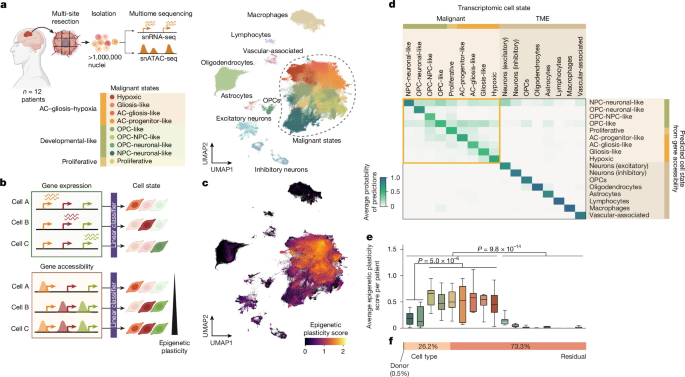
Mapping Glioblastoma Plasticity: A Million-Cell Multiome Atlas Reveals Predictable Cancer Cell States
For years, glioblastoma has been described as a chaotic disease. The most common and lethal brain cancer in...