Military Leaders Prioritize Data Over Superintelligence
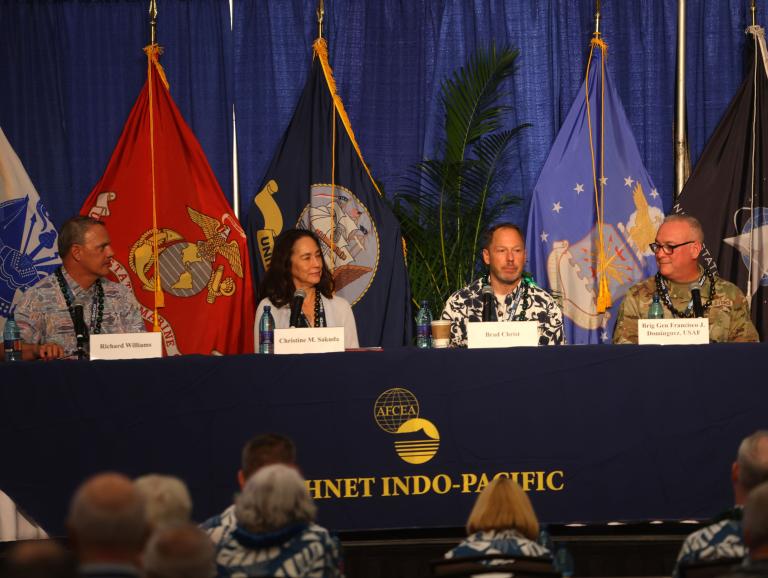
Technology experts at the TechNet Indo-Pacific 2026 conference in Honolulu issued a warning: military and state operations must overhaul their data strategies and workforce training before attempting to adopt superintelligence. The shift requires moving beyond traditional tactical memorization toward a new standard of algorithmic skepticism.
The Operational Hurdles of Naval Intelligence
Richard G.K. Williams, technical director, N6, U.S. Pacific Fleet, identified data as key in the evolution of super intelligence (SI). Speaking to attendees, Williams argued that the current trajectory of naval operations relies too heavily on rigid software tools. “Before we aggressively move toward SI, we really need to look at the data strategy and data problem,” Williams stated.
Training the Critical Supervisor
The transition demands a new type of sailor and marine. Rather than merely operating software, personnel must evolve into critical supervisors. This role requires the ability to manage automated agents, identify model drift, and verify the integrity of authoritative data sources. According to Williams, this human layer of oversight is non-negotiable: “With regards to SI and our workforce, we must educate, train and prepare our workforce to leverage SI, but also be prepared in the event it fails, so that traditional capabilities still exist.”
Administrative Bottlenecks in State Governance
These challenges are not confined to the front lines. Christine M. Sakuda, State of Hawaii Chief Information Officer, noted that civilian agencies face a structural backlog in data readiness. While cybersecurity infrastructure is established, the actual utility of state data remains low. “The state government has so much data across its executive branch that relates to the Department of Land and Natural Resources, or the Department of Human Services, and the Department of Health, and much of that data is not in a format that we can actually leverage today,” Sakuda noted.
Keep reading

Darryl Barnes Identified After Fatal Shootout With Louisville Police
A 30-year-old Louisville man was identified Wednesday as the individual who died in a motel room following a...
Beth Hoffman: Iowa Poll Watching Raises Intimidation Concerns
In a recent column for In the Dirt, Beth Hoffman argues that the atmosphere at Iowa polling places...

Julie Blackmon argues Betsy Fogle is vital for Missouri healthcare
In a column for the Springfield Daily Citizen, Julie Blackmon argues that State Rep. Betsy Fogle is qualified...

Should Lions Trade for Buckner and Ward? AToZ Sports Analyzes
The Indianapolis Colts have officially entered a selling phase, trading away Pro Bowl guard Quenton Nelson to the...