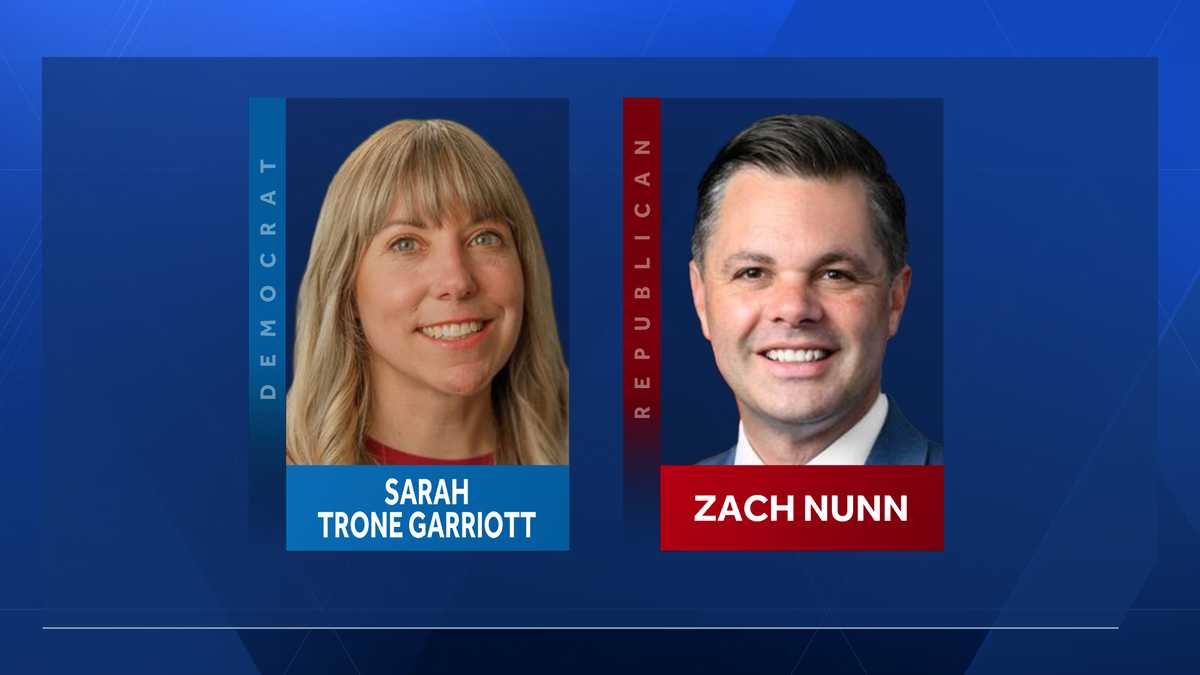
Iowa’s 3rd Congressional District Debate: Zach Nunn and Sarah Trone Garriott Face Off
Iowa’s 3rd Congressional District voters face a clear choice between incumbent Republican U.S. Rep. Zach Nunn and Democratic challenger Sarah Trone Garriott, a state senator, as both candidates met in KCCI TV studios in Des Moines for their only debate before the November election.
Nunn is seeking a third term in the U.S. House, while Trone Garriott looks to flip the seat. An infographic presented during the coverage compared their stated positions across a broad slate of issues, including the economy, health care, abortion, immigration, education, water quality, and national defense, according to KCCI.
Clashing on Transgender Issues and Statehouse Records
The debate quickly sharpened when Nunn criticized Trone Garriott for votes she’s taken on transgender issues while serving in the Iowa Senate. Nunn directly targeted his opponent’s legislative track record during the Des Moines matchup.
She is in the extreme element of her party that does not want to protect girls in sports, in the locker room. Even her own colleague…Josh Turek today has highlighted the fact that this is wrong and should be stopped. — U.S. Rep. Zach Nunn
Turek, the Democrat running for Iowa’s U.S. Senate seat, is currently running an ad opposing males competing in female sports. Defending her record, Trone Garriott countered that her votes reflected an effort to stand up for parents.

“I believe that we make much better decisions when parents are involved because parents are the ones who are there, who can see the circumstances, they can understand what’s at stake, and they make the best decisions for our community,” Trone Garriott said.
Trone Garriott Criticizes Nunn over Defense Leadership
National defense and ongoing foreign conflicts also drew sharp disagreements between the two campaigns. Trone Garriott criticized Nunn for having U.S. Defense Secretary Pete Hegseth headline a campaign fundraiser this summer, pledging to join a bipartisan push to remove Hegseth from his post if elected.
“We need good leadership in the Department of Defense, a careful plan, a clear strategy and we haven’t had this with this war,” Trone Garriott said, referencing the ongoing war involving Iran. “From the start, it was a chaotic mess and we kept getting promised that it would come to end…and there’s no end in sight.”
Nunn defended his legislative actions regarding military authorization. He noted that after opposing resolutions to end the war, he voted to withdraw President Trump’s authority to continue the conflict because conditions on the ground had shifted.
“For the entire first part of the year we were in open peace negotiations. I had trusted both the president and the administration to be able to execute on that,” Nunn explained. “When those things changed we said that we have to have a battle plan for what we do for our men and women in uniform for what we do with our conflict with Iran.”
Both candidates agreed that Iran should never be allowed to possess a nuclear weapon.
Candidates Spar over Release of Epstein Files
The candidates also sparred over government transparency and the release of the Epstein files. Trone Garriott accused Nunn of dragging his feet before ultimately voting last November to release the documents. Nunn countered that he opposed earlier release plans because the names of Epstein’s victims would have been exposed to the public.
With early voting underway and Election Day approaching, voters in Iowa’s 3rd District must weigh these conflicting legislative records, defense stances, and approaches to constituent advocacy.
Keep reading

How Dinner to Go Supports Augusta Health Mobile Medical Care
Between October 1, 2025, and September 30, 2026, Augusta Health’s Mobile Medical Unit provided 553 patient visits to...

$13.7 Million Road Project Planned for 45th Street in Bel Aire
The city of Bel Aire is moving forward with a $13.7 million road overhaul of 45th Street, a...

399,900: Historic Lumber Baron Home for Sale in Loyalsock
A mountainstone estate at 220 Northway Road in Loyalsock Township is now on the market for $399,900, marking...

Darryl Barnes Identified After Fatal Shootout With Louisville Police
A 30-year-old Louisville man was identified Wednesday as the individual who died in a motel room following a...