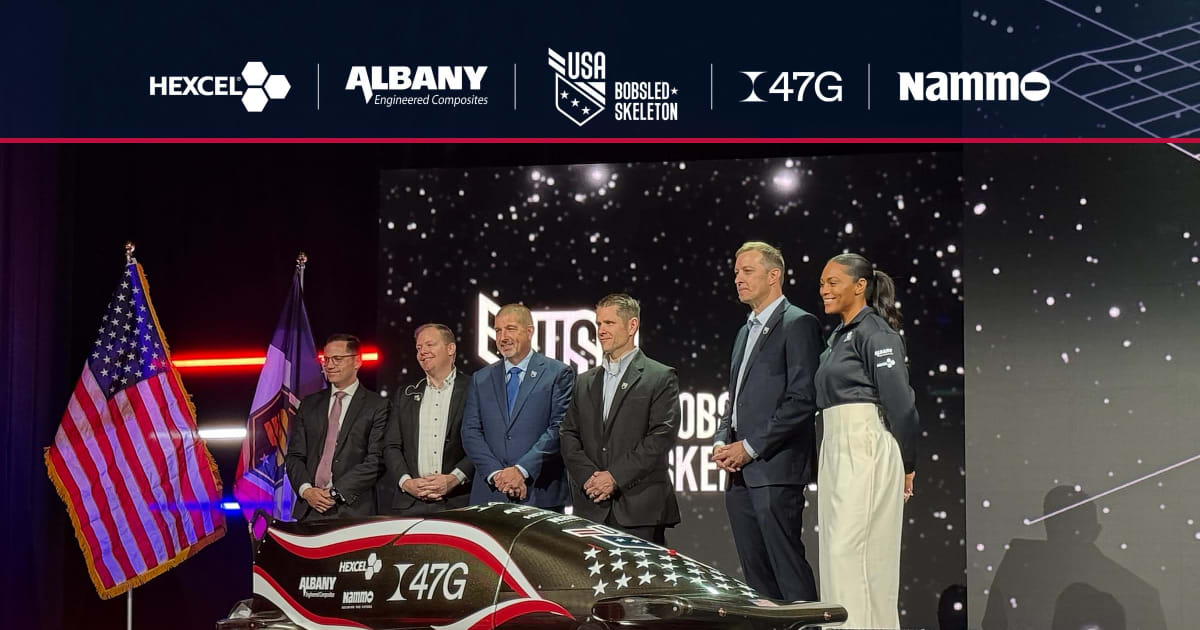
Hundredths of a second. In the world of elite bobsled and skeleton, that is the difference between a gold medal and an empty podium. It is a sport where the physics of the sled—its weight, its aerodynamics, and the structural integrity of its shell—are just as critical as the explosive power of the athlete at the start line. To close that gap, USA Bobsled/Skeleton (USABS) is turning to the people who build missiles and aircraft.
In an announcement made Oct. 28, 2026, during the Zero Gravity Summit in Salt Lake City, USA Bobsled/Skeleton reported a new strategic partnership with a consortium of aerospace and defense leaders including 47G, Albany Engineered Composites, Hexcel, and Nammo Composite Solutions. The goal is simple but ambitious: take the high-performance composite materials used in the world’s most demanding flight environments and apply them to the cowlings of American bobsleds.
Aerospace materials hit the ice
The partnership moves the development of USABS equipment into the realm of “deep tech.” Rather than relying on traditional sporting goods manufacturing, the team will now utilize advanced carbon-fiber and composite engineering to shave precious milliseconds off their run times. The division of labor among the partners is precise.
Albany Engineered Composites will handle the manufacturing of next-generation composite cowlings for the four-man bobsleds, while Nammo will produce the carbon-fiber cowlings for the two-man sleds. Hexcel is providing the foundational expertise in advanced composite materials—the same kind of lightweight, high-strength substances required for unmanned systems and military aircraft.
This isn’t just about making a sled lighter; it’s about structural rigidity and aerodynamic efficiency. When a sled hits peak velocity, the air resistance and the G-forces in the curves put immense pressure on the hull. Aerospace composites are designed specifically to maintain their shape and strength under those exact types of extreme stressors.
“Our athletes give everything they have to find those hundredths of a second, and they deserve equipment that matches their commitment,” said Aron McGuire, CEO of USA Bobsled/Skeleton.
The road to home ice in 2034
The timing of this partnership is not accidental. With Salt Lake City set to host the 2034 Olympic and Paralympic Winter Games, USABS is playing a long game. By aligning with Utah-based aerospace firms, the team is creating a localized innovation loop. Athletes already train at the Utah Olympic Park in Park City; now, the engineers building their equipment operate in the same state.
This proximity allows for a tighter feedback loop between the pilot and the manufacturer. Kaysha Love, a two-time Olympian and the 2025 Women’s Monobob World Champion, noted that having aerospace engineers on the project provides a psychological edge, allowing athletes to focus on performance while the technical side is handled by specialists.
For the companies involved, the move is a showcase of “dual-use” technology. The ability to pivot a material designed for a missile casing to a bobsled cowling demonstrates the versatility of Utah’s growing aerospace ecosystem. Aaron Starks, president and CEO of 47G, the organization that brokered the partnership, framed the move as a way to showcase the state’s talent and research capabilities to a global audience well before the 2034 torch is lit.
The tension between tech and athleticism
In sports like bobsled, few depend more on equipment, where the design and engineering of a sled can determine the winner.
By linking the Olympic legacy to the aerospace sector, Utah is showcasing an ecosystem where advanced manufacturing, aerospace, and deep tech intersect.
“Advanced composite technology has helped transform aerospace by enabling engineers to design components that are strong, lightweight, and capable of performing in some of the most demanding environments,” said Jeff Daniel, vice president, commercial segment at Albany Engineered Composites.
The aerospace industry is used to testing in wind tunnels and vacuum chambers; now, they’ll be testing in the frozen chutes of Park City, where the margin for error is non-existent and the reward is a glimpse of gold in 2034.
Worth a look

Maine Department of Labor reports 4,720 approved paid leave claims
Thousands of Maine workers are now accessing paid time off for childbirth, serious illness, and family care thanks...
Odenton MARC Station Breaks Ground on $56M Commuter Garage
Governor Wes Moore, County Executive Steuart Pittman, and regional transit leaders broke ground on October 28, 2026, for...

Frankfort vs. Independence: Win Streak Meets Stout Defense
The Class AA No. 1 Frankfort Falcons enter Friday night's matchup against the No. 6 Independence Patriots. With...

Masterson and Holscher battle over property tax relief in Kansas race
Kansas voters will decide between different approaches to addressing surging property taxes across the state. Republican gubernatorial nominee...