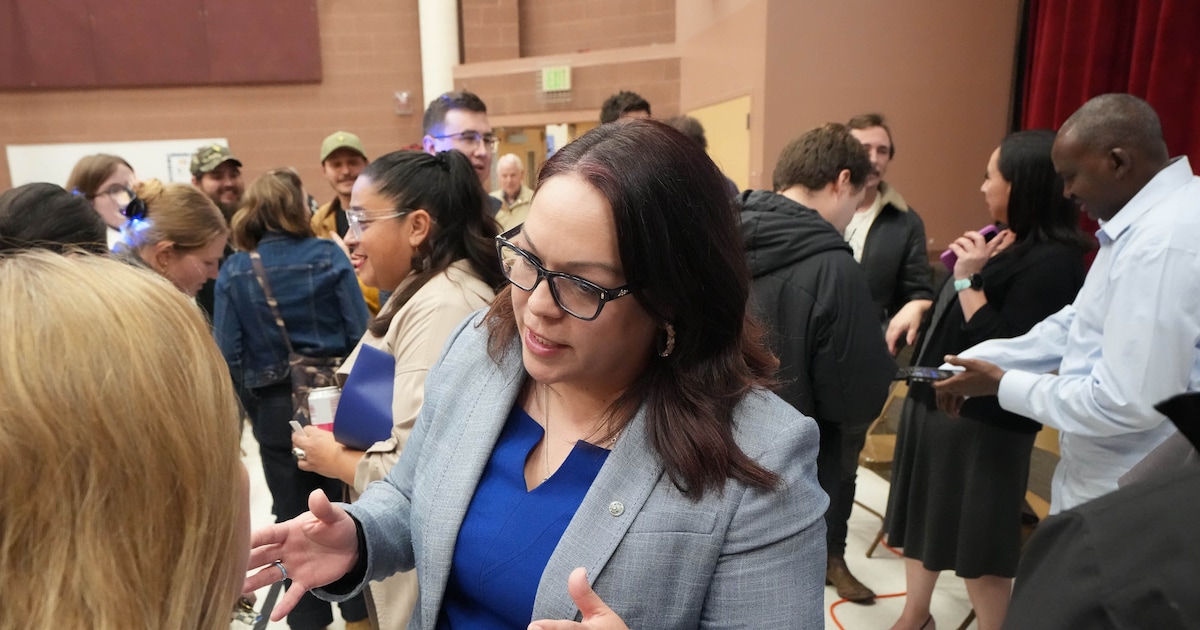
“Tuesday was a very clear message on where Americans are when it comes to the way people have been treated,” Senate Minority Leader Luz Escamilla told a crowd of approximately 75 attendees at Rose Park Elementary on Tuesday, Nov. 10, 2026.
The sentiment reflected changing Utah politics, where Democrats are seeing momentum translate from national trends into local legislative influence, The Salt Lake Tribune reported. Early returns from last week’s general election suggest the state's House of Representatives is realigning, with at least a dozen seats appearing to flip from Republican to Democrat.
This shift is substantial enough to end the Republican supermajority in that chamber. For the 28 Democratic representatives now serving in the House, the new math changes how policy is negotiated and how the minority party exerts pressure on the remaining GOP majority.
A shift in House dynamics
House Minority Leader Angela Romero, a Democrat from Salt Lake City, noted that the party doubled its numbers in the Utah House of Representatives. The success included the election of a Democratic member from Provo, a move that drew applause from the community members gathered on Salt Lake City’s west side.
The victory in Provo saw Democratic socialist David Chappell defeat incumbent Republican Rep. Norm Thurston, who had held the seat for nearly 12 years. Romero characterized the election results not as a simple increase in Democratic turnout, but as a specific reaction to the current Republican caucus.

“I don’t think we increased Democrat turnout. This was a referendum on our Republican colleagues,” Romero said.
Romero emphasized that the expanded caucus must work in unison to “hold our Republican colleagues’ feet to the fire.”
The impact of these results extends beyond the statehouse to the federal level. With Ben McAdams winning in the redrawn 1st district, the Utah Democratic caucus expects more power to advocate for the protection of public lands.
Legislative priorities and bipartisan hurdles
While the Democratic caucus enters the upcoming session with increased numbers, they face a legislature where Republicans still hold the majority. This reality necessitates a pragmatic approach to lawmaking. Senate Minority Leader Luz Escamilla noted that the changes in the House will bring about “a completely different dynamic,” but cautioned that progress depends on communication.
“We don’t pass a single bill if we don’t work in a bipartisan way as Democrats in Utah,” Escamilla said. She noted that her ability to converse with Republican colleagues and bring different perspectives has been vital in preventing certain immigration bills from passing during the last session.
For some lawmakers, the election results provide a renewed sense of possibility for specific policy goals. Rep. Rosalba Dominguez of Murray expressed hope that a major immigration bill aimed at protecting people in state-funded safe-haven spaces might finally have a viable path forward.
Other incoming and sitting representatives are preparing to tackle a variety of local issues. Rep.-elect Stephen Otterstrom, whose district includes the west side of Salt Lake City, mentioned that the caucus is looking to develop legislation regarding:
- Child abuse prevention
- Hate crime protections
- Daycare costs
- Property taxes
Senator Jen Plumb warned that the loss of the Republican supermajority might trigger a defensive posture from the remaining GOP leadership. “We’re going to see some defensiveness that is going to require us to be steady and consistent, and also remain committed to the principles that we champion in our folks,” Plumb said.
The official results of the election remain subject to the standard canvassing process. Vote counts will be official once the statewide canvass is completed on Nov. 23.
Related reading

Pinedale Home Prices Rise as Mayor Tracks Loss of Public Workers
Pinedale home prices have climbed by roughly $200,000 in recent years as the Wyoming town struggles to balance...

Milwaukee Residents Weigh in on New Midtown Center Branch Library Design
Milwaukee Public Library officials and architects met with community members on Tuesday to discuss the future of the...

The History of Hartline and the Development of Grant County, Washington
Voters approved the incorporation of Hartline by a margin of just three votes on February 2, 1907, according...
Richmond Marathon Will Cause Rolling Road Closures This Saturday
Sold-out crowds of runners will traverse Richmond on Saturday morning for the annual Richmond Marathon, its companion half-marathon,...