
Vera Gottliebe Anna Gräfin von Lehndorff-Steinort, known globally as Veruschka, died on Tuesday at her home in Berlin at the age of 87.
Father Executed for Plot Against Hitler
Born on May 14, 1939, in Königsberg, East Prussia—now Kaliningrad, Russia—Veruschka grew up through World War II. Her father, Count Heinrich von Lehndorff-Steinort, was a member of the German resistance executed in September 1944 for his involvement in the July 20 plot to assassinate Adolf Hitler. Her family settled in Hamburg after the war, and she studied art before moving to Florence, Italy.
Italian photographer Ugo Mulas discovered her at age 20, drawing notice for her statuesque 1.85-metre frame. Moving between Paris, New York, and Munich, she adopted the moniker Veruschka and quickly rose to prominence. She graced “the cover of American Vogue 13 times” and collaborated extensively with top image-makers of the era.
Richard Avedon called her the most beautiful woman in the world.

Collaborated with Top Designers and Avedon
At her peak, Veruschka commanded up to $10,000 a day while working alongside designers such as Yves Saint Laurent, Karl Lagerfeld, and Valentino. Among her most ambitious projects was a 26-page Vogue spread titled “Great Fur Caravan,” shot over five weeks in Japan by Richard Avedon at a cost of $1 million.
Beyond traditional editorials, she pioneered body-painting photography, beginning with a 1966 shoot where she wore only paint. After stepping back from commercial modeling in 1975 due to creative friction with then-editor Grace Mirabella—who wanted her to adopt a more conventional lifestyle—Veruschka collaborated with sculptor and painter Holger Trülzsch on avant-garde self-portraits that made her painted figure dissolve into forests or building facades.
Film Cameos and Activism Across Decades
Her cinematic presence included a famous appearance playing herself in Michelangelo Antonioni’s 1966 cult film Blow-Up, opposite David Hemmings. Decades later, she returned to the screen as a high-stakes poker player in the “2006 James Bond film Casino Royale”, sharing a scene with Daniel Craig.
Though largely retired from the runway, she occasionally returned, appearing for Chanel in 1994, Giles Deacon in London in 2011, and fronting an Acne Studios lookbook in 2017.
Tributes From the Fashion Community
News of her death brought an outpouring of tributes from former collaborators and friends. Her former partner and photographer Franco Rubartelli, with whom she had recently reunited after five decades of no contact, shared an emotional statement on Instagram.
“It hurts to know that I had her close again only to learn how to let her go. And yet I'm grateful for that brief miracle. Grateful to have heard from her again, to know her light had not gone out, to know she was still the remarkable woman I remembered,” her former partner and photographer Franco Rubartelli said.

Additional remembrances came from figures across the industry, including photographer Nigel Barker, who recalled her humility and grace during a 2001 shoot. Her sister, Catharina Kappelhoff-Wulff, confirmed her passing through her company, noting that parts of Veruschka’s estate have been donated to the East Prussian State Museum in Lüneburg.
Honoring the Legacy of an Icon
American’s Next Top Model judge Nigel Barker said via Instagram that the model assisted in revolutionizing fashion photography. He recalled working with her in 2001, stating that she remained exceptionally humble on set with his entire team.
British Vogue detailed that photographer Richard Avedon characterized her striking appearance as a look that demands something extraordinary, requiring people to extend themselves to meet the challenge or risk losing a unique splendor forever.

Early Adversity and Artistic Pursuits
During the wartime period, her family suffered detention in forced labor camps until the conflict ended, and she attended 13 distinct schools while growing up. After moving to Paris, she encountered Eileen Ford of Ford Models before relocating to New York in 1961. She was represented for a time by the Stewart Modeling Agency, where she boasted a wall featuring more magazine covers than any other model.
Her cinematic career extended beyond her famous role in Antonioni’s film to include participation in various other productions such as ‘Veruschka: Poetry of a Woman,’ ‘Salomé,’ ‘Flesh Color,’ ‘Dorian Gray in the Mirror of the Yellow Press,’ ‘The Bride,’ and the 2005 biographical documentary ‘Veruschka: Die Inszenierung (m)eines Körpers.’ In addition to her visual and cinematic endeavors, she also worked closely with Helmut Lang and Paco Rabanne starting in 1990, walked as a guest model at the Melbourne Fashion Festival in 2000, and later took part in London Fashion Week.
Following World War II and the city’s occupation, Berlin was split into West Berlin and East Berlin, divided by the Berlin Wall, with East Berlin declared the capital of East Germany. In later life, following German reunification in 1990, Berlin once again became the capital of all of Germany.
Reflecting on her early entry into the industry, she said her initial perspective was one of wide-eyed naivety, viewing her profession as an escape into an entirely new existence where she used her physical form as an instrument and an avatar for constant metamorphosis. Her literary contributions included the release of her autobiography, ‘Veruschka — Mein Leben,’ published in 2011. “the shape-shifting supermodel who defined an era”, Vogue's obituary said.
Keep reading
WEF Urges ASEAN to Adopt Common Carbon Standards, Link Registries
The World Economic Forum has urged Southeast Asian nations to establish common standards for carbon credits, connect their...

Myanmar Rejects ‘Inappropriate’ Parts of ICJ Genocide Ruling
Myanmar’s leader Min Aung Hlaing has said the country will not comply with “inappropriate” parts of a landmark...
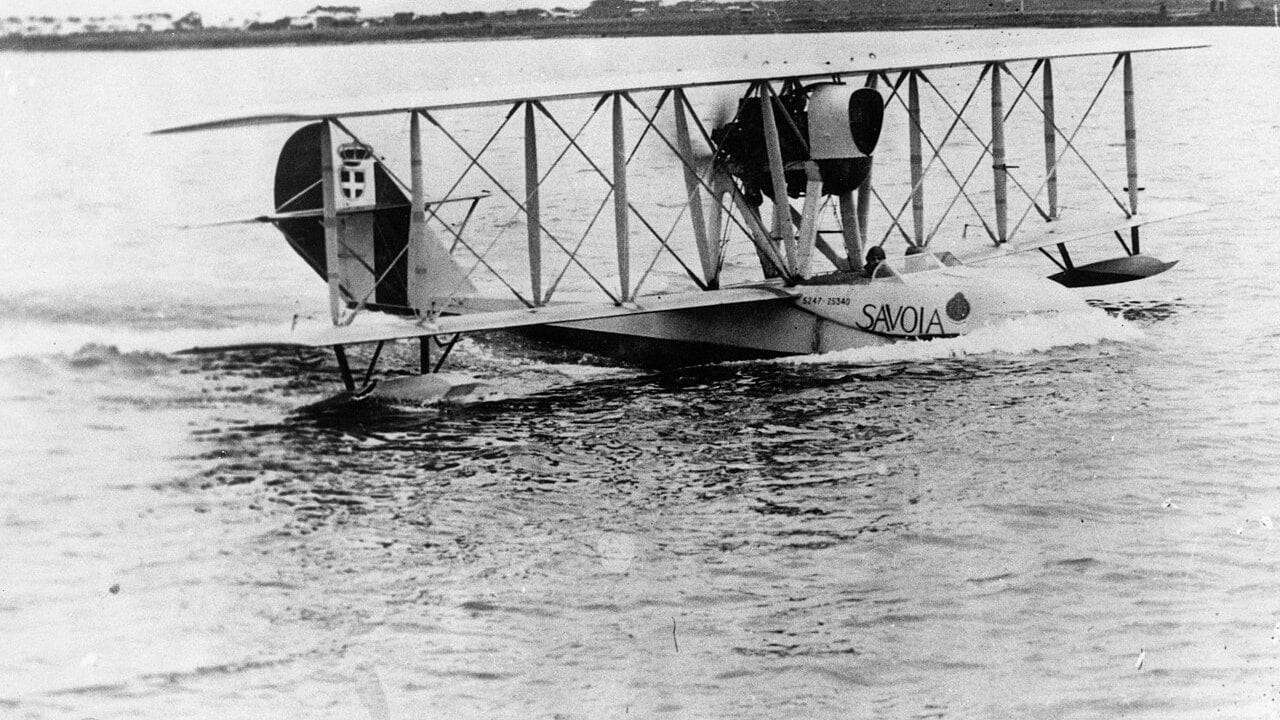
Francesco de Pinedo Completes 55,000 km Rome-Melbourne-Tokyo Flight in Flying Boat Gennariello
Francesco de Pinedo completed an aerial tour of about 55,000 kilometres on 7 November 1925, touching three continents...

Trump Announces New Tariffs on EU, China; Ireland Pharma Excluded
The Trump administration announced new tariffs on 14 major trading partners Wednesday, including the European Union and China,...