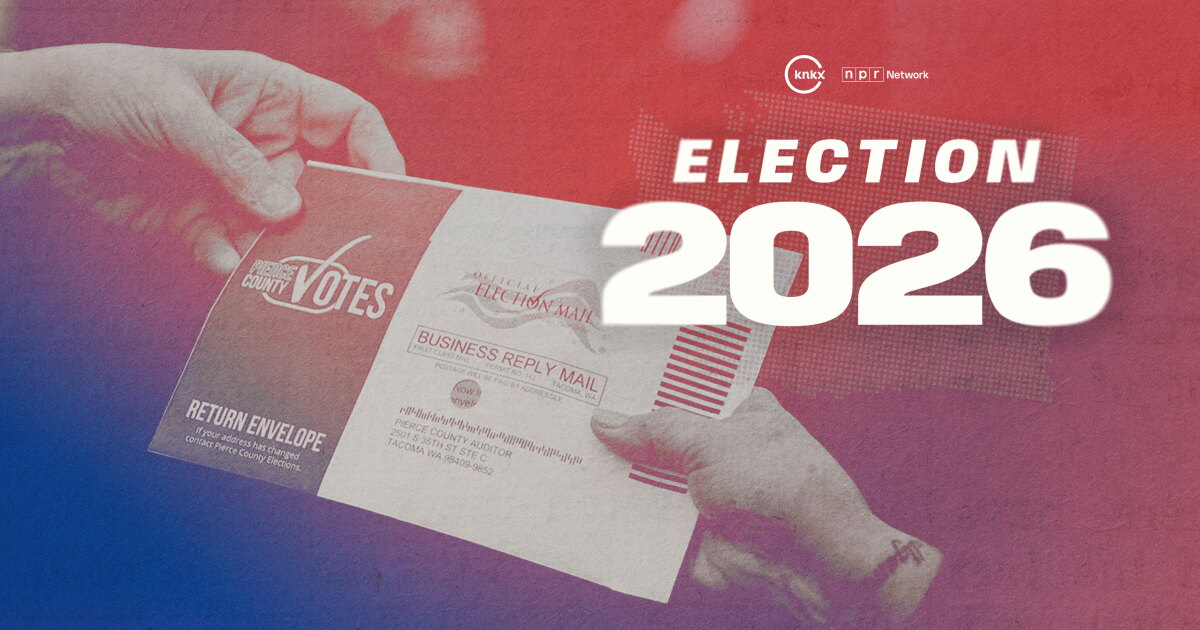
With a majority of ballots counted Tuesday night, 58% of Washington voters have rejected Initiative 645, the conservative-backed effort to repeal the state’s new 9.9% tax on income above $1 million — a levy the state Office of Financial Management estimates will collect more than $11 billion over its first three years, starting with $3 billion in the first year alone. KNKX Public Radio reported the returns as they came in across Western Washington, with all three statewide measures still being tallied into Wednesday.
Three initiatives backed by the political action committee Let’s Go Washington were on every voter’s ballot this election, and early returns show a split verdict: the high-earner tax survives, the expanded Parents’ Bill of Rights appears headed for defeat, and a ban on transgender girls in girls’ school sports is pulling ahead.
The Millionaires Tax Survives a $500,000 Test Case
Initiative 645 asked voters to repeal the tax that the state Legislature passed and Gov. Bob Ferguson signed into law in March. The tax takes effect in 2028, with the state collecting its first payments in 2029. Under the law, only income above $1 million is taxed at 9.9% — so someone earning $1.5 million would owe $49,500, paid on the $500,000 above the threshold. You can read the official ballot title and summary from the Washington Secretary of State and the Legislature’s summary of the measure.
Let’s Go Washington collected more than 500,000 voter signatures to put the repeal on the ballot, arguing that voters have historically rejected income-based taxes and urging a “no” vote as a message that any income tax is unwelcome. Supporters warned that an income-based tax could be amended later to reach lower earners. Ferguson said he would veto any legislation lowering the $1 million threshold, and Senate Majority Leader Jamie Pedersen, a Seattle Democrat, said such bills would not be viable — though at least one Democrat has expressed interest in taxing people earning $250,000 annually. The state Department of Revenue lays out how the tax rate applies.
The stakes were framed in dollars: labor unions including the Washington Education Association and the Washington Federation of State Employees campaigned against the repeal, centering their message on the revenue the state would lose while facing significant budget shortfalls through the biennium ending in 2027 and beyond, per the Washington State Economic and Revenue Forecast Council. The Office of Financial Management’s fiscal impact statement projects the $11 billion figure.
BREAKING: Initial results show Initiative 001 narrowly trailing, with 52.77% of votes counted opposed and 47.23% in favor. The measure seeks to restore the original 2024 parents’ bill of rights by undoing changes made by the Washington Legislature last year.…
Parents’ Bill of Rights Expansion Trails at 53%
Initiative 001, which would reinstate the 2024 version of the state’s Parents’ Bill of Rights, was trailing with 53% of counted votes rejecting it. The measure would expand the documents parents can request from schools to include health and counseling files, and would cut the time administrators have to produce records from the 45 days required under the federal Family Educational Rights and Privacy Act to just 10 days.
Let’s Go Washington pursued the measure after lawmakers amended the Parents’ Bill of Rights last year — amendments that survived a legal challenge in 2025 — removing references to medical and mental health counseling records to align the law with existing statutes. The group claims those revisions “stripped the right of parents to be informed about their children’s health care decisions.” The state Attorney General’s summary says the proposal largely reiterates rights parents already hold under state and federal law, while expanding what counts as education records.
Opponents organized under the banner No Hate in WA State, including the Washington State Coalition Against Domestic Violence & Sexual Assault and the Washington State Nurses Association.
“I-001 restricts student access to help for challenges like depression, sexual assault, domestic violence, bullying, and anxiety,” No Hate in WA State stated on their website. “While most parents are loving and supportive, the sad reality is not all kids are safe at home.”
Critics also argued the initiative was badly written — potentially delaying school notifications to parents when a crime is believed committed against their child, and allowing parents accused of such a crime to access sensitive documents. Proponents countered that schools should not be able to withhold information from parents and legal guardians.
Transgender Athlete Ban Pulls Ahead at 57%
The third measure, Initiative 638, was leading with 57% of initial votes in favor. It would ban transgender girls from competing in girls’ school sports regulated by the Washington Interscholastic Activities Association and require healthcare providers to verify children’s biological sex. Every girl wishing to compete in girls’ sports would have to undergo medical testing to determine birth sex — via genital exam, testosterone hormone test, or chromosome test.
Supporters argue the ban protects fairness in girls’ sports, saying students assigned male at birth carry physical advantages. Opponents say it marginalizes transgender students and would subject all girls playing school sports to unnecessary medical testing, potentially discouraging participation. Washington has had no restrictions on student sports participation for nearly 20 years; current policy lets students compete in the sport that aligns with their gender identity. If passed, Washington would be among the first states to require medical testing rather than simply a birth certificate, and one of the few Democrat-led states with such a ban.
Final results on all three measures are expected to be updated again Wednesday. See all election results on the Washington Secretary of State’s website.
What stands out across the three initiatives is how differently voters weighed the same conservative playbook: they protected a tax aimed at the state’s highest earners, pushed back on expanding parental access to student records, and backed restricting who can play on girls’ teams.
Related reading

Democrats sweep US midterms as markets rally and oil Plunges 9%
On Wednesday, Democrats swept the U.S. midterm elections. Eastern, Wall Street staged its sharpest rally in over a...
Democrats sweep Wisconsin races, Seize legislative chambers
Democrats now control every statewide office and both chambers of the Wisconsin Legislature for the first time in...

Dining server positions at Sunrise Senior Living in Cheyenne, Wyoming, are paying between $12.00
Dining server positions at Sunrise Senior Living in Cheyenne, Wyoming, are paying between $12.00 and $15.00 per hour,...

This Week in West Virginia History: Key Events and Anniversaries
On November 4 and 5, 1985, heavy rains triggered devastating floods across parts of West Virginia, killing forty-seven...