
Why strengthen a levee when there is no water in sight? Because floodwaters can reach areas that are normally dry, threatening homes, businesses, and infrastructure near Stockton, California. Through the Lower San Joaquin River Project, the U.S. Army Corps of Engineers Sacramento District is improving levees to reduce that flood risk before high water arrives, spk.usace.army.mil reported.
Addressing Seepage, Stability and Erosion
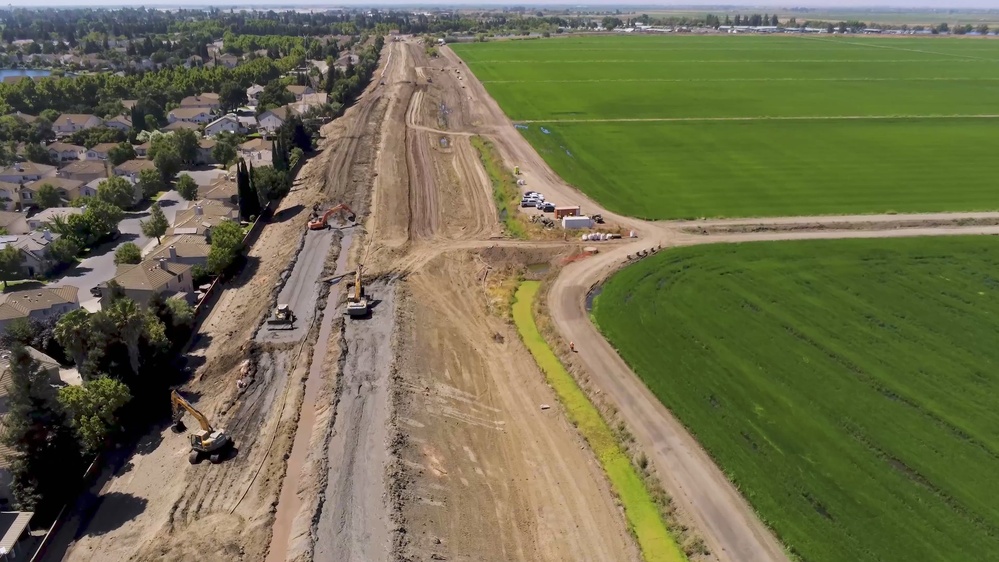
Levees often conceal vulnerabilities that remain entirely out of sight during dry conditions. Floodwater can seep directly through the earthen barrier or push underneath its foundation, while high-velocity flows can erode exterior surfaces. To counter these physical stressors, engineers are reshaping specific sections to improve overall stability, installing underground cutoff walls to block internal seepage, and laying heavy rock protection to resist surface erosion.
These methods are currently concentrated along a mile-long stretch of levee at Tenmile Slough as part of a much larger regional undertaking. When a major flood event unfolds, the window for emergency reinforcement closes instantly. The project timeline dictates that this heavy civil work must happen long before the first storm surge materializes.
The Scope of the Lower San Joaquin River Project
The overarching initiative extends far beyond a single drainage ditch or isolated embankment. As documented in video reporting by John Prettyman for DVIDS, the Lower San Joaquin River Project is designed to improve approximately 23 miles of levees while adding two crucial closure structures around north and central Stockton (DVIDS). These coordinated upgrades aim to lower flood vulnerability across an entire metropolitan fringe, protecting local communities from water paths that change drastically during severe weather events.
Flood risk is dictated entirely by where water can travel tomorrow, not by where dry riverbeds sit today.
Law Office Assistant | Jacksonville, Florida – LHH
A busy Jacksonville law firm is currently seeking a dependable Law Office Assistant to manage front-desk operations, vendor...

Man sentenced to 4 years in Danbury kidnapping tied to alleged $245M crypto heist
A 23-year-old St. Louis man received a four-year federal prison sentence on Wednesday for his role in a...

Northbound I-25 closing overnight in south metro Denver after construction ‘complication,’ CDOT says
Northbound Interstate 25 in Lone Tree will face overnight closures on Wednesday and Thursday as construction crews work...

Los Angeles sues Wagmor Pets over alleged “puppy laundering” operation – CBS News
Los Angeles Files Lawsuit Against Wagmor Pets Over Puppy Laundering Allegations The Los Angeles City Attorney filed a...