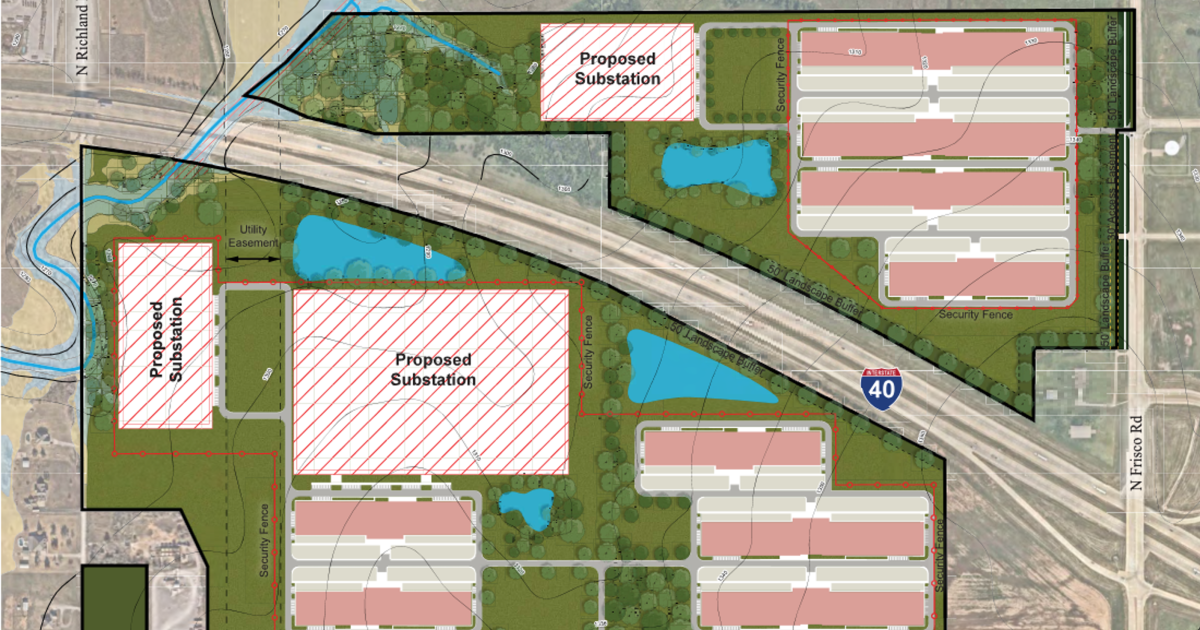
The Oklahoma City Council voted to approve a data center development, with city leaders warning that the green light should not be read as an open invitation for more.
The 284-facility planned unit development, spearheaded by developer Beltline Energy after months of exhaustive negotiations, will sit on the border between southwest Oklahoma City and Yukon in Canadian County, as KOSU reported. For months, this specific application has tested local patience, racking up more deferrals than any zoning case in the city’s history.
Yet, while the council ultimately cleared the project by an eight-member vote, the road getting here revealed deep anxieties over the footprint of modern artificial intelligence and cloud infrastructure. Mayor David Holt made it clear that the arduous negotiation process was an anomaly rather than a blueprint for future developments.
“I’m skeptical that that is replicable across the city moving forward. So I think it is important for people to understand: If this is approved today, I do not think that means that Oklahoma City is open for business for data centers.” — Mayor David Holt
A Tailored PUD to Curb Noise and Water Drain
To win approval, the developer had to agree to restrictions far tighter than standard industrial zoning typically demands. The Oklahoma Corporation Commission handles electrical agreements, but city leaders used the planned unit development mechanism to clamp down directly on noise and water consumption.

Hyperscale facilities rely heavily on massive gas-powered generators to keep servers running during power outages. Regular testing of these units often drives nearby residents out of their homes with low-frequency humming and industrial roars.
Under the Beltline agreement, sound caps have been set significantly lower than the national average for similar builds. Furthermore, mandatory testing windows are restricted strictly to weekdays between 10 a.m. and 4 p.m., shielding neighborhoods from night and weekend disruptions.
Water usage proved to be another critical flashpoint. The facility is capped at 75,000 gallons of potable water daily, restricted solely to domestic needs and fire suppression. According to OKC Utilities Director Josh Morgan, the developer explicitly ceded its right to apply for industrial groundwater permits from the state, settling for an allocation equivalent to a standard medium-sized business rather than the millions of gallons typical of liquid-cooled server farms.
The Moratorium Stays Put
The Beltline project sidestepped Oklahoma City’s broader municipal freeze only because its zoning plan was formally filed in August 2025, months before the city enacted a strict moratorium on large-scale data center zoning decisions. That moratorium is slated to expire at the end of the year.

Mayor Holt signaled that he intends to introduce a measure extending the pause for another six months. He emphasized that future applications will face hostile scrutiny on a strictly individual basis.
Ward 3 Councilwoman Katrina Avers, who represents the affected suburban corridor, championed the negotiations to ensure the development brought concrete tax revenue to local school districts and county infrastructure without overwhelming local roads or utilities. Avers argued that setting strict local boundaries forces incoming tech giants to respect neighborhood limits.
“We need infrastructure investment. We need public safety investment,” Avers said. “We need a well-rounded approach to economic development that involves a comprehensive plan that doesn’t just say agriculture until the next planned unit development comes along.”
Suburban Skepticism Persists
Not everyone is convinced the compromises go far enough. A handful of local residents voiced persistent opposition during the final hearings, pointing to the cumulative strain of multiple massive industrial projects clustered into a tight geographic footprint.

Yukon resident David Blankenship questioned how the city evaluates the combined environmental impact of several neighboring proposals spanning nearly 300 acres total. Even with professional sound studies factored in, local realtors like Stephanie Burdine argued that lower decibel limits still mean enduring constant industrial noise 24 hours a day.
Despite those warnings, the room saw remarkably sparse turnout compared to fiery data center hearings elsewhere across the country, which have frequently drawn hundreds of dissenting voices and police intervention. That relative calm was bought through months of painstaking compromise between Councilwoman Avers and jittery property owners.
With the first major digital infrastructure footprint now officially sanctioned, the city’s broader stance remains defensive. As Mayor Holt warned the council, the next application might simply hit a wall where the city decides it can absorb no more.
Keep reading

7,000 riders: Inside Utah’s NICA boom – Escape Collective
Soldier Hollow showcases the elite and the adolescent Thousands of spectators packed the hillside at Soldier Hollow last...

Harris County Sheriff’s Deputy Alexander Kristopher Cowley arrested, accused of child sexual abuse
Alexander Kristopher Cowley, an 11-year veteran of the Harris County Sheriff’s Office assigned to the Critical Incident Response...

ICE: Man arrested outside Nashville airport known or suspected Tren de Aragua gang member
The Nashville Airport Arrest That Upended Local Rideshare Rumors When federal agents moved in on a man outside...

WHY DID THE FRENCH SPEND THE DAY CALIBRATING THE MAST? – America’s Cup
The La Roche-Posay Racing Team spent a day at their Bagnoli base rigorously calibrating their AC75's mast and...