
The political landscape of Texas shifted dramatically following the midterm elections, as Democrats secured key statewide offices and the state House, setting the stage for a fundamental reassessment of how public institutions like the University of Texas at Austin are governed. With Gina Hinojosa defeating incumbent Governor Greg Abbott to become the state’s first Democratic governor in more than three decades, the incoming administration will be in charge of filling seats on the UT System Board of Regents. According to reporting from KUT, this transition arrives after two years of significant upheaval at UT Austin under Republican leadership, a period marked by the installation of new top administration, the cutting of various academic majors, and a major overhaul of the university’s core curriculum.
The implications of this political “blue wave,” as described by Yahoo, extend far beyond the governor’s mansion, reaching into the very halls of academia. While the shift in power is historic, the actual transformation of the University of Texas System will not happen overnight. The state manages its public universities through two primary mechanisms: the governor’s ability to appoint members to the UT System Board of Regents and the Texas Legislature’s control over budgets and operational policies. While the executive branch is turning blue, the Texas Senate maintains a Republican majority, creating a complex environment for the new administration’s agenda.
The slow process of reshaping the Board of Regents
Although Governor Hinojosa now holds the authority to appoint the nine voting members of the UT System Board of Regents, she faces significant structural hurdles. Most of the current regents serve six-year staggered terms, and six of the nine members are not scheduled for reappointment until 2029 or later. Under current rules, the governor cannot simply fire these officials. New appointments made by Hinojosa require confirmation by the Texas Senate, which remains under Republican control.
The timing of these changes may be dictated by upcoming expirations. Three regents’ terms are set to end next February, including Board Chair Kevin Eltife, a former Republican state senator who has been a central figure in UT Austin’s recent direction. Hinojosa has previously signaled her intent to prioritize academic freedom in her appointments, telling the University of Texas at Tyler student newspaper earlier this year that she would appoint regents who respect that principle. This stance directly contrasts with the recent tenure of the Republican-appointed board, which oversaw the implementation of Senate Bill 17 and Senate Bill 37.
These legislative tools have already fundamentally altered the university’s operations:
- Senate Bill 17: Prohibited “diversity, equity, and inclusion” (DEI) offices and programs at public universities.
- Senate Bill 37: Granted the governor-appointed regents expanded authority over university management and established a state office to investigate potential violations of higher education laws.
While these laws remain on the books, the level of their enforcement may change. Gary Susswein, a former UT spokesperson who now runs a strategic communications firm, noted that the true test will be how these policies are carried out by an incoming executive branch—including the governor, lieutenant governor, and attorney general—all of whom campaigned against these very laws. This creates a potential friction point between the state’s legislative mandates and the executive branch’s implementation.

Political tensions and the future of KUT Public Media
The debate over university governance has also placed a spotlight on KUT Public Media, Austin’s NPR station, which has been housed by the university for decades. Recent friction between the university and the station reached a head when UT Austin dismissed KUT general manager Debbie Hiott earlier this year. While the university cited mismanagement of the inaugural KUT Festival as the reason for the dismissal, KUT reported that internal records dispute that account. Hiott has since argued that the station should seek independence from the university to insulate itself from political volatility.
“To me, it doesn’t matter who is in the Legislature and it doesn’t matter who is in the executive branch of the state government when it comes to that issue. Ultimately, I just don’t think that KUT should be at risk of the whims of any political party.”
While KUT and KUTX remain editorially independent and are funded by community and business donations rather than state taxes or tuition, the station remains physically and administratively tied to the university structure.
The debate over academic direction and public trust
Art Markman, a former UT professor and senior vice provost who was dismissed last year due to what he described as “ideological differences,” believes the university has a massive opportunity to rebuild its reputation.

James Gates sues OpenAI alleging ChatGPT assisted wife’s plot
A North Carolina man has filed a lawsuit against OpenAI, alleging that its ChatGPT chatbot was used to...

Wyoming girls state swimming championships begin this Thursday
The Wyoming High School girls’ state swimming and diving championships kick off Thursday, Friday, and Saturday in Gillette....

Mitchell Robinson takes on new role as Celtics face early slump
Robinson's Rebound: A New Role for Boston's Center Seven games into the season, the Boston Celtics have their...
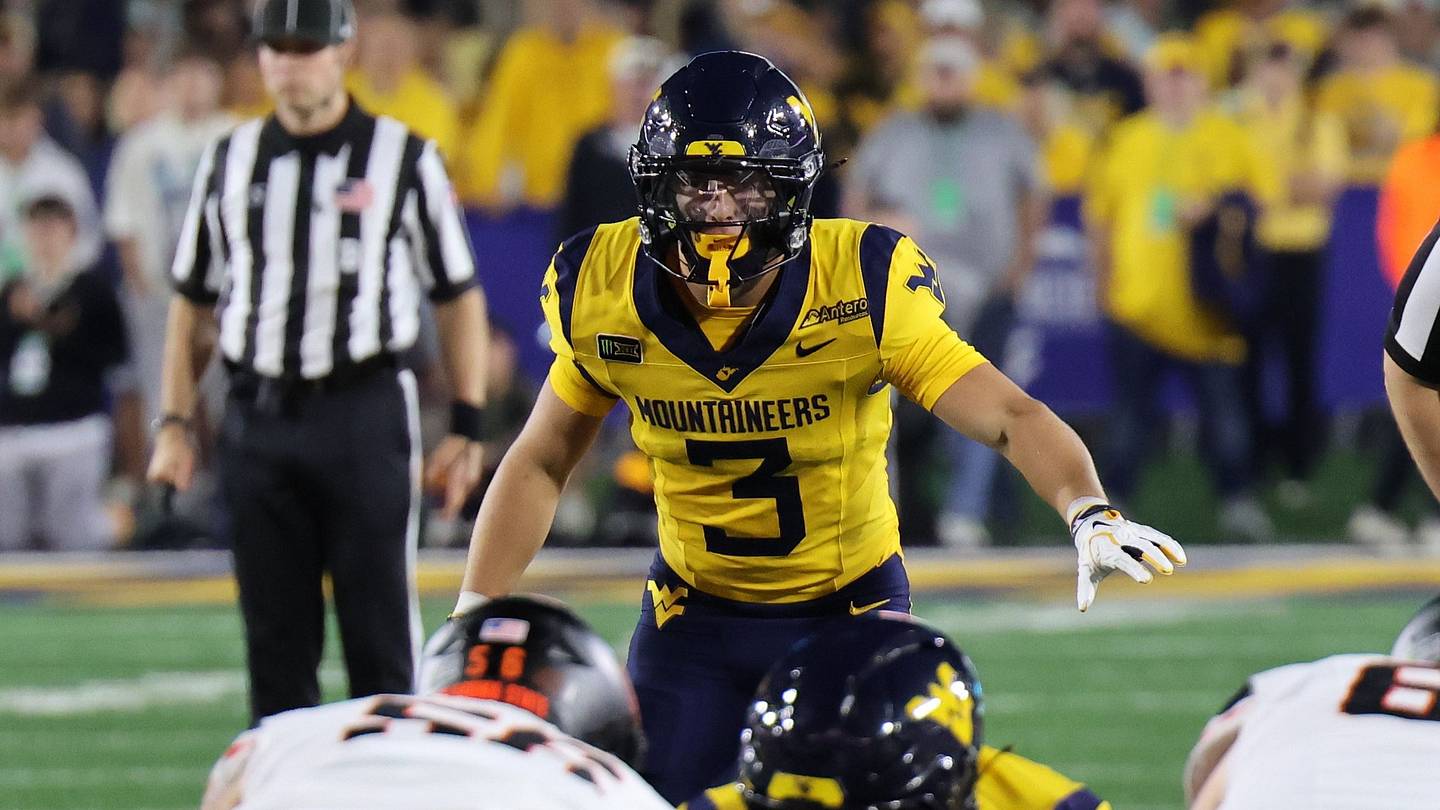
WVU Injury Update: Sieg, Weaver-Bomar Trending to Play at Texas Tech
West Virginia Mountaineers Get Key Injuy Boost: S Matt Sieg, WR Armoni Weaver-Bomar Trending to Play at Texas...