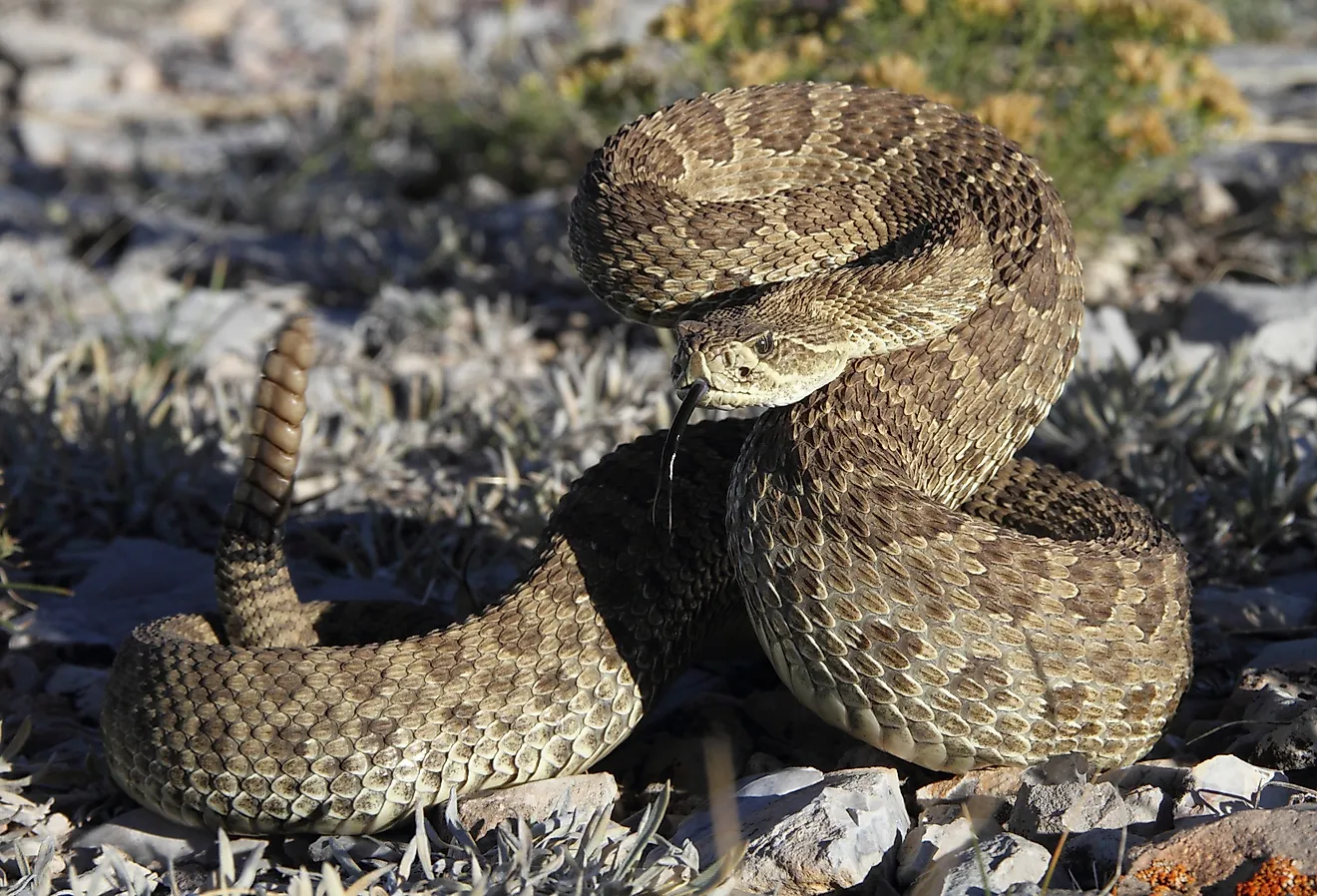
Only 10 inches of annual precipitation falls near Gardiner, Montana, compared to nearly 80 inches in Yellowstone’s southwest corner, creating an arid habitat where the park’s sole venomous snake lives.
Most of Yellowstone National Park sits above 7,500 feet on high volcanic plateaus, forming a cold environment for cold-blooded animals where only six reptile species survive.
World Atlas reported that the prairie rattlesnake is restricted to a single small corner of the park along the lower Yellowstone River around the North Entrance. That population stays within a few miles of Gardiner, occupying low-elevation flats where greasewood and prickly pear cactus grow in salty soil.
Reese Creek sits at 5,282 feet, marking the lowest ground in Yellowstone, while a drive from the North Entrance to Yellowstone Lake gains about 2,450 feet to reach 7,733 feet. The road passes Mammoth Hot Springs at 6,239 feet before climbing above 7,500 feet across most of the park, which tops out at 11,358 feet on Eagle Peak.
Idaho State University herpetologists Debra Patla and Charles Peterson documented a few specimens in that low northwest zone during an amphibian and reptile inventory conducted from 2000 to 2003 and reported in 2004.
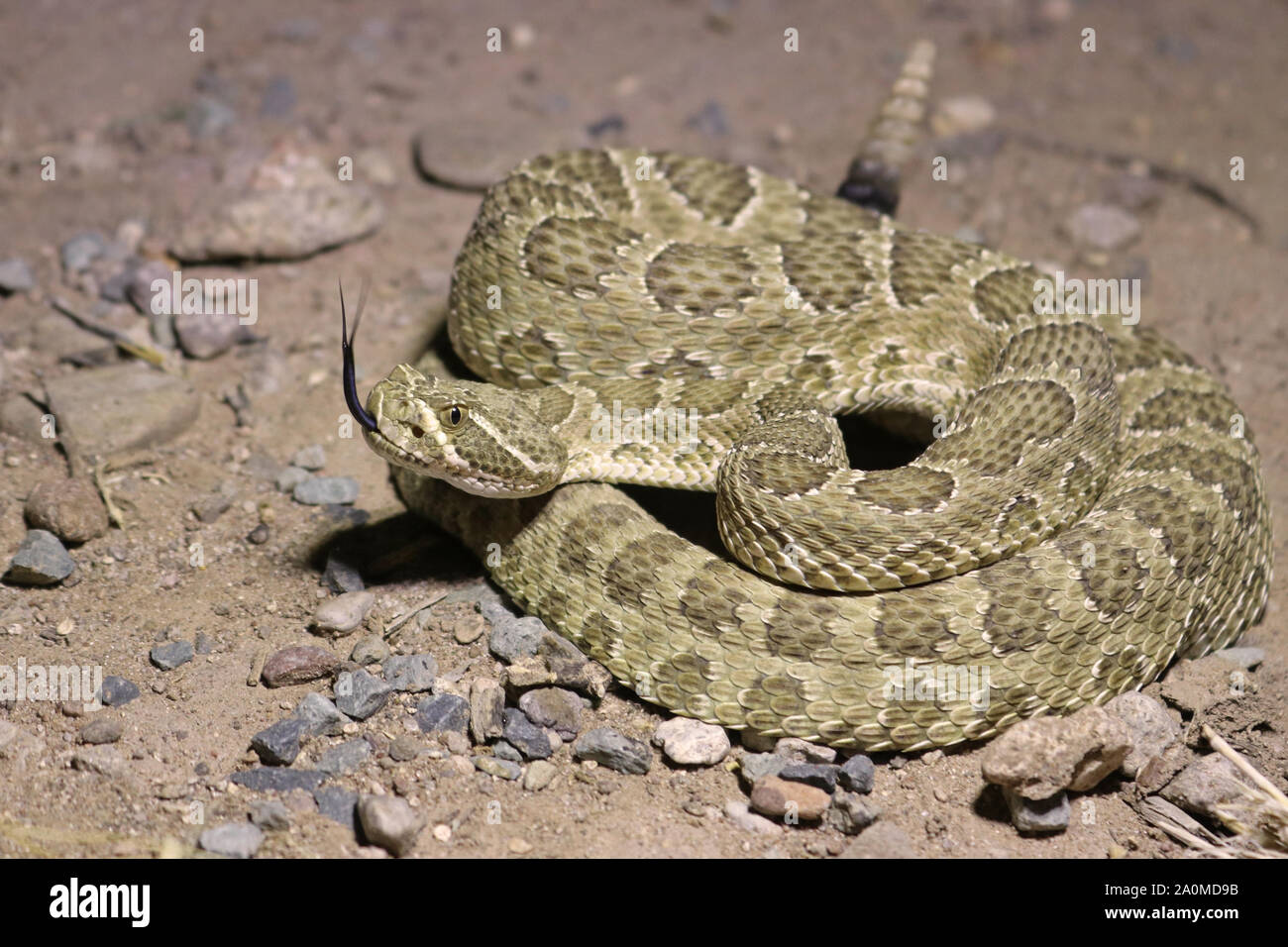
Prairie rattlesnakes utilize specific sites along the river including Reese Creek, Stephens Creek, and Rattlesnake Butte. During winter, the animals gather in communal dens beneath rocks, while in summer an adult can range up to 7 miles from its den while hunting mice, ground squirrels, and rabbits. Hikers access this dry northern terrain via the Rescue Creek Trail or the Yellowstone River Trail through the Black Canyon.
Five other reptile species share the park, including the bullsnake, rubber boa, sagebrush lizard, and common and terrestrial gartersnakes. While the sagebrush lizard also appears in hydrothermal areas like Norris Geyser Basin and the Shoshone and Heart Lake geyser basins, the rattlesnake remains confined to the low ground near Gardiner. The National Park Service knows of only two snakebites in Yellowstone’s history and describes the prairie rattlesnake as usually defensive.
Related reading

P2P Cheyenne Shootout Youth Wrestling Tournament Set for Dec. 5 in Wyoming
Youth wrestlers will hit the mats in Wyoming on Saturday, December 5, 2026, for the P2P – Cheyenne...

Percepture: Testing Standby AI Inference Requires Validating Answers, Not Just Endpoints
Organizations testing standby AI inference services can discover that functional endpoint responses often mask underlying failures, such as...

Puro.earth Issues 280,449 CO₂ Removal Certificates to ADM for Nebraska CCS Project
Helsinki-based carbon crediting platform Puro.earth issued 280,449 CO₂ Removal Certificates to agricultural processor ADM for its Columbus CCS...

Aubameyang Relishes Barcelona Reunion, Says He Likes High Defensive Lines
Pierre-Erik Aubameyang is relishing a sentimental yet high-stakes reunion with his former club Barcelona this weekend at the...