
Residents of Southaven, Mississippi, are being offered cash for their homes on one strict condition: they must agree not to sue Elon Musk’s AI company over the deafening noise from a nearby power plant. Real estate agents have been going door-to-door in the Colonial Hills neighborhood, representing xAI (which has operated under the names SpaceXAI and SpaceXSI), to secure properties that the company intends to use as staff housing for its massive regional expansion, The Guardian reported.
This isn’t just a few opportunistic buys. According to a recording of a conversation heard by The Guardian, a realtor told a resident that the company has a target to purchase 418 homes. So far, 18 homeowners have reportedly agreed to sell, and DeSoto county records show that five homes have been bought by MZX—an xAI subsidiary—since October 9, 2026. The move effectively creates a “pay-to-stay-silent” mechanism, as the offers are contingent on owners agreeing not to join an existing class-action lawsuit regarding the plant’s noise pollution.
The sound of a jet engine in the suburbs
For those living in Colonial Hills, the “innovation” of the AI boom sounds less like the future and more like a runway. The source of the distress is a former Duke Energy site now housing 69 temporary gas turbines designed to power three vast datacenters—Colossus I, Colossus II, and Macrohardrr—which sprang up across the Tennessee-Mississippi border since July 2024.
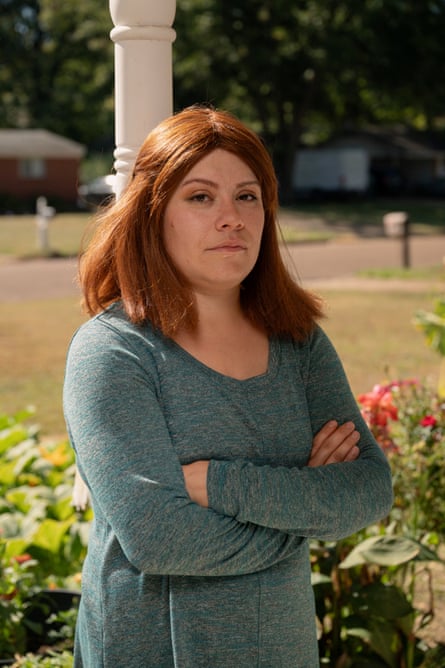
Elizabeth Rose, a local piano teacher, describes the noise as a continuous roar that wakes her up at 2 a.m. and 3 a.m. She has dubbed the unfolding situation “Elonville,” suggesting the neighborhood is being transformed into a private playground for the world’s richest man. Jason Haley, who has owned his home for 20 years, describes a “high-pitched hum” and a sound like an airplane hovering over the house that has made sleep nearly impossible.
The human cost here is a classic clash between hyper-scale industrial growth and residential stability. While the average home price in the area is around $180,000, the cost of the noise is measured in health and sanity. Haley eventually filed a lawsuit in June, citing “near-constant noise, vibrations and other nuisance-level harms.”
Unpermitted turbines cause millions in annual health costs
The friction isn’t just about the volume. The U.S. Environmental Protection Agency (EPA) has determined that dozens of these truck-sized gas turbines have been running without the federal permits required by law. While the EPA left enforcement to the state, the environmental impact has been stark. The Southern Environmental Law Center estimates that toxic emissions from these turbines have resulted in $44 million in annual health costs, exacerbating conditions like asthma and COPD for the neighborhood’s elderly and children.
When environmental groups and the NAACP sued in federal court to stop the turbines, the U.S. Department of Justice attempted to block the lawsuit.
“Our governor saying I don’t love America because I don’t like being tortured by noise? That is just asinine and ignorant,” said Jason Haley.
The economic trade-off
Not everyone in Southaven views the turbines as a torture device. In one of the poorest states in the union, the influx of capital is a powerful lure. Southaven’s mayor, Darren Musselwhite, has championed the development, noting that the datacenters bring unprecedented tax revenue and jobs to DeSoto county. He even oversaw a land swap with xAI that provided the city with a new police and firefighter training center.
You can find further data on the effects of persistent noise exposure in clinical evidence.
The divide is clear: on one side is the “gold rush” of AI infrastructure, backed by Musk and supported by figures like Donald Trump—who has characterized opponents of such development as “backwards and poor.” On the other are residents like Gavin Foust, a paramedic who grew up in the area, who views the push to displace people as “reckless and shameful.”
A temporary fix for a permanent problem
There is a glimmer of hope for the residents, though it comes with a caveat. In July, xAI agreed to replace the temporary turbines with a permanent gas-fired facility by next summer, which is expected to reduce the noise. But for people like Haley, the company’s track record on permits and pollution makes such promises hard to swallow.
While Musk spends up to four nights a week in an Airstream trailer personally overseeing the build-out of the Grok AI chatbot, the people of Colonial Hills are left wondering if their neighborhood will survive the expansion. For some, the offer to sell is an escape hatch. For others, like Elizabeth Rose, it’s a matter of principle. She refuses to sell, stating she wants to make things “difficult for Elon.”
The situation in Southaven serves as a blueprint for the coming years of the AI race. As these “supercomputer clusters” require more power and more land, the conflict between corporate speed and civic rights will only intensify. In “Elonville,” the price of progress is being paid in decibels and deeds.
Worth a look
Craig Fuller documents wildlife in Grand Teton and Yellowstone
Craig Fuller documented a wildlife tour through Jackson Hole, Grand Teton National Park, and Yellowstone National Park, reporting...

Extinction Stories: Immersive Dioramas at Milwaukee Public Museum
The emerald ash borer threatens the survival of 7.5 billion ash trees across North America, a figure that...

Cincinnati Volleyball Previews Matches Against Colorado and West Virginia
The Cincinnati volleyball team is traveling to Boulder, Colorado, to play Colorado on Thursday at 9 p.m. ET...

Washington State Suspends Pre-Election Campaign Contribution Limits
Washington state's campaign finance regulators are effectively pausing the rules on how much money can flow into political...