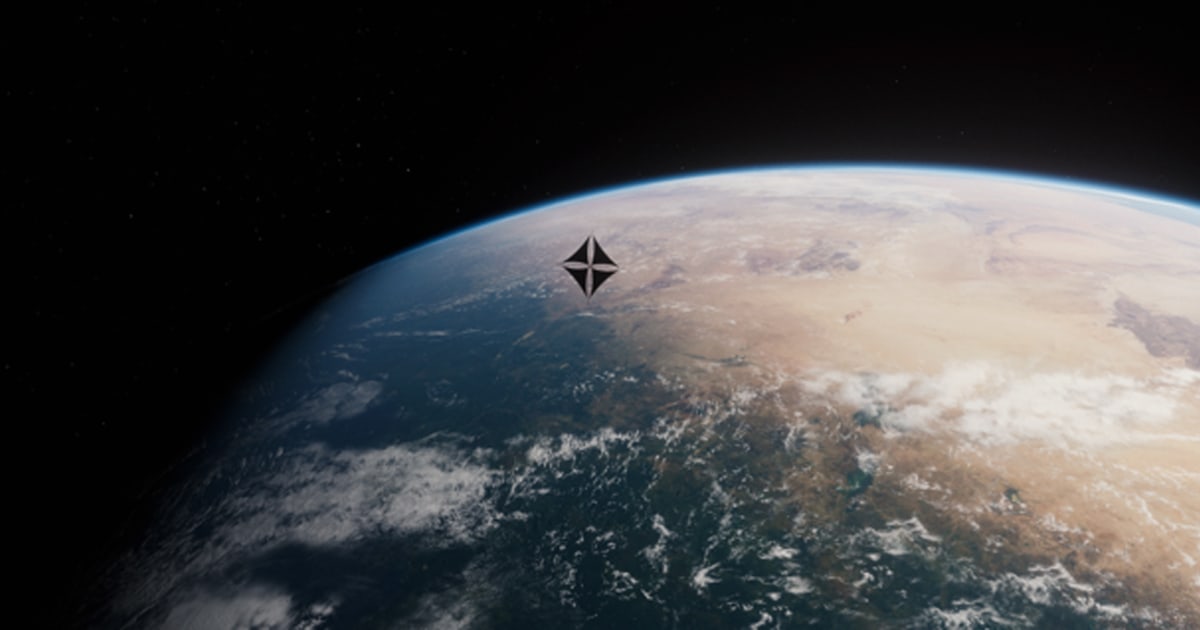
Four environmental groups petitioned the Federal Communications Commission on Thursday to reverse its approval of Reflect Orbital’s plan to launch the Earendil-1 demonstration satellite, which will carry a 59-foot mirror to beam on-demand sunlight to Earth, citing risks to astronomy, wildlife, and human eye safety.
The pushback centers on a July 9, 2026, regulatory decision by the Federal Communications Commission authorizing Reflect Orbital to deploy and operate Earendil-1, an experimental spacecraft designed to test whether an in-space reflector can redirect sunlight onto specific darkened areas of the planet. While the agency approved only a single test mission, critics warn that the technology represents a slippery slope toward an industrial-scale orbital grid.
Earthjustice attorney Jan Hasselman did not mince words regarding the regulatory green light, telling NBC News that Reflect Orbital’s proposal is a uniquely bad idea.
DarkSky International, Environment America, the American Bird Conservancy, and Public Employees for Environmental Responsibility joined the legal challenge, arguing the federal regulator ignored broad environmental and scientific consequences.
How Earendil-1 Plans to Refract Sunlight After Dark
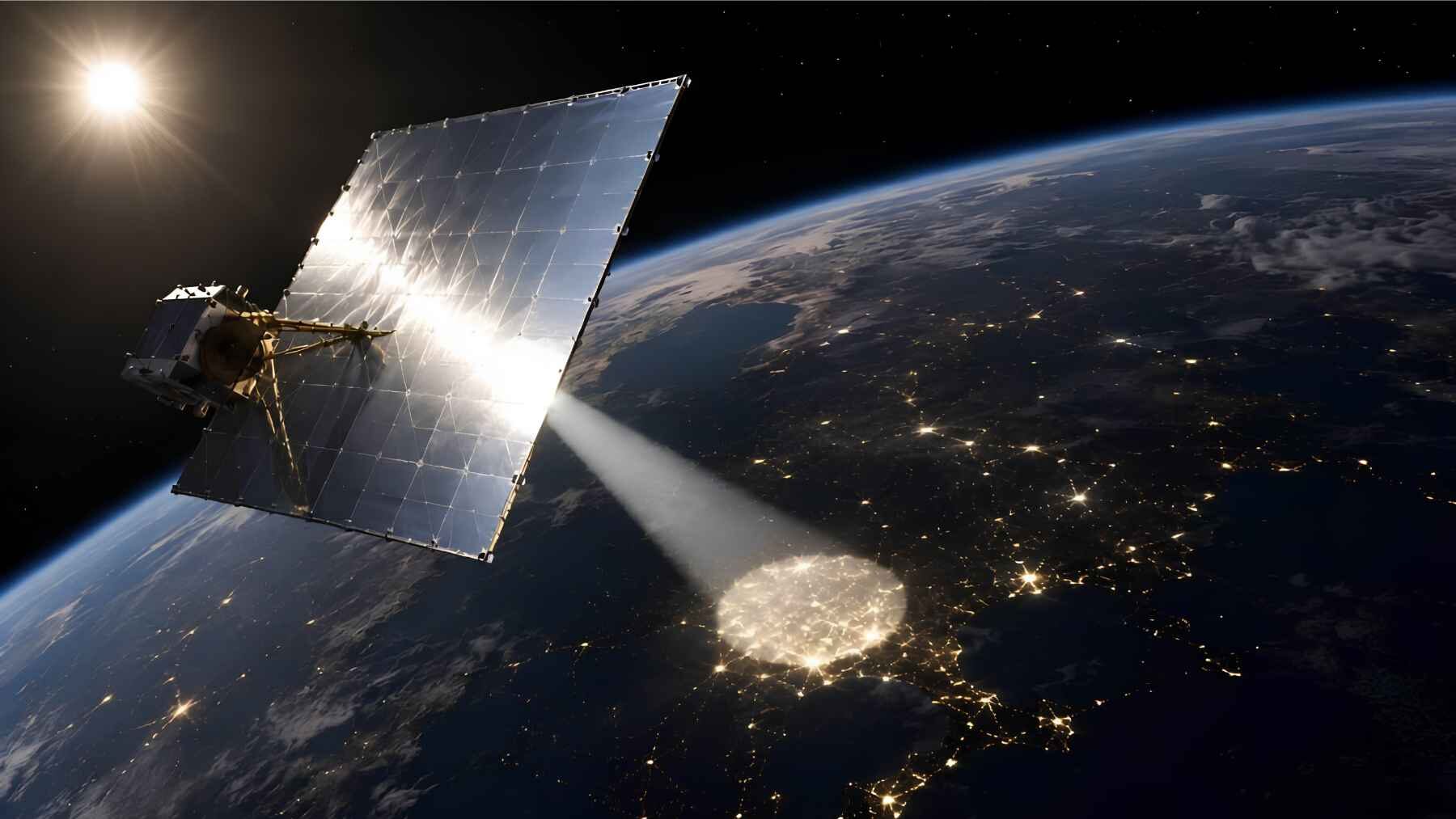
Operating from an orbit roughly 388 miles above Earth, the experimental satellite is engineered to create a moonlike patch of light about 3.1 miles wide. The spacecraft will carry a reflector roughly 59 feet by 59 feet. The mechanism makes no electricity and stores no energy; instead, its thin reflective film functions like a giant heliostat in orbit, turning to intercept the Sun while remaining sunlit and casting a beam toward locations experiencing nighttime.
Reflect Orbital envisions operating a megaconstellation of satellites. The company also pitches the service for disaster zones, remote industrial sites, and nighttime construction.
Yet, the initial mission is modest. The upcoming demonstration is designed to provide around 0.1 lux for up to five minutes—comparable to a clear night under a full moon.
Astronomy Research and Eye Safety Concerns
While the company emphasizes commercial possibilities, scientists and safety experts argue that even a short test introduces unacceptable risks. Telescopes amplify incoming light, making observatories uniquely vulnerable. Samantha Lawler, an associate professor of astronomy at the University of Regina, warned that the project would affect astronomical research worldwide.
“Any time the satellite is above the horizon, it will wash out the night sky, so astronomers everywhere in the world will have to pay attention to where the satellite is. They have made no indication of how they will coordinate with observatories. That could destroy a camera on a telescope. It can also damage people’s eyes.”
Samantha Lawler
Optical engineer and LED lighting expert Eric Bretschneider raised similar alarm bells regarding ground-level safety, comparing the targeted light beam to a helicopter shining a spotlight right at you
. He noted that people might instinctively look toward an unfamiliar bright spotlight in the dark, risking permanent retinal damage.
Regulatory Limits and the Broader Megaconstellation Vision
The regulatory battle exposes a significant jurisdictional gap. More than 1,800 people and the American Astronomical Society filed comments opposing the project. Although the American Astronomical Society expressed dismay over the ruling, the commission denied its petition, concluding that risks from a single short-duration test did not justify blocking the launch.
The FCC maintained that most optical and environmental effects fell outside its statutory authority because its licensing framework primarily governs radio communications and orbital debris. That narrow mandate allowed the government to approve the radio frequencies needed to steer the craft without issuing a full environmental endorsement of beaming concentrated sunlight onto the nighttime hemisphere.
Reflect Orbital has previously stated an ambition to operate a megaconstellation of more than 50,000 satellites by 2035. While the startup insists it will avoid sensitive environments and dark-sky reserves, the environmental petition makes clear that opponents intend to fight the foundational authorization before the constellation scales any further.
Keep reading

Sand Hoppers Move Hundreds of Tons of Sand on California Beaches
Inch-long beach crustaceans known as sand hoppers dig fresh burrows nightly along Southern California shores, moving an estimated...

Scientists Discover 13 Fatty Acids in Cat Urine That Form Unique Scents
Researchers in Japan, Germany, and Spain have discovered 13 unusual branched-chain fatty acids in domestic cat urine that...

Google Patents Filing Details New Text Classification Method for Office Systems
While traditional office automation approaches historically relied on multi-label document categorization based solely on body text, newly surfaced...
Ancient rocks from Western Australia suggest Earth was already dragging surface water into its mantle and using it to generate volcanoes 3.1 billion years ago — through a primitive recycling process that may have preceded modern plate tectonics
Geologists examining ancient volcanic formations in Western Australia have discovered evidence that water was influencing Earth's interior and...