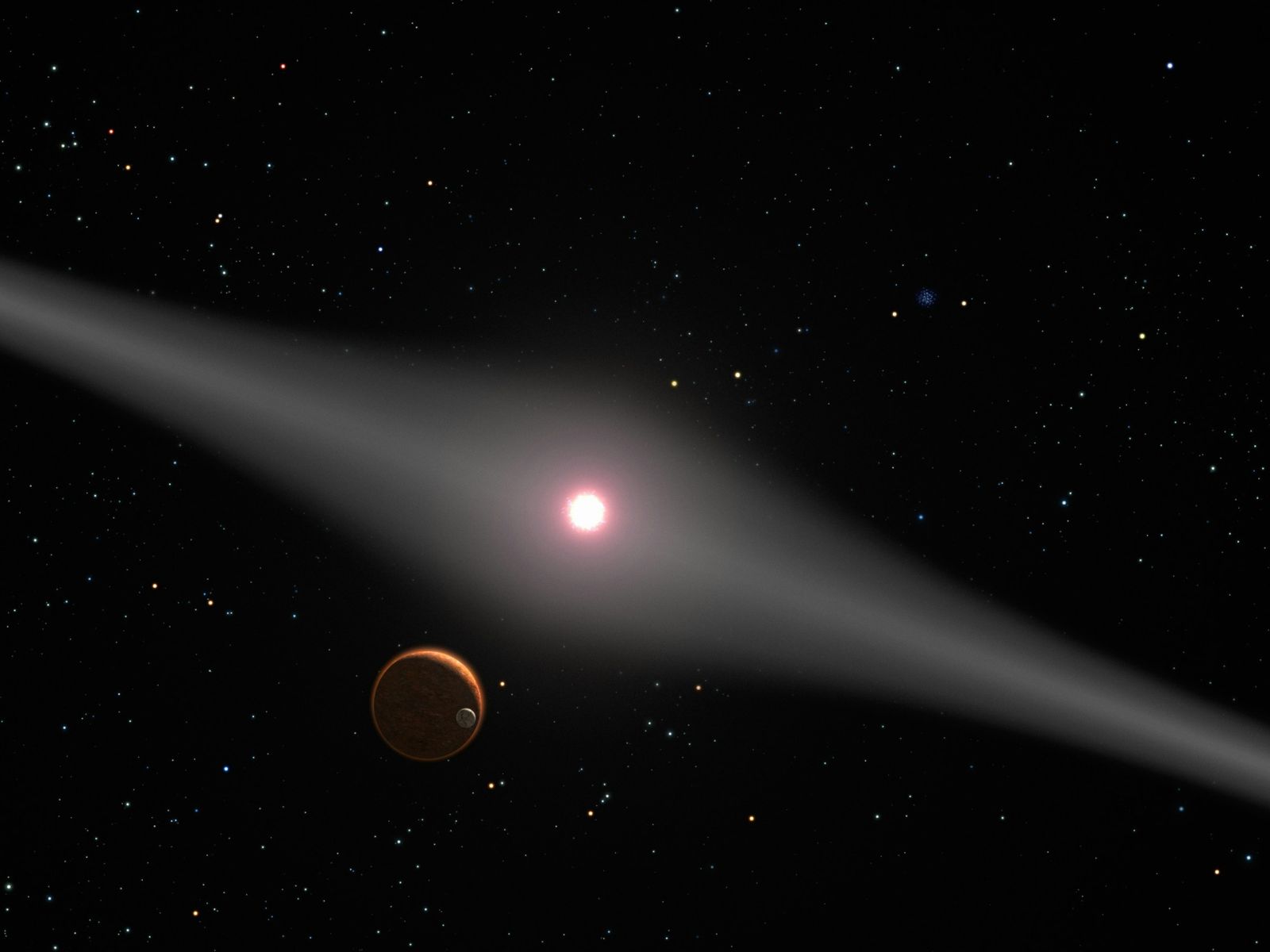
Astronomers have detected a supermassive black hole located far from its home galaxy’s center, providing rare evidence of a wandering celestial object shredding a nearby star. The discovery stems from an unusual cosmic flare that occurred roughly 30,000 light-years from the core of a massive nearby galaxy, according to findings published in smithsonianmag.com.
Artificial Intelligence Flags Rare Tidal Disruption Event on Galaxy Outskirts
While supermassive black holes are typically found residing at the centers of galaxies, this newfound object sits on the outer margins of the galaxy Notebookcheck, which is situated about 750 million light-years from Earth. The event, designated as TDE 2025abcr, was first discovered in November 2025.
How Artificial Intelligence Spotted the Cosmic Billboard
Because black holes produce no light of their own, they are exceptionally difficult for researchers to detect directly. However, they can briefly illuminate their locations during a tidal disruption event, which occurs when a star passes fatally close to a massive black hole and gravitational forces pull it apart.
The Zwicky Transient Facility at the Palomar Observatory in California detects roughly half a million flashes each night. To sift through this massive volume of data, researchers developed an artificial intelligence-based algorithm designed to automatically recognize the specific light pattern of a tidal disruption event.
Robert Stein, a research fellow at the University of Maryland, College Park and NASA’s Goddard Space Flight Center in Greenbelt, Maryland, noted that the AI algorithm successfully identified a flare matching a tidal disruption event despite its unusual location. Igor Andreoni, assistant professor of physics and astronomy at the University of North Carolina at Chapel Hill, described such occurrences as cosmic billboards that allow scientists to find invisible black holes.
The Physics and Power of the Distant Flare
During the tidal disruption event, the emitted light was brighter than that of the host galaxy and reached an intensity 10 billion times more powerful than sunlight. Follow-up observations utilizing space- and ground-based telescopes helped researchers rule out alternative explanations and confirm the event.
Key parameters of the discovered system include:
- Black Hole Mass: Estimated at approximately one million times the mass of the Sun.
- Distance from Galactic Core: More than 30,000 light-years away.
- Distance from Earth: Approximately 750 million light-years.
- Discovery Date: November 2025.
Implications for Galaxy Collisions and Future Research
The discovery marks the most distant offset yet recorded for a tidal disruption event discovered using visible light. Jonathan Carney, a co-author of the study and PhD student in physics and astronomy at the University of North Carolina at Chapel Hill, emphasized that finding a massive black hole tens of thousands of light-years away from the center reveals these objects in places astronomers would not normally expect.
Scientists theorize that wandering black holes can be flung out into the cosmos when galaxies collide with one another. Researchers suggest that the black hole may have been stranded away from the center following an ancient galaxy merger, or alternatively, pushed outward by gravitational encounters with other black holes near the galactic center.
The findings offer long-awaited evidence of wandering black holes and demonstrate that ground-based visible-light telescopes can reliably reveal them. Astronomers expect that identifying similar events on the margins of galaxies will help shed light on the complex evolutionary histories of their host galaxies.
Keep reading
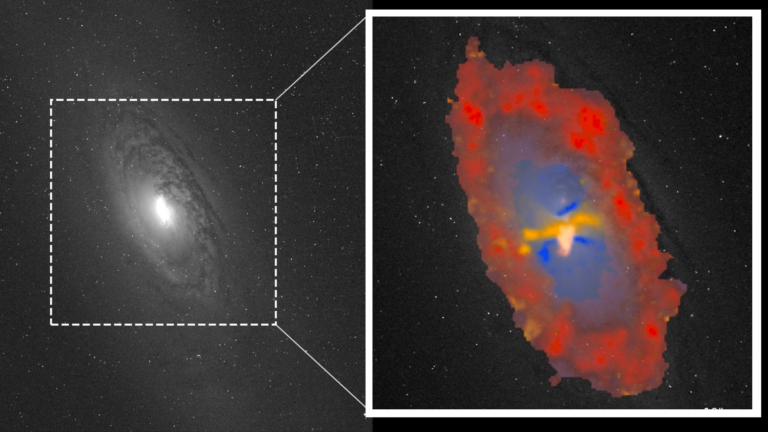
Black Hole Shock Waves Spark Star Formation in Nearby Galaxies
Astronomers studying nine local galaxies have discovered that shock waves from active supermassive black holes consistently travel perpendicular...
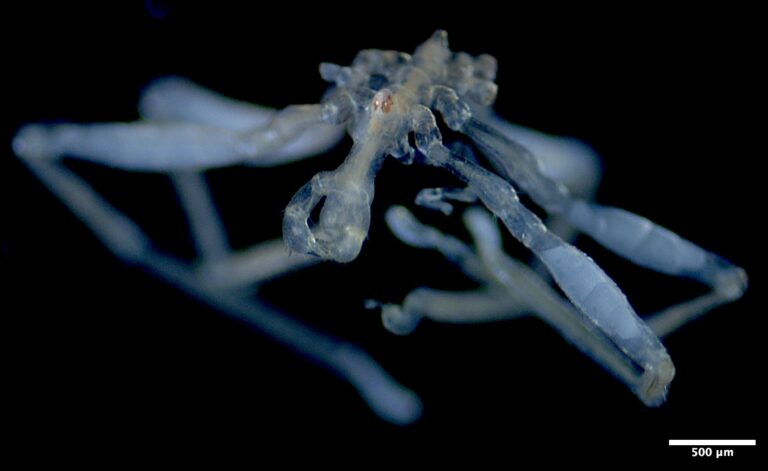
UBC Researchers Discover Two New Sea Spider Species in the Salish Sea
Researchers at the University of British Columbia have discovered two new species of sea spiders, Callipallene pilosuspedes and...
Climate Impact Lab Projects 450,000 Heat Deaths From Super El Niño
A newly released Climate Impact Lab report projects that more than 450,000 people worldwide could die from excessive...
Harvest Moon Rises September 26 to Mark the 2026 Autumn Equinox
Skywatchers are preparing to view the full moon this weekend as the Harvest Moon rises on September 26,...