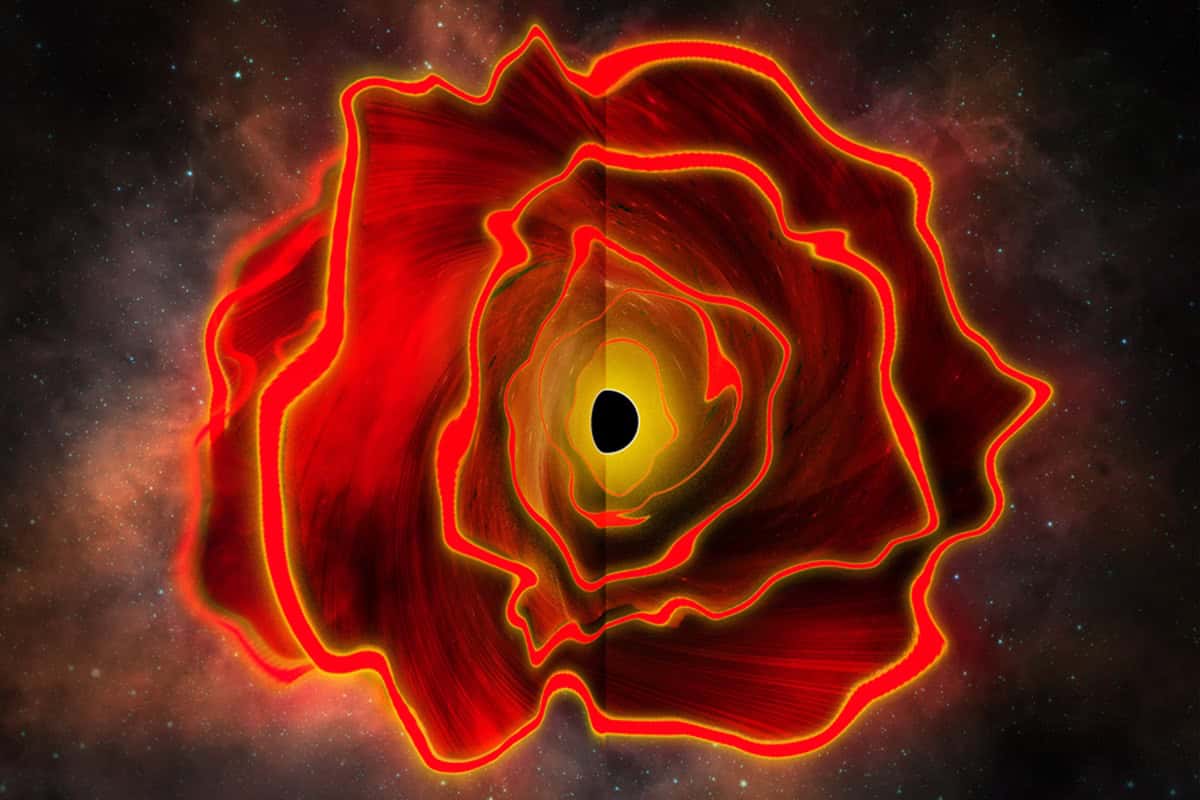
Astronomers using the James Webb Space Telescope have discovered an extremely bright red spot in the early universe, designated MoM-BH*-1, which existed 660 million years after the Big Bang. Researchers propose this object is a new type of astrophysical entity: a young black hole swaddled in a dense, nearly dust-free hydrogen cocoon.
When astronomers first pointed the James Webb Space Telescope at the early universe, they expected to find distant galaxies. Instead, high-resolution imaging revealed an intensely red point of light lurking in the constellation of Cetus. At first glance, the object resembled an ordinary star, carrying spectral signatures typically associated with stellar atmospheres. Yet its light output defied conventional physics, shining with an intensity far outstripping any known star.
Led by an international team investigating exceptionally bright early objects through the Mirage or Miracle
survey, scientists determined that the newly identified body releases energy comparable to what a black hole might generate, surpassing the production of any known star. That extreme energy production matches the behavior of a black hole rather than nuclear fusion.
Unprecedented Light Signatures and the Discovery of MoM-BH*-1
The object, formally cataloged as MoM-BH*-1, immediately commanded attention because it was the reddest source in the roughly 250-square-arcminute field examined by researchers. Spectroscopy revealed a dramatic drop in brightness at specific wavelengths—a feature known as a Balmer break. While ordinary stellar populations can produce such breaks, the measurement recorded here reached an extreme value of about 7.7.
That reading far surpasses typical dust-free star populations, which top out around a break strength of 3. Even an artificial population composed exclusively of A-type stars remains below approximately 5. According to lead author Dr. Rohan Naidu, the break we observed in this object is the deepest break we have ever observed in any object, ruling out ‘ordinary’ stars as the source.
Ordinarily, astronomers explain exceptionally red distant objects by pointing to dust scattering starlight, much like smoke reddens sunlight near the horizon. In this case, however, spectroscopic analysis showed very little dust. Instead, exceptionally dense hydrogen gas absorbs and reprocesses shorter-wavelength radiation, creating the unique red appearance.
The Anatomy of a Black Hole Star
To explain how a single object can combine stellar signatures with black hole energy levels, researchers developed computer simulations of the system. The resulting model depicts a young, actively feeding black hole enclosed within a turbulent, nearly dust-free cocoon of gas extending across tens of astronomical units—roughly the scale of our Solar System.
In this arrangement, the accreting black hole supplies the intense energy output that nuclear fusion would normally provide in a traditional star, while the surrounding hydrogen envelope acts as the star’s outer radiating surface. This paradoxical hybrid led researchers to coin the term black hole star
to describe the phenomenon.
Naidu conducted the work while at the Kavli Institute for Astrophysics and Space Research, part of the Massachusetts Institute of Technology, and is now based at the University of Hawaii. He noted that the body shines with the energy typically associated with black holes, but at the same time bears signatures classically associated with stars.
Solving the Mystery of Little Red Dots
The identification of MoM-BH*-1 carries broad implications for interpreting deep-space observations. Throughout its mission, the James Webb Space Telescope has uncovered large numbers of mysterious little red dots
scattered across the early universe, prompting intense debate among astrophysicists over whether those sources are distant galaxies or exotic objects.
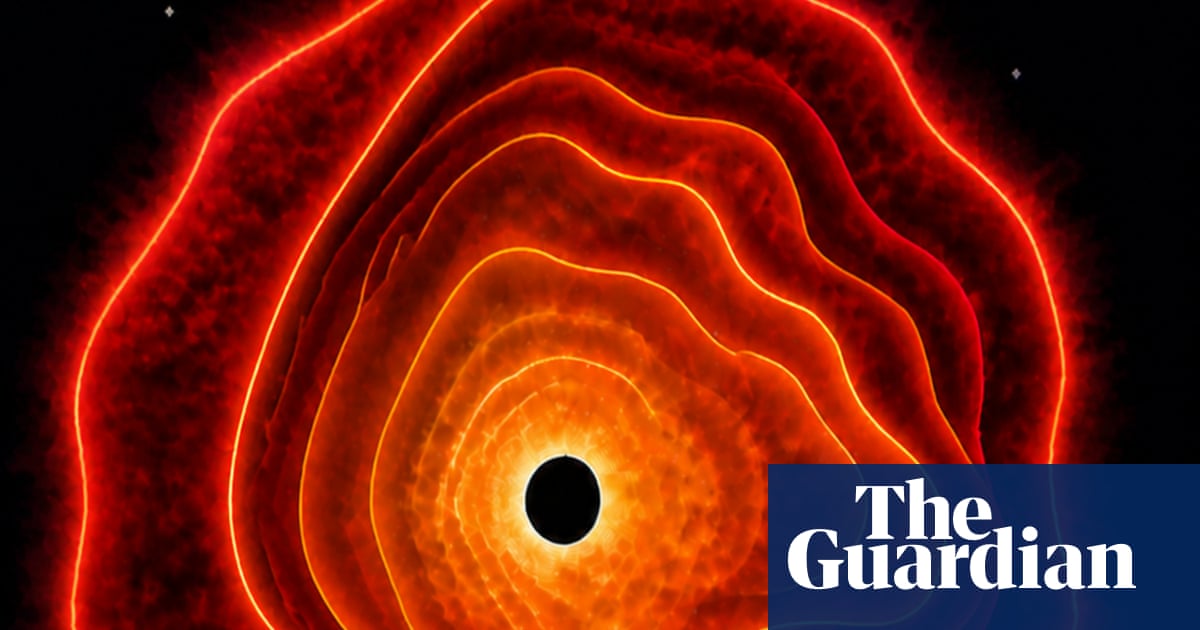
Researchers suggest these swaddled, nascent objects could represent the missing evolutionary link that explains how supermassive black holes—such as the one residing at the center of the Milky Way—managed to grow so massive so quickly after the Big Bang.
By governing when stars form and when star formation ceases, these early-forming systems may have set the foundational course for galaxy evolution across the cosmos.
Keep reading
New Iron Minerals Could Hold Primordial Water at Earth’s Core-Mantle Boundary
Newly discovered iron oxyhydroxide minerals stable at core-mantle boundary conditions could hold up to 15% water by weight,...
NASA Targets 2028 for Boeing Starliner Crewed Flight After Overhauls
NASA Administrator Jared Isaacman announced on Monday that Boeing's Starliner spacecraft is targeted for a crewed flight in...
Researchers Identify Two New Sea Spider Species in the Salish Sea
Researchers have identified two previously unknown species of sea spiders in the Salish Sea, marking the first such...
NASA Viking Missions Mark 50 Years Since Historic Search for Life on Mars
Fifty years ago, NASA's Viking missions conducted the only direct search for extraterrestrial life in history.