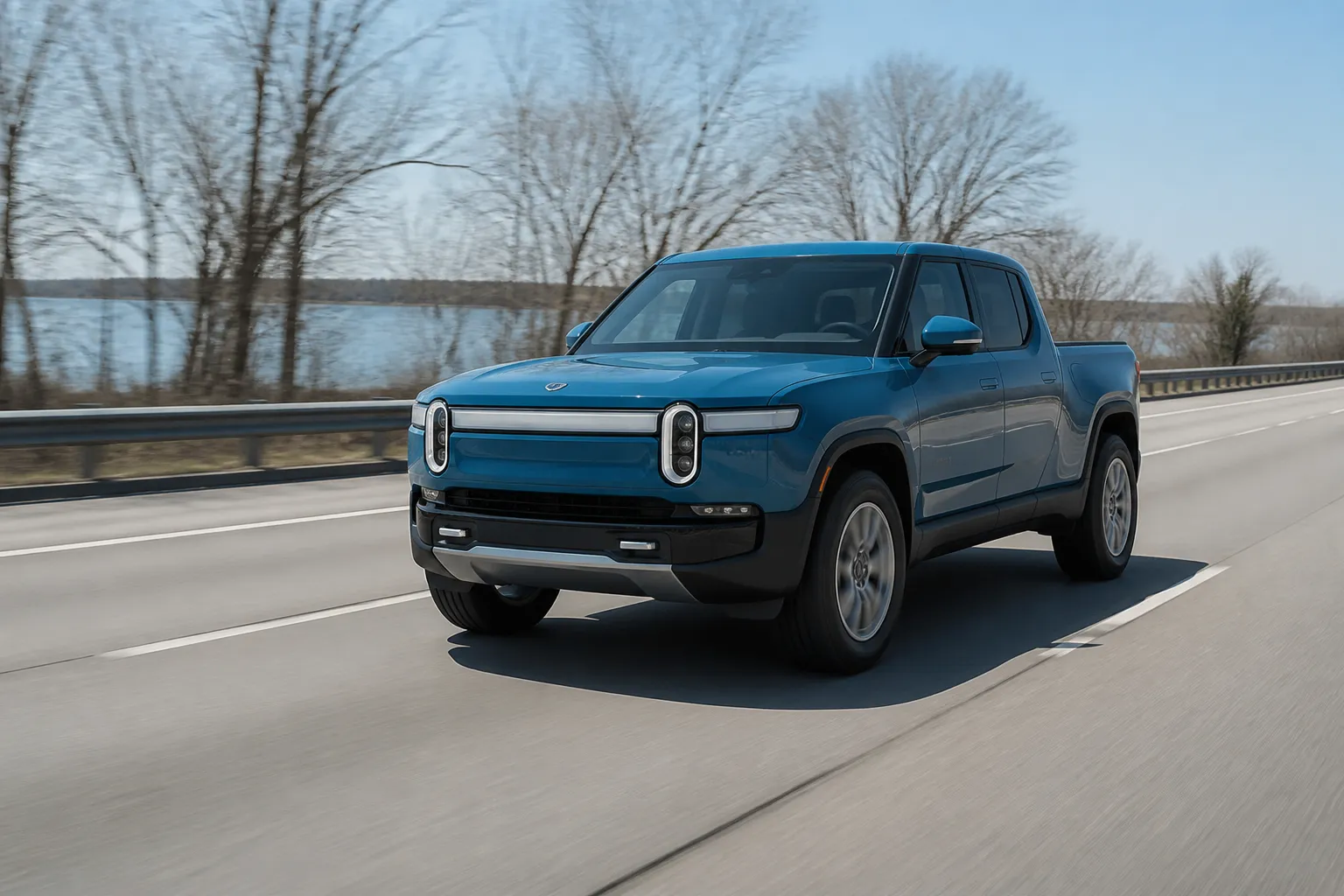
Rivian Automotive’s Autonomy+ driver-assistance system outperforms General Motors’ Super Cruise on highways but trails Tesla’s FSD (Supervised) on city streets, according to test drives reported across Midwest highways and Michigan roads, as automakers vie for recurring software revenue.
The race to dominate hands-free driving technology has entered a new phase as automakers push toward vertical integration and in-house artificial intelligence. Following test drives spanning hundreds of miles across Midwest highways and Michigan roads, automotive reviewers have mapped out how leading advanced driver-assistance systems stack up against one another, highlighting a widening gap between highway-only automation and complex point-to-point city navigation.
Rivian Autonomy+ and the Push Past Legacy Highway Systems
Rivian’s in-vehicle AI assistant launched in its vehicles on May 12, 2026, marking a significant technological pivot for the electric vehicle manufacturer. Testing a recent version of Rivian’s R1T pickup truck, the vehicle largely controlled itself on several Midwest highways, outperforming legacy competitors such as General Motors’ Super Cruise.
General Motors originally led the development of hands-free highway systems with its Super Cruise, which was initially tested a year before its debut in 2017. However, America’s largest automaker was slow to roll out the technology on new vehicles or significantly grow its capabilities beyond expanding geographies and adding lane changes. Ford Motor Company also caught up quickly on highways, but both legacy automakers continue to lack systems capable of hands-free driving on nonhighways. Those two companies are working on eyes-off technologies, but industry expectations do not place them on the market until 2028.
Rivian credits its software improvements to its push toward vertical integration, which included developing a new generation of software and electric vehicle architecture in-house. That structural integration has caught the attention of financial markets. Piper Sandler analyst Alexander Potter upgraded Rivian’s stock in an investor note, writing that as volume rises, Rivian should be better able to monetize software & services, a key benefit of vertical integration.
How Rivian Autonomy+ Compares to Tesla FSD (Supervised)
Despite surpassing legacy competitors on highways, Rivian is still playing catch-up to Tesla’s FSD (Supervised) system when it comes to nonhighway driving and point-to-point navigation, where a vehicle is designed to manage a complete trip from start to finish. Testing a recent version of Tesla’s FSD (Supervised) v14 alongside the Rivian R1T revealed distinct operational differences in handling urban environments.
The primary operational contrast lies in how each system handles traffic lights, intersections, and road signs on nonhighway streets. Rivian’s Autonomy+ system currently detects roadway signals, but it does not execute maneuvers based on them; it merely alerts the driver that they are approaching. In contrast, Tesla’s system handled every signal, interchange, and exit ramp encountered over nearly 200 miles of rural roads and downtown Ann Arbor, Michigan. Testing also showed Tesla’s vehicle handling roadwork zones, parking maneuvers including parallel parking, and navigating around a truck partially blocking a lane.
Rivian expects to introduce point-to-point driving later this year, bridging the gap between its current highway capabilities and full route automation. James Philbin, senior vice president of autonomy and AI at Rivian, addressed the strategic trajectory during the company’s first Autonomy and AI Day on Dec. 11, 2025, in Palo Alto, California.
Tesla’s system you use is a point-to-point system. So that that’s the next big leap for us in a way, is getting to that same point-to-point type interaction and that system where it really does the full driving task.
James Philbin
Sensor Suites, Regulatory Scrutiny, and Safety Guardrails
To achieve its driving goals, Rivian relies on a sensor suite comprising at least 10 wide-dynamic-range cameras, five radars, and mapping data, with plans to add lidar to the R2 model early next year. Tesla relies exclusively on cameras and a machine vision system. While Rivian builds in additional safety guardrails, Tesla’s approach has drawn heightened federal oversight. The U.S. National Highway Traffic Safety Administration intensified its investigation into Tesla’s Full Self-Driving (Supervised) system earlier this year following multiple accidents, including a fatal crash where the regulator stated the system failed to adequately warn the driver about limited visibility caused by sun glare or fog.
Industry observers and company executives emphasize that no vehicle on sale today is fully autonomous. Drivers must remain attentive at all times with hands ready to take immediate control. Even as hardware and software suites expand, pricing strategies across automakers continue to diverge.
Subscription Costs and Recurring Revenue Models
Automakers increasingly target advanced driver-assistance systems as vital growth markets capable of generating recurring revenue streams. The pricing structures for these capabilities vary significantly across manufacturers, offering buyers choices between outright purchases and monthly subscriptions.
| Automaker | System Name | Subscription Price | Lifetime Purchase Option |
|---|---|---|---|
| Tesla | FSD (Supervised) | $99 per month | Not listed |
| Rivian | Autonomy+ | $49.99 per month | $2,500 |
| General Motors | Super Cruise | $39.99 per month ($399 per year) | Not listed |
Keep reading
Nvidia and AMD GPU Prices Surge Up to 40 Percent Ahead of Q4 Hike
Graphics card prices have risen in 2026, driven by factors such as memory shortages, rising silicon costs from...

Nvidia and OpenAI Implement Safety Guardrails Amid AI Growth
Advanced artificial intelligence developers are tightening safety guardrails and pulling back on major model rollouts amid growing concerns...

Tanzania Explores Helsinki Startup Ecosystem to Boost Tech Hub Ambitions
Tanzania’s ambition to become a regional technology hub relies on more than digital infrastructure, with a study visit...
Apple releases iOS 27.0.1 for iPhone, here’s what’s new
Apple released iOS 27.0.1, delivering essential bug fixes for iPhone 18 Pro Face ID authentication crashes, camera color...