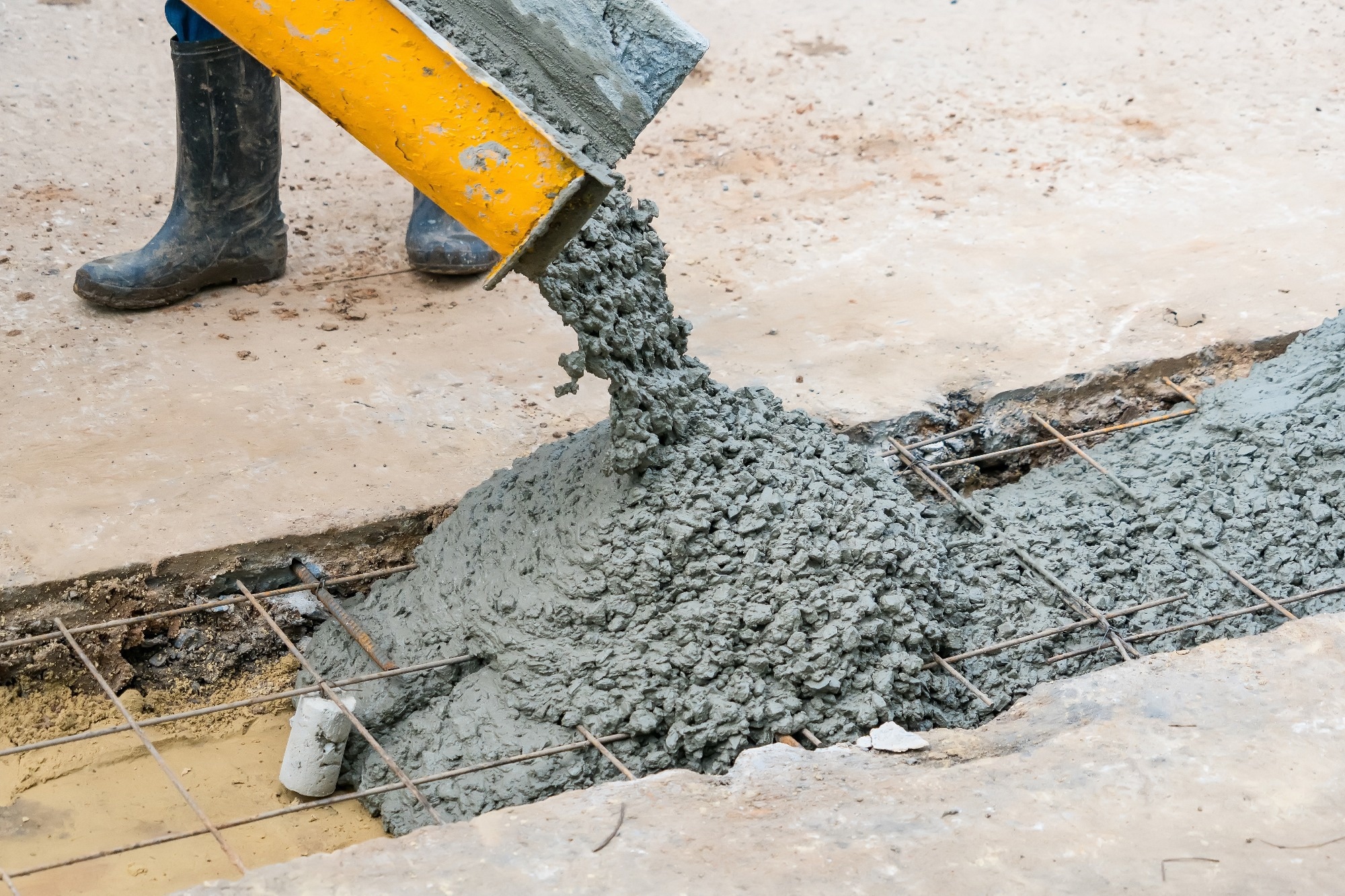
Researchers examining sustainable construction alternatives report that combining industrial iron processing waste with dynamically prepared magnetized water can significantly improve concrete compressive strength, tensile performance, and workability while reducing reliance on natural river sand extraction.
Concrete production remains tied to the extraction of natural river sand, a resource-intensive demand that contributes to environmental challenges such as riverbank erosion and habitat destruction. Finding reliable industrial substitutes has become a priority for researchers investigating eco-friendly building materials. A recent development explores how industrial byproducts and specially treated water might solve multiple structural and environmental problems at once.
Testing Iron Waste and Magnetized Water in Concrete Mixtures
A recent experimental program examined whether iron processing waste generated during machining and steel manufacturing could replace traditional river sand in Ordinary Portland Cement concrete. Because iron waste possesses a relatively high specific gravity and suitable physical characteristics, it offers a viable candidate for partial aggregate replacement. At the same time, researchers evaluated the role of dynamically prepared magnetized water, which has attracted industry interest for its ability to alter fluid properties in cement-based materials.
While both iron waste and magnetized water have been studied separately in various contexts, researchers investigated what happens when they are used together to evaluate their combined influence on workability, strength, and microstructure. The experimental design substituted river sand with iron waste at six distinct intervals: zero percent, 10 percent, 20 percent, 30 percent, 40 percent, and 50 percent. Mixing water was prepared using conventional tap water alongside water exposed to magnetic fields of 1.4 or 1.6 Tesla across 50, 100, 150, or 200 magnetization cycles. A superplasticizer was introduced to maintain proper workability across the mixtures.
Compressive Strength and Mechanical Performance Gains
The findings indicate that moderate replacement levels yield the most favorable performance outcomes, proving that higher concentrations of industrial waste are not automatically better. Concrete containing 20 percent iron waste mixed with standard tap water achieved a 32 percent improvement in compressive strength at 28 days, a gain associated with superior particle packing and a denser internal matrix.

Introducing magnetized water provided an additional performance boost under specific operational parameters. A magnetization level of 150 cycles delivered the strongest overall results, with the IW10-M-150 mixture recording a 22 percent higher compressive strength than its tap-water counterpart. Tensile and flexural properties also benefited from the treatment combination, demonstrating that industrial byproduct integration can enhance structural metrics while putting waste materials to productive use.
Broader Applications of Magnetized Water Across Industries
Academic documentation highlights that magnetized water refers to water subjected to a magnetic field intended to alter its physical and chemical properties, influencing solubility and structure for agricultural, health, and industrial applications.
Recent studies demonstrate that treating irrigation water with magnetic devices can improve water use efficiency, increase crop germination rates, and support agricultural productivity in water-scarce regions. Connecting these diverse technical applications reveals a growing cross-sector interest in non-chemical fluid treatments designed to optimize resource usage, whether in crop production or in reducing the environmental footprint of heavy industrial manufacturing.

NIST Researchers Develop Scalable Superconducting Single-Photon Detectors
Researchers at the National Institute of Standards and Technology have developed a wider superconducting single-photon detector architecture using...
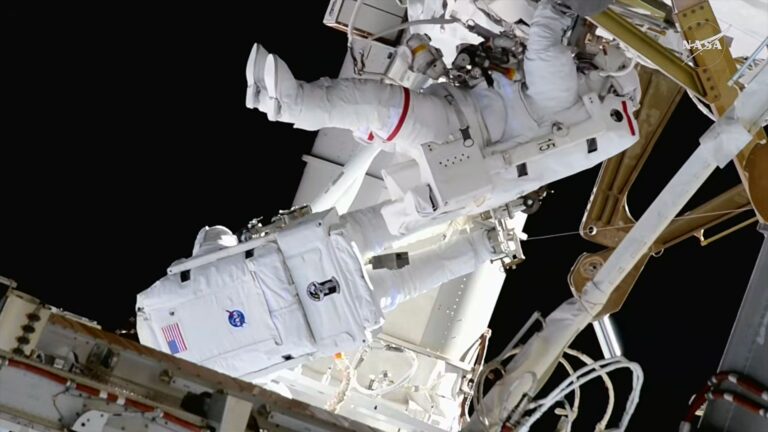
Menon and Adenot Replace Failed ISS Antenna During Spacewalk
On August 25, 2026, NASA astronaut Anil Menon and ESA astronaut Sophie Adenot ventured outside the International Space...

Partial Lunar Eclipse 2026 Visible in North America and the UK
North American stargazers and early-rising British observers can view a rare partial lunar eclipse in the early hours...
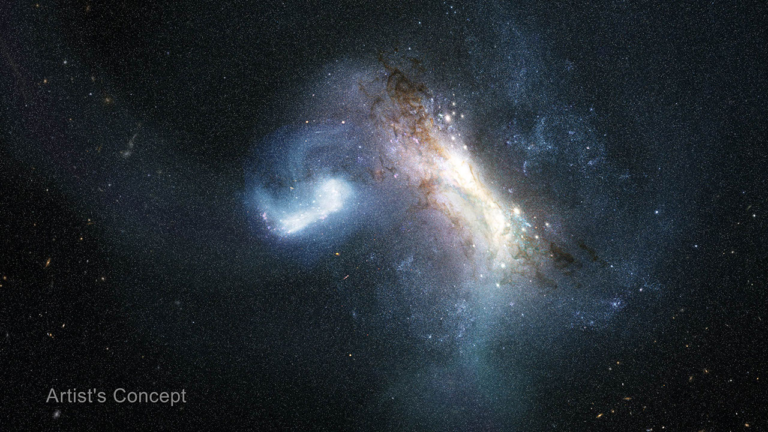
Hubble Telescope Reveals Ancient Dwarf Galaxy Merger With Milky Way
Astronomers using NASA’s Hubble Space Telescope have uncovered definitive evidence that an ancient dwarf galaxy named LKH collided...