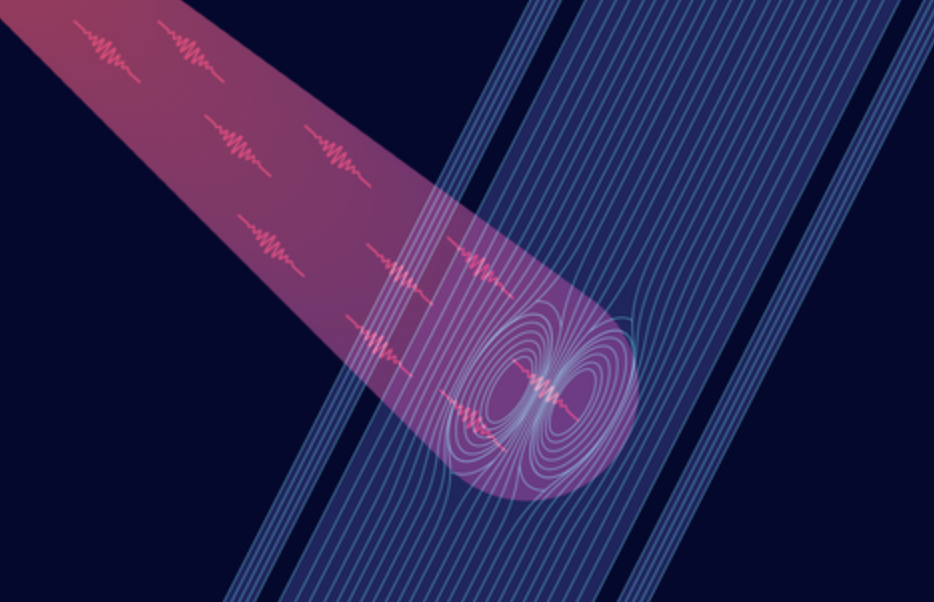
Researchers at the National Institute of Standards and Technology have developed a wider superconducting single-photon detector architecture using superconducting rails to redistribute current.
Everyday life relies heavily on photons, which serve as the fundamental building blocks of light. For advanced applications ranging from quantum networks to deep-tissue medical imaging, capturing and counting every single particle of light is critical. Photons carry information,
noted Kristen Parzuchowski, a postdoctoral researcher at the National Institute of Standards and Technology, emphasizing that measurement systems must be capable of detecting every incoming photon when transmitting data across deep space communication links or searching the universe for dark matter.
How Superconducting Nanowire Detectors Capture Light
Scientists typically rely on superconducting nanowire single-photon detectors to capture individual light particles. These instruments take advantage of superconductivity, a state in which electrical current flows through a material with zero resistance. When a single photon strikes the device, it creates a tiny splash that disrupts the superconducting state and triggers a measurable electrical pulse.
Over years of development, researchers refined these detectors to achieve a detection efficiency of roughly 98%. Despite that high efficiency, traditional designs faced strict physical limitations tied to their fabrication and microscopic scale.
Scaling Beyond Nanoscale Fabrication Limits
Conventional superconducting nanowire single-photon detectors typically depend on wires measuring roughly 100 nanometers in width, connected to an external readout circuit. Electric current flows through this narrow channel much like water moving through a river. When a photon hits the wire, it generates a localized hot spot that produces a voltage pulse picked up by readout electronics.
Historically, researchers believed that these wires had to remain at the nanoscale so that a single photon possessed enough energy to disrupt superconductivity across the entire width of the wire.
“Your photon energy needs to break superconductivity over the entire width of the wire. It’s very difficult to have your device in a regime where the photon could break superconductivity over 100 microns wide, so devices needed to be on the order of hundreds of nanometers wide.”
Eli Mueller, postdoctoral researcher at the National Institute of Standards and Technology
Operating at such minuscule scales introduced distinct operational hurdles. Narrow wires restricted overall current flow, making it harder to detect lower-energy photons because they produced fainter readout blips. Furthermore, current did not always flow evenly across the wire. Manufacturing defects caused electricity to accumulate along the edges like eddies in a river, generating false signals known as dark counts.
Implementing Superconducting Rails to Direct Current
To overcome these manufacturing and operational constraints, researchers abandoned the pursuit of progressively smaller wires and instead designed a detector featuring superconducting wires scaled up to a tenth of a millimeter — more than 100 times wider than conventional devices. To make an arbitrarily wide wire function effectively, the team added superconducting rails alongside the central wire.

These rails run current in the same direction and generate a magnetic field that redistributes electricity evenly across the detector. This configuration eliminates edge buildup and allows the middle of the device to carry significantly higher current.
“If we can get the middle of our device to flow more current than what was previously accessible, then we can generate a hot spot over an arbitrarily wide wire. And that hot spot is what’s giving you the pulse out. If you’re operating even closer to that transition between the superconducting state and the normal state, then you’re still sensitive to the very low energy photons.”
Eli Mueller, postdoctoral researcher at the National Institute of Standards and Technology
Performance Improvements and Future Applications
By operating closer to the transition point between the superconducting state and the normal state, the wider architecture remains sensitive to low-energy photons while simplifying physical fabrication.
Additionally, the wider detectors exhibit polarization insensitivity, meaning they can register incoming photons regardless of the orientation of their electric field. Researchers note that these performance improvements make the scaled detectors promising for biomedical imaging and astronomical observation, where capturing extremely faint light signals remains essential.
Worth a look

NASA Releases Artemis II Lunar Science Data and Farside Images
NASA released nearly a terabyte of Artemis II science data and reports on Wednesday, featuring 11,000 images, audio...

UK Skies Illuminated by Northern Lights as Geomagnetic Storms Continue
Skies across the UK lit up with the aurora borealis on Friday and Saturday evening as energetic solar...

Hubble Data Points to First Potential Planet Born From Dead White Dwarf Star
Astronomers revisiting decades-old Hubble Space Telescope data have discovered an unusual chemical signature around a white dwarf star,...

Spanish Archaeologists Catalog Neanderthal Wooden Tools at Abric Romaní
Spanish archaeologists have cataloged 597 wooden remains and imprints from Neanderthal living areas at Abric Romaní, dating between...