Monash University researchers argue that early human relatives and close fossil relatives living up to 5 million years ago should be reclassified under the genus Homo. Published in the American Journal of Biological Anthropology, the proposal challenges traditional taxonomy as new fossil discoveries blur old evolutionary boundaries.
The traditional human family tree is proving increasingly difficult to fit into the rigid categories scientists have relied on for decades. Growing evidence that early human relatives do not fit neatly into traditional categories is prompting a proposal to expand the genus Homo. A new proposal argues that accumulating evidence is blurring the boundaries between early human ancestors, close fossil relatives, and modern humans, raising fundamental questions about how these groups are named and classified.
The research, published in the American Journal of Biological Anthropology, suggests placing all human species and closely related fossil forms dating back the past 4 to 5 million years within a single expanded genus Homo. Human evolution is often depicted as a sequence of clearly separated species, beginning with ape-like ancestors, passing through Australopithecus and early members of Homo, and eventually leading to Homo sapiens. While human evolution is often visualized as a neat, orderly sequence beginning with ape-like ancestors, passing through Australopithecus, and eventually culminating in Homo sapiens, the actual fossil record tells a far more complicated story.
Fossil Discoveries Blur Old Genus Boundaries
As researchers unearth new finds that have repeatedly weakened the traits once used to draw firm lines between humans and their close relatives, many of the physical and behavioral traits once used to draw firm lines between humans and their close relatives have become harder to define. According to lead researcher Dr. Ian Towle, a Research Fellow at the Monash Biomedicine Discovery Institute, this growing body of evidence renders the current classification system increasingly less useful and less accurate.
This re-evaluation encompasses species currently assigned to Homo alongside Australopithecus and Paranthropus, all of which lived within the past 5 million years. Over the past 50 years, modern taxonomy has shifted to reflect actual evolutionary relationships by grouping species according to shared ancestry and common descent, known as clades. Human evolutionary classification, however, has been slower to adopt this lineage-based approach. In recent decades, classification has increasingly focused on clades, groups that include a common ancestor and all of its descendants.
Dr. Ian Towle, Research Fellow at the Monash Biomedicine Discovery Institute
Towle noted that these groups do not necessarily represent distinct evolutionary branches, and the behavioral and ecological differences once used to separate them are becoming increasingly difficult to maintain. Genetic analysis and new fossil finds have revealed that traditional boundaries lack the clear distinction once assumed. As Dr. Towle said: Recent fossil discoveries and advances in evolutionary and genetic analysis make this an ideal time to reconsider whether our traditional taxonomy still accurately reflects human evolution.
He added: These groups do not necessarily represent distinct evolutionary branches, or ‘clades,’ and differences in behavior and ecology once used to distinguish them have also become increasingly difficult to maintain.
Furthermore, Dr. Towle stated: I propose expanding Homo to include these other groups to provide a more accurate and stable way to represent the complex evolutionary relationships revealed by the growing fossil record.
Challenging Traditional Traits of the Genus Homo
Members of the Homo genus have traditionally been identified by specific physiological and cultural markers, including larger brains, sophisticated tool use, and distinct anatomical characteristics. Yet these diagnostic traits no longer hold up under modern scrutiny.
Scientists now recognize that some accepted members of Homo possessed very small brains, while evidence indicates that complex behaviors also appear to have been present in Paranthropus and Australopithecus. By moving these species into an expanded Homo genus, researchers hope to establish a more consistent and stable framework that accommodates the non-linear nature of human ancestry and reduces the need to repeatedly redraw taxonomic boundaries as new fossils and evidence emerge.
Dr. Ian Towle, Research Fellow at the Monash Biomedicine Discovery Institute
A More Stable Taxonomic Future
The proposed taxonomic revision aims to eliminate the constant need to redraw evolutionary boundaries every time a new fossil is uncovered. As researchers continue to learn more about our ancestors and close fossil relatives, the more we realize how complex and non-linear our family tree is.
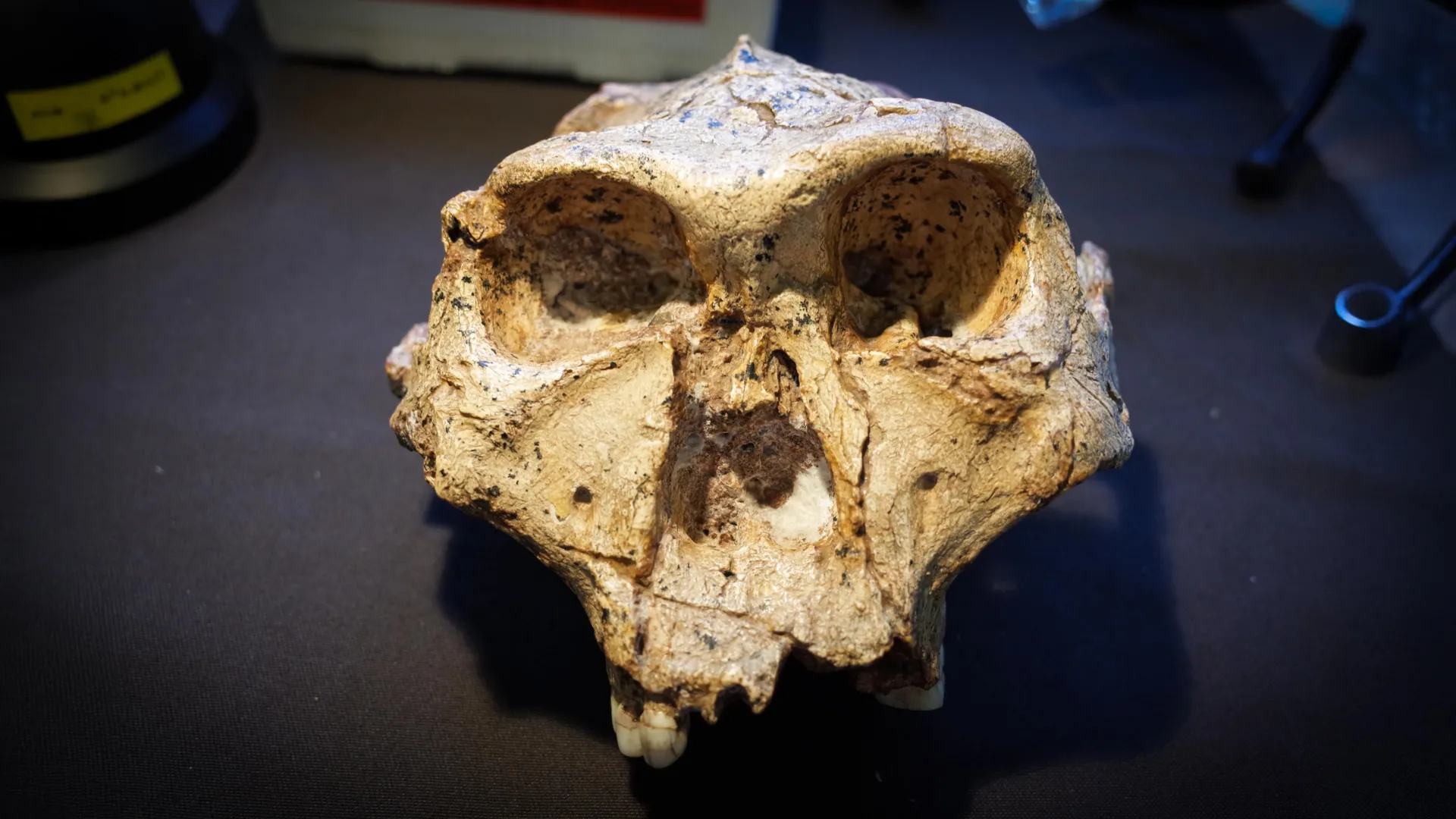
As Dr. Towle explained: The more we learn about our ancestors and close fossil relatives, the more we realize how complex and non-linear our family tree is.
He concluded: Expanding the Homo genus to also include species of Australopithecus and Paranthropus will allow us to account for differences without regularly reclassifying particular groups.
The study, titled Clades, Grades, and the Genus Problem: A Case for Revising Hominin Taxonomy
by Ian Towle, and published on 18 August 2026 in the American Journal of Biological Anthropology (DOI: 10.1002/ajpa.70344), offers a structural solution to the growing friction between traditional classification rules and the realities of the fossil record.
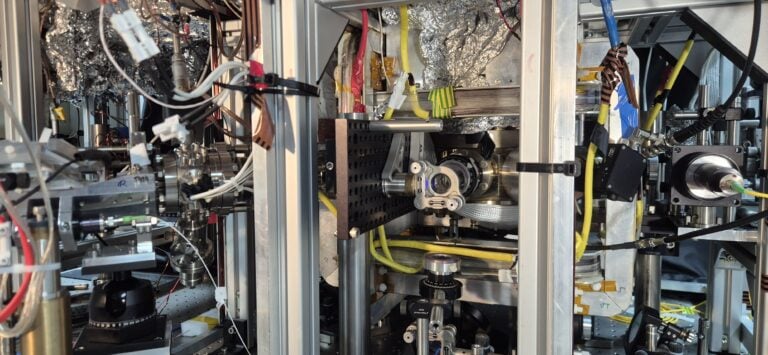
Researchers Measure Gravity Effect on Quantum Atoms in New Study
Researchers have directly measured gravity’s predicted effect on the quantum phase of freely falling rubidium atoms, observing Einstein’s...
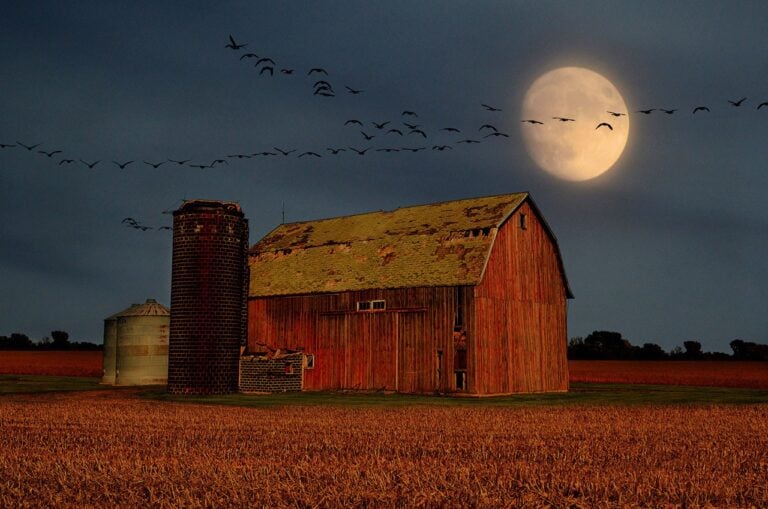
Corrected Headline: Harvest Moon Rises Near Saturn on September 26
The Harvest Moon of September 2026 will rise on September 26, appearing near Saturn and Neptune in the...
Solar Storm Disrupts GPS Signals
A November 2024 solar storm caused GPS signals to drift over 33 feet, disrupting self-driving cars and highlighting...
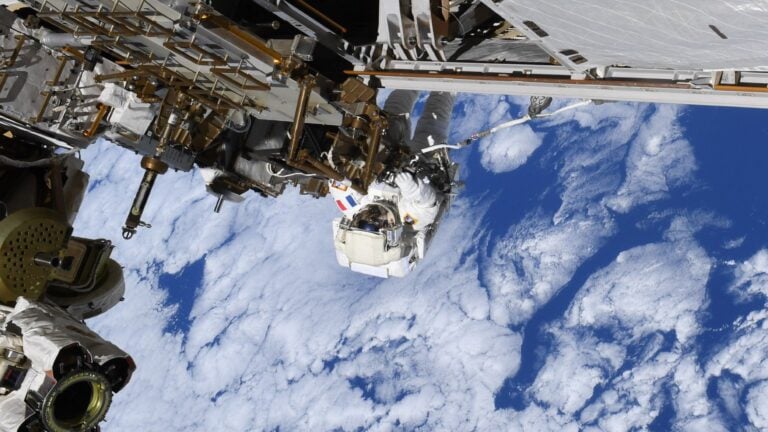
Astronauts Sophie Adenot and Anil Menon Install ISS Space-to-Ground Antenna
European Space Agency astronaut Sophie Adenot and NASA astronaut Anil Menon completed a six-hour and 30-minute spacewalk outside...