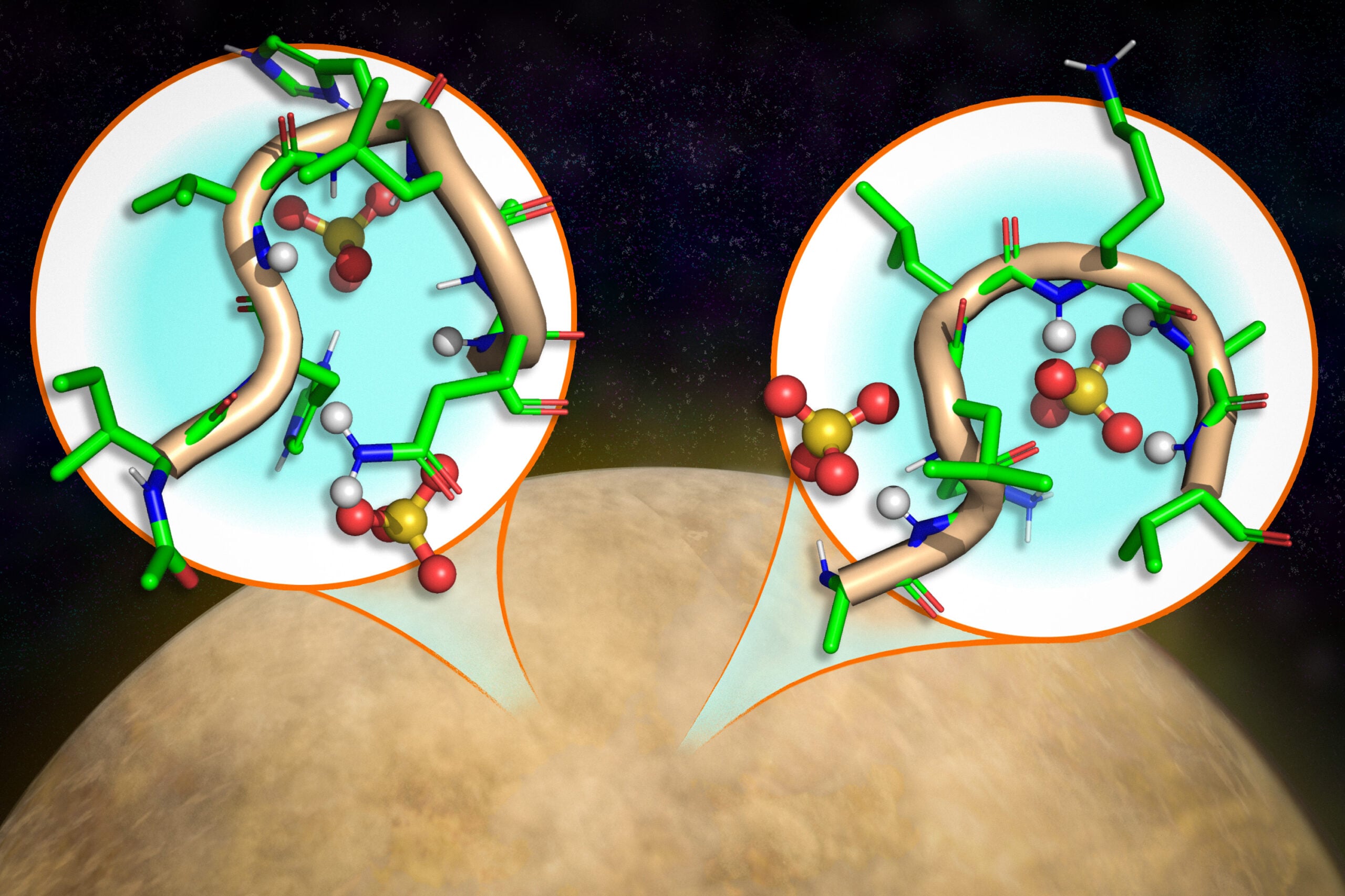
Researchers at the Massachusetts Institute of Technology have demonstrated that short peptides can remain stable and fold into defined structures in ninety-eight percent sulfuric acid, suggesting that the harsh cloud layers of Venus could potentially host biological functions and that astronomers should not rule out non-Earth-like worlds in the search for extraterrestrial life.
When searching the solar system for signs of past or present life, scientists have traditionally focused on planets featuring liquid surfaces akin to Earth. However, mounting evidence indicates that the necessary ingredients for life might persist within the corrosive, highly acidic clouds that blanket Venus, as reported by researchers at the Massachusetts Institute of Technology. The planet Venus is arguably the most mischievous planetary body in the solar system, shrouded in a thick atmosphere that requires radar images to see the surface.
While astrobiologists have long focused on liquid water being the driver in the search for life beyond Earth, this study proposes that life might exist even under the harshest environmental conditions. An international team of researchers led by the Massachusetts Institute of Technology provided evidence that non-Earth-like planets could be just as viable of hosting life as we know it along with Earth-like planets.
Laboratory Experiments Reveal Peptide Stability in Acid
While the surface of Venus is a living hell with searing temperatures and crushing pressures, its atmospheric cloud layer stretching from 30 to 37 miles above the planet, or 48 to 60 kilometers, provides much more favorable, Earth-like conditions including temperature and pressure. Those clouds consist of about 98 percent sulfuric acid, a solvent long believed to destroy biological molecules instantly.
Meteorites that contain peptide building blocks regularly enter Venus’s atmosphere, raising the possibility that those peptides could serve as building blocks for simple life forms if they could survive the clouds’ corrosive environment. To test whether basic building blocks of life could withstand this corrosive environment, investigators conducted laboratory experiments using nuclear magnetic resonance spectroscopy, which examines the molecular structure and physical composition of chemical compounds. Working with MIT’s Department of Chemistry Instrumentation Facility, the team analyzed various molecules in a solution of nearly pure sulfuric acid. Earlier studies established that nucleic acids, the building blocks of DNA, could remain intact under highly acidic conditions, as could lipids and amino acids. The team then turned their attention to peptides.
Uncovering the Folding Mechanisms of Macromolecules
The latest study, published in the Proceedings of the National Academy of Sciences, reveals that short peptides can not only remain stable for many weeks in concentrated acid, but they can also fold into specific three-dimensional shapes. Researchers attribute this unexpected resilience to the severe lack of water within the system, with water being known for breaking apart peptide chemical bonds through hydrolysis.
“If peptides find their way to that cloud layer of concentrated sulfuric acid, they will stay and be stably preserved in that cloud of droplets. And once these macromolecules have a defined three-dimensional structure, they can potentially have a function,” says Mei Hong, an MIT professor of chemistry and one of the senior authors of the new study.
Life needs to have specially shaped proteins so that they have a specific target they can latch onto and perform their function,
said Dr. Sara Seager, who is a Professor of Planetary Science at MIT and a co-author on the study. Before this, people thought that peptides couldn’t survive in sulfuric acid, so showing peptides are not only stable, but also fold, is a really big deal.
For that challenging task, researchers at the Department of Chemistry Instrumentation Facility suggested that Seager join forces with Hong, an NMR expert who has an advanced 800-megahertz solution NMR spectrometer in her lab. The paper appears in the Proceedings of the National Academy of Sciences, with Jia Yi Zhang, an MIT graduate student, serving as the lead author, and former MIT postdoc Aurelio Dregni also listed as an author. Janusz Petkowski, a research assistant professor at Wroclaw University of Science and Technology, is also a senior author of the paper.
Historical Context and Future Planetary Search Strategies
The concept of life being possible within the clouds of Venus goes back more than 75 years when German physicist and science writer Heinz Haber proposed the possibility of life in the clouds of Venus in his 1950 paper titled Epitome of Space Medicine
. This was followed by a 1967 paper published in Nature by Harold Morowitz and Carl Sagan that also discussed the possibility of life in the clouds of Venus. Modern investigations have accelerated since Seager’s laboratory initiated acid-persistence studies in 2020. Additionally, Dr. Seager is the Principal Investigator for the Morning Star Missions to Venus, which consists of several privately funded missions to Venus to ascertain the planet’s habitability, specifically focusing on its atmosphere and clouds.
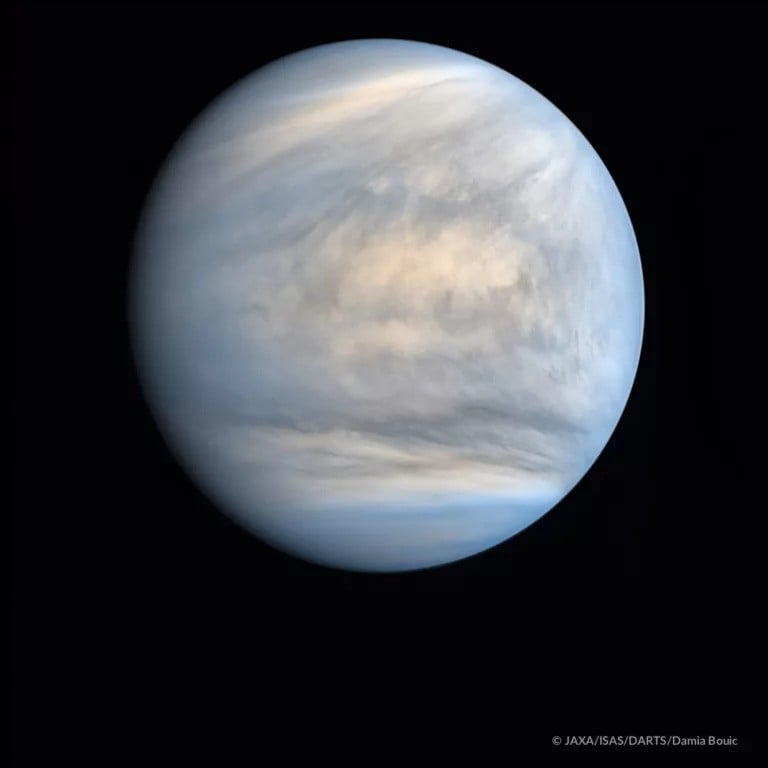
Along with being a study co-author, Dr. Seager is responsible for kickstarting research into whether biological processes could be stable in acidic environments beginning with a 2023 study published in the Proceedings of the National Academy of Sciences. She will be joining the University of Toronto faculty in September.
Beyond our solar system, these findings alter how astrobiologists might evaluate distant exoplanets where Earth twins are difficult to find, according to insights detailed by the international research team.
We really don’t know the full extent of what planet archetypes are out there. We’re seeking exoplanets that might be a true Earth twin, but what if they’re all Venuses? Our findings definitely open up a whole range of possibilities,
says Seager, another senior author of the study.
Keep reading

LUX-ZEPLIN Collaboration Records Unexplained Particle Interaction
Researchers conducting the LUX-ZEPLIN (LZ) experiment deep beneath the Black Hills of South Dakota have recorded a single...
North American Forests Could Face Increased Pest Damage From Climate Change
Rising global temperatures and shifting rainfall patterns could amplify tree pests and diseases across more than 80 per...

New Study Reveals Lower Silicon Dioxide Abundance on Mercury
A recent scientific study has determined that the surface of Mercury contains significantly less silicon dioxide than previously...
Astronomers Discover 10-Sided Atmospheric Wave at Saturn’s South Pole
Astronomers using the Hubble Space Telescope have discovered a massive, evolving 10-sided atmospheric wave circling Saturn’s south pole.