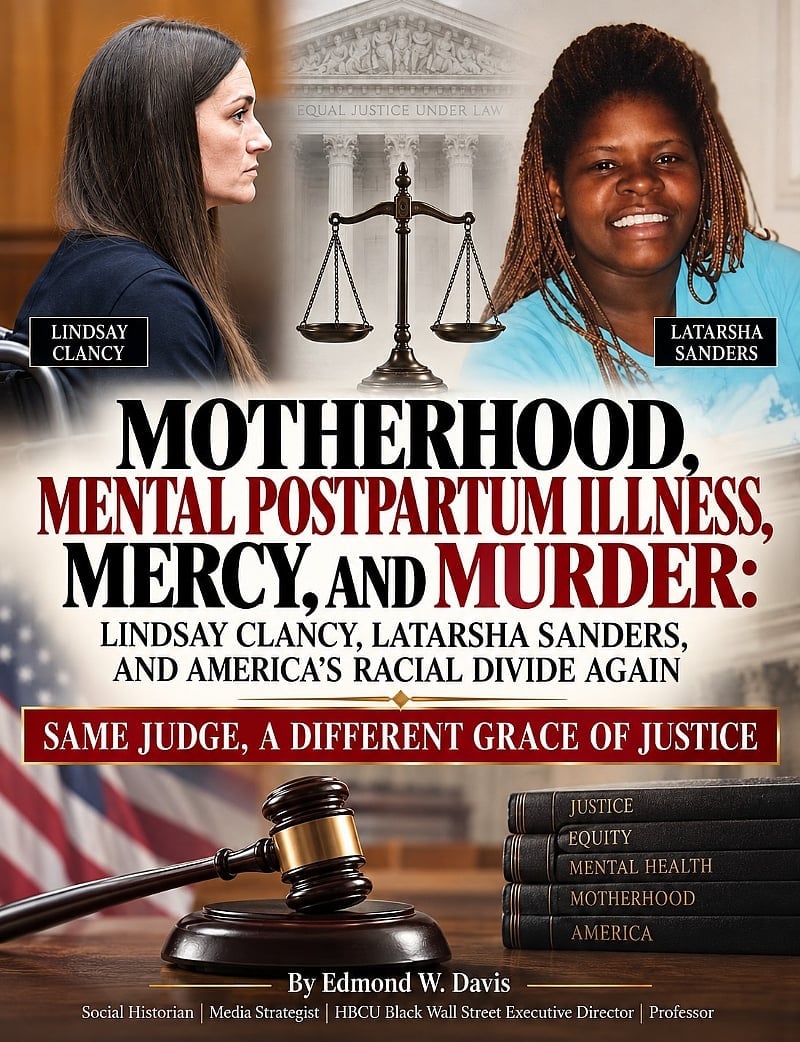
Following a deadlocked jury after a four-week trial, a Massachusetts judge declared a mistrial on September 4, 2026, in the murder case of Lindsay Clancy, a Duxbury mother whose defense argued severe postpartum psychosis rendered her not criminally responsible for the deaths of her three young children.
The Duxbury Killings and the Legal Defense
The central events of the Lindsay Clancy case unfolded on January 24, 2023, inside the family’s Duxbury, Massachusetts, home. Clancy’s ex-husband found their children—Cora, 5, Dawson, 3, and eight-month-old Callan—strangled in the basement. Clancy was found injured from an apparent suicide attempt and was subsequently hospitalized in police custody before the youngest child, Callan, was pronounced dead at Boston Children’s Hospital two days later.
Clancy, who had been on leave from her job as a labor and delivery nurse at Massachusetts General Hospital, faced murder charges. Her defense attorney argued that she suffered from severe postpartum psychosis and lacked criminal responsibility at the time of the killings. Prosecutors took a sharply contrasting view, arguing that she deliberately killed the children and understood that her actions were wrong.
Deliberations, Courtroom Tension, and the Mistrial
After a trial spanning more than four weeks, Plymouth County Superior Court Judge William F. Sullivan declared a mistrial on September 4, 2026, because the jury could not unanimously resolve whether Clancy was criminally responsible after seven days of deliberations. Boston Globe columnist Yvonne Abraham has been covering the trial closely, arguing it has effectively put two defendants on the docket: Clancy and our broken mental health system.
Abraham has also written about the near-impossible pressure on jurors given the media circus around the case.
Understanding Postpartum Psychosis
The trial placed national attention on postpartum psychosis, a rare but severe psychiatric condition. The murder trial of Massachusetts mother Lindsay Clancy has brought attention to a rare but severe mental health condition. Clancy killed her three children and attempted suicide in 2023. Her defense says she was experiencing postpartum psychosis, which can affect one’s grip on reality, but prosecutors say she acted intentionally. Prior to the tragedy, Clancy — who was on leave from her job as a labor and delivery nurse at Massachusetts General Hospital — had shared on social media about her struggles with anxiety in new motherhood.

Experts emphasize that sufferers often experience intense shame and guilt, complicating early intervention. Dr. Phillip Resnick, a professor of psychiatry at Case Western Reserve University, explained to NBC Boston this week: Women who have a baby are expected in our society to love that baby immediately. If someone has postpartum depression or postpartum psychosis, they may not feel the natural maternal feelings, then they feel guilty and are reluctant to even tell their husband or their obstetrician or pediatrician about their feelings.
Broader Legal and Regional Implications
Compassion for serious mental illness is not the problem, but unequal compassion is. That distinction becomes impossible to ignore when Clancy’s case is placed beside that of Latarsha Sanders, a Black mother from Brockton, Massachusetts. In February 2018, Sanders killed her sons, Edson “Marlon” Brito, 8, and La’Son Brito, 5. She raised a lack-of-criminal-responsibility defense. A jury convicted her in 2022 of two counts of first-degree murder, resulting in two sentences of life without parole. Then Massachusetts’ highest court intervened. On August 6, 2026, the Massachusetts Supreme Judicial Court ordered Sanders a new trial. The court concluded that relevant evidence concerning Sanders’s mental deterioration while awaiting trial should have been admitted and that excluding it was prejudicial. And who tried Sanders? Judge William F. Sullivan—the same judge who presided over Lindsay Clancy’s trial. Reuters subsequently highlighted that connection precisely.

Globe columnist Yvonne Abraham has compared Clancy’s case with that of Latarsha Sanders, noting the striking similarities between their cases and the vastly different public attention they received. That difference should make us examine how race and class shape whose suffering we understand. Those are the same questions Abraham spent seven chapters unpacking in her 2025 series on Latarsha Sanders — a Brockton mother convicted of killing her two sons in strikingly similar circumstances, but never received anything like the public sympathy Clancy has.
Worth a look

Yemeni Government Forces Recapture Strategic Hais District in Hodeidah
Yemeni government forces recaptured the strategic Hais district south of Hodeidah on September 6, 2026, amid intensifying clashes...

UN General Assembly Endorses Equal Earth Map Projection to Correct Africa Size
The resolution, titled the Correct the Map resolution, was sponsored by Togo and backed by members of the...

Explosions Reported Near Iran’s Kharg Island Oil Terminal
Explosions were reported near Iran’s Kharg Island oil terminal early Saturday, prompting unconfirmed regional claims that a tanker...

Hemedti Arrives in Addis Ababa Amid Border Buildup
Sudan’s Rapid Support Forces Commander Mohamed Hamdan “Hemedti” Dagalo arrived in Addis Ababa for unannounced talks on August...