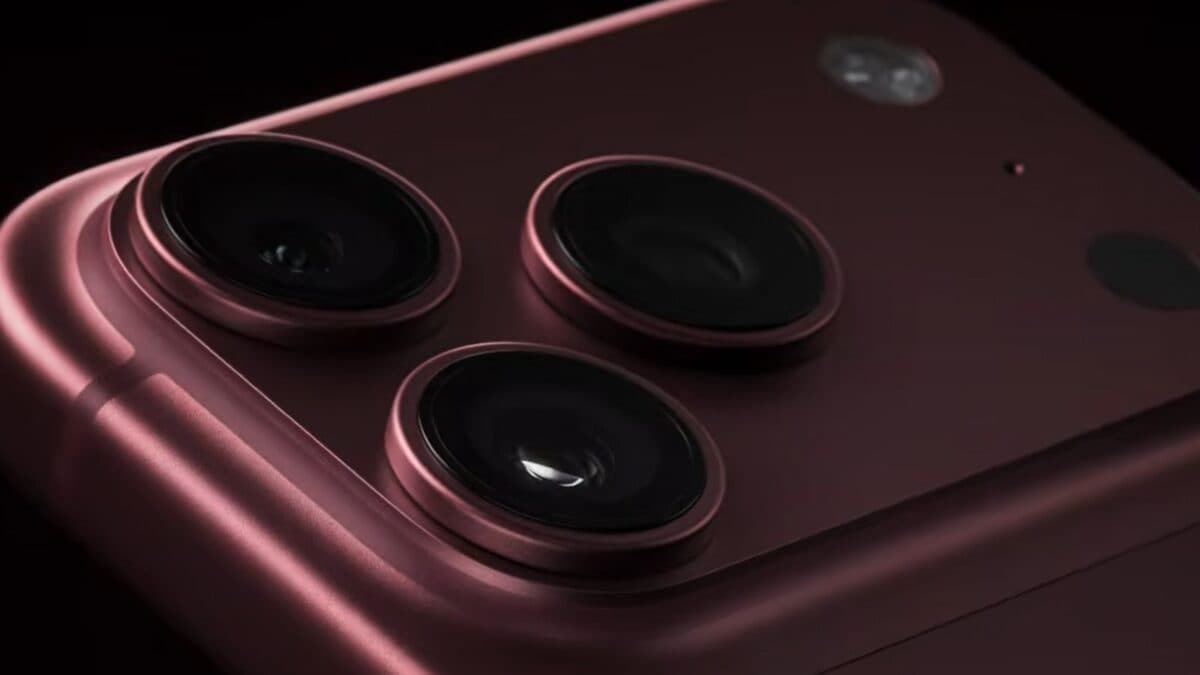
Apple used its September event to introduce its latest flagship devices, though the spotlight at the keynote was shared with the company’s first foldable phone, the iPhone Duo, which took center stage as Apple’s very first foldable phone. Even with the new foldable device capturing early attention, the iPhone 18 Pro and Pro Max arrived with a thorough hardware overhaul centered on optical mechanics, processing power, and digital trust. As ZDNET’s key takeaways noted, Apple unveiled the iPhone 18 Pro and 18 Pro Max at its September event, continuing to feature the company’s best cameras with upgrades including dual-aperture cameras and a smaller Dynamic Island.
Physical Variable Aperture on the iPhone 18 Pro Camera
The most striking physical upgrade to the iPhone 18 Pro lineup sits inside the main camera module, where Apple introduced a physical variable aperture. The headline feature is a 48MP main camera built around a physically adjustable aperture using laser-cut components thinner than a human hair. Traditional smartphone cameras rely on fixed openings, but the new system utilizes these components to adjust the lens opening automatically or manually.

Paired with the physical hardware is a new Pro controls panel baked directly into the Camera app. Photographers can manually adjust shutter speed, white balance, and the new aperture stops while monitoring exposure levels through a live histogram. Mashable’s Stan Schroeder has been testing the new camera tools for his iPhone 18 Pro Max review, and you can see plenty of test photos in his full review.
Apple Reference Image Mode and Cryptographic Verification
Beyond optical changes, Apple introduced Reference Image mode, an opt-in security setting designed to cryptographically verify that an image was captured by genuine hardware rather than generated by artificial intelligence. Apple’s new Reference Image mode on iPhone 18 Pro cryptographically proves a photo is real, using sensor signing, Private Cloud Compute and quantum-secure signatures. Apple has published a detailed technical breakdown of Reference Image, a new opt-in camera mode on the iPhone 18 Pro and Pro Max that cryptographically proves a photo was actually captured by an iPhone sensor, without revealing who took it or which device was used. Apple’s Security Research blog explains that AI tools have made it trivial to generate or alter photorealistic images, to the point where a photo simply looking real is no longer enough to prove it depicts something that actually happened. Existing industry approaches, built around the C2PA standard, attach authenticity information after a photo is captured and track its edit history from that point on. Apple argues this leaves a weak spot: if any part of that after-the-fact editing chain is compromised, there’s no way for someone viewing the image to detect the failure.

Apple says any serious photo-verification system needs to satisfy three requirements at once. First, semantic authenticity: the final image has to faithfully represent what the sensor actually captured. Second, resilience to compromise: nobody should be able to fake a capture.
Apple Security Research Details on Secure Digital Negatives
Apple has published a new post on its Security Research website in which it details how the iPhone 18 Pro’s new Reference Image camera mode works. The feature is designed to make it easier for people to confirm the authenticity of photos and be sure that no AI features were used. Apple has described its new system as a secure digital negative, one that contains all of the raw pixels captured during the shooting of a photograph as well as metadata. That information is then processed within Apple’s Private Cloud Compute system, with the camera sensor cryptographically signing the data immediately after the image is captured. The creation of a secure digital negative begins with a secure boot of the camera sensor into a specialized reference capture mode. The mode instructs the sensor to cryptographically sign pixel data immediately after capture, and prevents the sensor firmware from modifying the data. This creates a hardware-enforced assurance that the operating system receives pixel data exactly as the hardware sensor captured it, preventing injection or tampering attacks. Apple’s system also uses cryptographic timestamps as a way to verify exactly when a photo was taken rather than simply relying on the timestamp in the photo’s metadata. Knowing when a photograph was captured is often a critical element in establishing its veracity. While prior industry systems have included a timestamp provided by the general device operating system, Apple believes this plainly falls short of the real-world assurance need. Instead, Apple Reference Image provides both a lower bound and an upper bound on capture time from Apple’s cryptographic timestamp service.

The displays of the iPhone 18 Pro and Pro Max are the same as last year, with 6.3-inch and 6.9-inch AMOLED panels that are still plenty bright, sharp, and vivid. Apple’s been on a bit of a roll with iPhone colors recently, debuting a polarizing Cosmic Orange with the iPhone 17 Pro and then a new Burgundy with the iPhone 18 Pro. In person, the new color looks refreshingly mature, shimmering in maroon and wine-like hues that should suit a variety of attire. The company has brought back a Deep Black finish, too, alongside Silver and Glacier.
The iPhone 18 Pro is $100 more expensive than last year, starting at $1199, while the iPhone 18 Pro Max starts at higher storage tiers that are quite pricey.
- WeBuyBricks Develops AI Sorting System to Salvage Millions of Lego Bricks
- Snap Partners With Nvidia, AWS, and Salesforce for AR Glasses Enterprise Push
- Why the iPhone 18 Pro Max Sold in the US Skips Apple's New Modem (daybreakwire.com)
- Microsoft unveils binding AI safety and privacy standards for US schools (newsarchyuk.com)
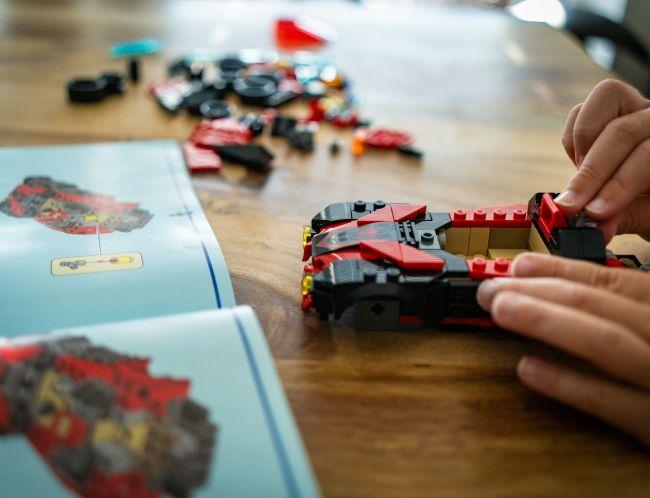
WeBuyBricks Develops AI Sorting System to Salvage Millions of Lego Bricks
Rossendale-based WeBuyBricks has developed a custom AI sorting system capable of processing 100,000 used Lego pieces daily.

Anthropic Researchers’ Warnings Prompt Push for AI Regulation
Massachusetts Congresswoman Lori Trahan responded by pushing for the bipartisan Frontier Act to regulate frontier labs.

Rodrigo Duterte Appears In Person At ICC For First Time In The Hague
Former Philippine President Rodrigo Duterte appeared in person at the International Criminal Court (ICC) in The Hague for...