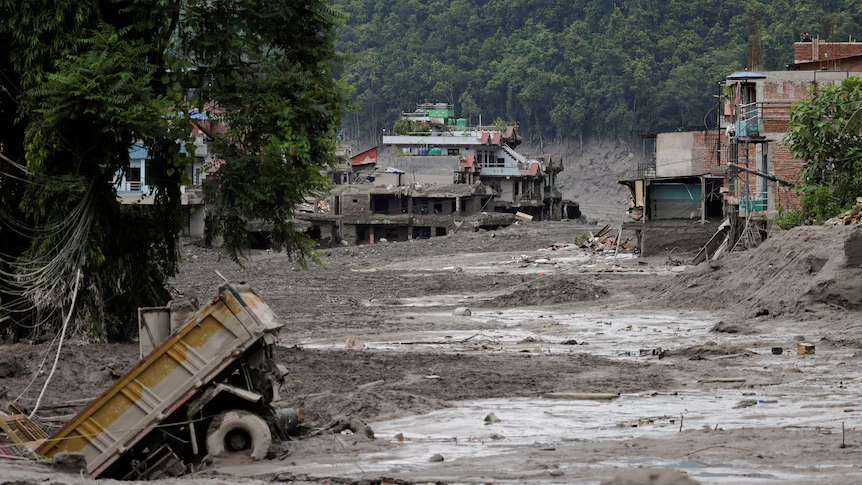
Human-induced climate change contributed significantly to the catastrophic glacier collapse and subsequent flash floods on the Nepal-Tibet border, according to a scientific study conducted by Imperial College London researchers. The disaster occurred on August 26, when a massive section of overhanging glacier and rock measuring roughly 200,000 square meters broke off the Langtang Lirung mountain peak.
Study Links Climate Breakdown to Deadly Langtang Lirung Glacier Collapse
The fallen ice and rock dropped about 1,400 meters into the valley below, sending an avalanche of 110 million cubic meters of snow and ice into the Lhende Khola river on the Tibetan side. The impact was so intense that United States Geological Survey data showed it registered as a magnitude 5.2 earthquake. The resulting deluge of water, ice, rock, and sediment careened downriver at speeds exceeding 110 mph, wiping out thousands of houses, roads, bridges, and energy infrastructure across border towns and villages in Nepal and Tibet.
The World Weather Attribution study concluded that the disaster was a compound event triggered by rising temperatures, thinning glaciers, thawing permafrost, and pre-existing geological weaknesses, alongside a potential contribution from a major earthquake in Nepal in 2015. Dr. Friederike Otto, a climatologist at Imperial College London and one of the study’s authors, stated that there was absolute certainty that human-induced climate change played a role in preconditioning the disaster.
Temperature Rises and Regional Environmental Impacts
Researchers identified unusually warm conditions prior to the collapse. In the region where the disaster occurred, climate breakdown has caused about 2 degrees Celsius of warming since pre-industrial times, including about 1.5 degrees Celsius of warming specifically in July and August. Local temperatures reached 5 degrees Celsius above the 30-year average in the days leading up to the collapse, and July and August were the warmest on record locally.

The study also noted that glaciers in the region had been thinning by about half a meter each year, which weakened existing fractures and increased instability. Additionally, the freezing threshold in the Himalayas has risen by about 100 meters per decade since the 1980s, exposing mountain slopes to higher and longer thaw temperatures. Heavy snowfall in October and November also contributed to a large amount of meltwater early in the year.
Scientists emphasized that climate change acted as a destabilizing factor on existing geological conditions rather than serving as the sole immediate trigger. Simon Cox, chief scientist at the Mountains to Sea programme at Earth Sciences New Zealand, explained that warming reduces ice support on steep slopes, boosts meltwater, and alters freezing, thawing, and rainfall patterns.
Casualties and International Fallout
The disaster resulted in more than 1,400 deaths, while thousands of people remain missing. Nepali Foreign Minister Shisir Khanal called on top emitting nations such as China and India to wake up and accept shared responsibility for the disaster, noting that Nepal is one of the lowest contributors to greenhouse gas emissions yet remains one of the biggest victims of global warming.
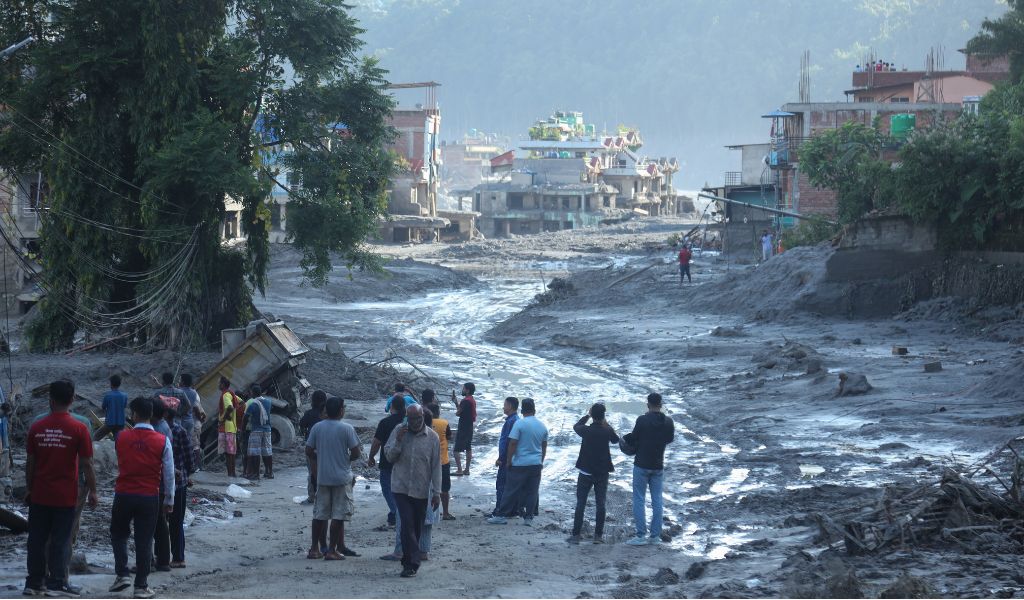
In response to the catastrophe, Nepal filed a formal request with the United Nations loss and damage fund for financial support to address the destruction. Seeking compensation and justice, the nation’s leadership continues to press international bodies as communities downstream struggle to cope with the cascading impacts of climate disruption in the Hindu Kush mountain range.
Keep reading

NASA Discovers Massive McGetchin Crater on Moon Formed in 2024
NASA researcher Robert Wagner has discovered a massive, 730-foot-wide lunar crater named McGetchin.
Greenland And Antarctica Lost Over 12 Trillion Tons Of Ice Since 1979
Satellite observations reveal that Greenland and Antarctica have shed massive amounts of ice since 1979.
Hubble Telescope Discovers Massive Decagon Wave at Saturn’s South Pole
Astronomers using the Hubble Space Telescope have discovered a massive, 10-sided atmospheric wave pattern encircling Saturn’s south pole.

Antarctic Krill Discovered Feeding at Deep-Sea Hydrothermal Vents
In a first for scientific history, researchers have discovered Antarctic krill utilizing deep-sea hydrothermal vents as a habitat,...