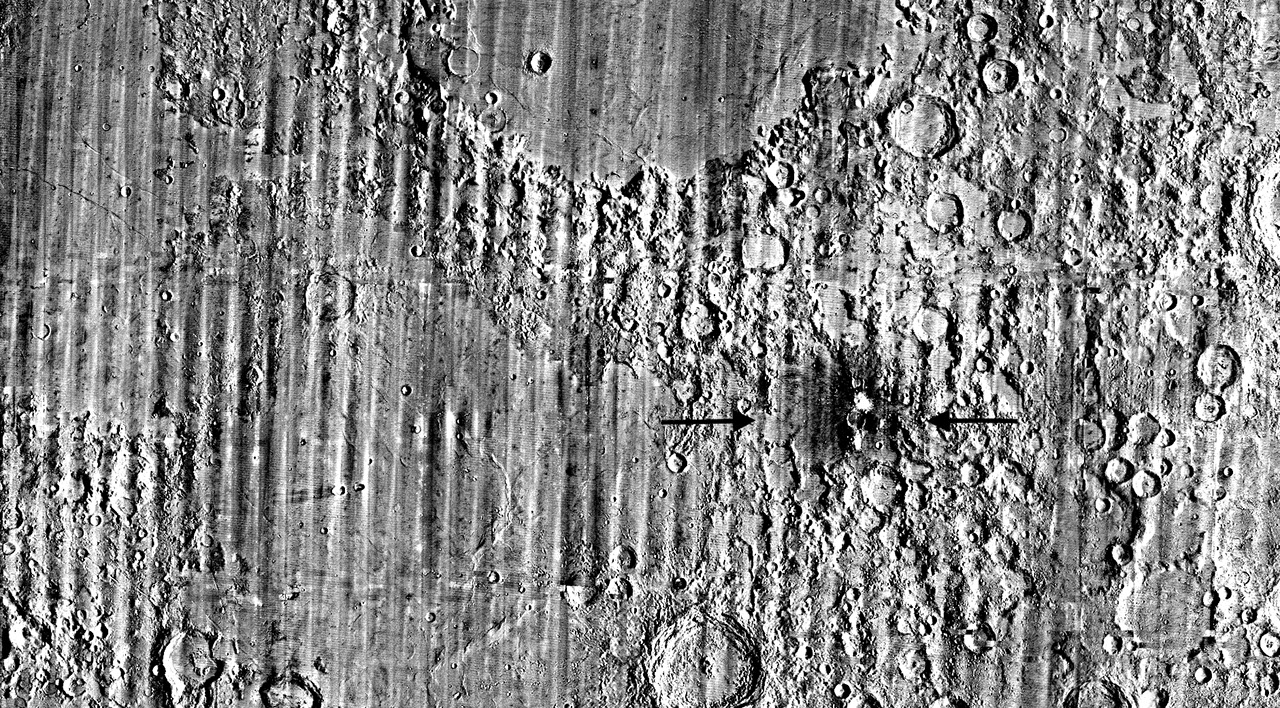
NASA’s Lunar Reconnaissance Orbiter has discovered McGetchin, the largest newly formed lunar crater ever found in the solar system. Measuring 728 feet wide and 141 feet deep, the crater was carved on the Moon’s eastern edge between April 11 and May 22, 2024, by an impact happening roughly once a century.
How Robert Wagner Spotted a Once-in-a-Century Moon Impact
What began as a routine data-quality check on a giant computer screen revealed an extraordinary planetary event. Robert Wagner, an image-processing specialist from Intuitive Machines working with data from the Lunar Reconnaissance Orbiter Camera system, noticed an unusually large bright spot circled by a dark halo. The distinct visual signature implied that surface material had been violently shaken up across the lunar terrain.
Wagner recalled the moment of discovery, saying, “I just stopped, dropped everything, and started looking into what that spot was,” as noted by NASA. By comparing before and after images captured by the orbiter, he confirmed the feature. A study published Wednesday in the journal Science Advances subsequently established it as the largest newly formed crater ever discovered in the solar system.
The Scale of McGetchin Crater and the Object That Created It
Named McGetchin in honor of pioneering lunar scientist Tom McGetchin, the impact site sits on the Moon’s eastern edge. The resulting cavity is around 730 feet wide and 141 feet deep, dimensions substantial enough to accommodate three vertically stacked yellow school buses or stretch across the length of two football fields. Researchers determined that the cataclysm was triggered when a comet or an asteroid roughly the size of a three- to six-story building slammed into the lunar surface between April 11 and May 22, 2024.
Unlike Earth, which possesses a protective atmospheric layer that slows down and incinerates incoming space debris, the Moon lacks such a shield. Consequently, objects reach the surface unimpeded. While the spacecraft’s team has logged more than 1,000 new impact craters and flagged 100,000 separate surface changes during more than 17 years in operation, events of this specific scale are exceptionally rare. Scientists estimate that an impact matching McGetchin’s magnitude occurs roughly once every 132 years, describing the event as a statistically rare, effectively once-in-a-lifetime observation.
Thermal Anomalies and the Four-Mile Cold Spot
The impact’s consequences extended far beyond the crater walls themselves. Following the discovery, researchers utilized the thermal instrument Diviner aboard the Lunar Reconnaissance Orbiter to examine the surrounding area. They uncovered a four-mile-wide zone encircling the crater that registers about 16 degrees Fahrenheit cooler at night than the adjacent terrain.
According to a second paper published Wednesday in the same journal, Science Advances, this thermal anomaly occurs because the violent collision fluffs up the regolith around the crater. The resulting material is less dense and significantly less capable of retaining surface heat. As researchers report, the cooling happens because the impact fluffs up the regolith, making it less dense and therefore less able to retain heat.
Preparing for Future Lunar Bases and Rover Mobility
Real-time documentation of such a massive impact provides critical geological data as space agencies look toward future lunar exploration. Both the United States and China are pursuing crewed missions and long-term infrastructure ambitions on the Moon as NASA prepares to build a base for astronauts. Understanding how large-scale impacts alter physical properties across a broad area helps researchers anticipate environmental conditions for future human and commercial activity on the Moon.
Furthermore, the extensive modification of the regolith surrounding McGetchin demonstrates that major strikes alter the landscape well beyond the physical rim of the crater. Researchers note that these widespread physical alterations could directly influence future surface operations, including how rover wheels interact with the altered terrain.

Study Links Climate Breakdown to Deadly Langtang Lirung Glacier Collapse
Human-induced climate change contributed significantly to the catastrophic glacier collapse and subsequent flash floods on the Nepal-Tibet border,...

NASA Discovers Massive McGetchin Crater on Moon Formed in 2024
NASA researcher Robert Wagner has discovered a massive, 730-foot-wide lunar crater named McGetchin.
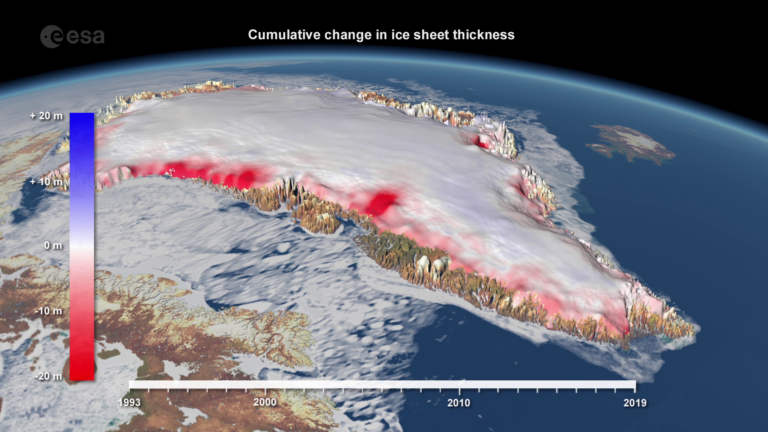
Greenland And Antarctica Lost Over 12 Trillion Tons Of Ice Since 1979
Satellite observations reveal that Greenland and Antarctica have shed massive amounts of ice since 1979.

Hubble Telescope Discovers Massive Decagon Wave at Saturn’s South Pole
Astronomers using the Hubble Space Telescope have discovered a massive, 10-sided atmospheric wave pattern encircling Saturn’s south pole.