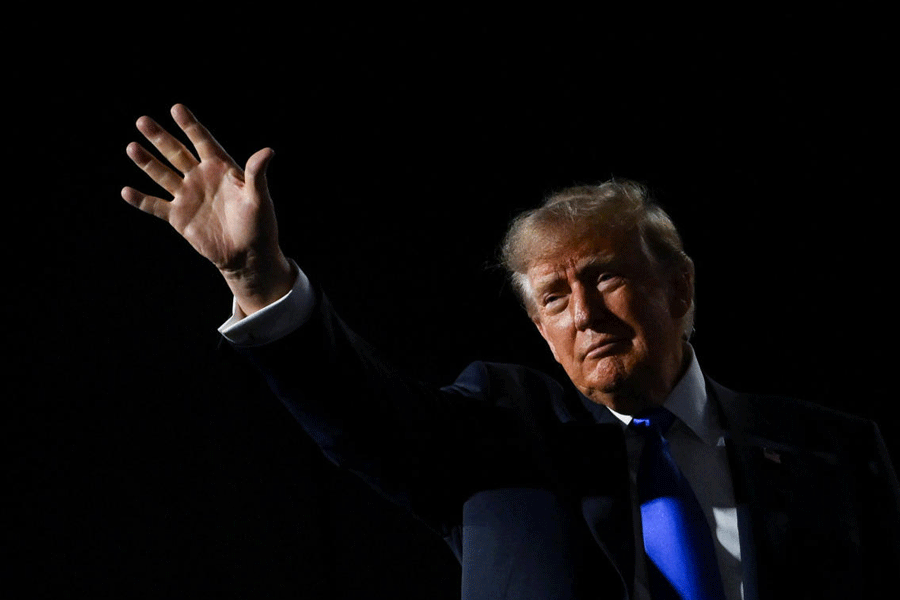
Graham Sanctioning Russia and Iran Act of 2026 by the US House on Wednesday, India’s Ministry of External Affairs confirmed that the nation remains committed to safeguarding its energy security for its 1.4 billion people amid potential secondary tariff threats.
Named the Lindsey O.
Graham Sanctioning Russia and Iran Act of 2026
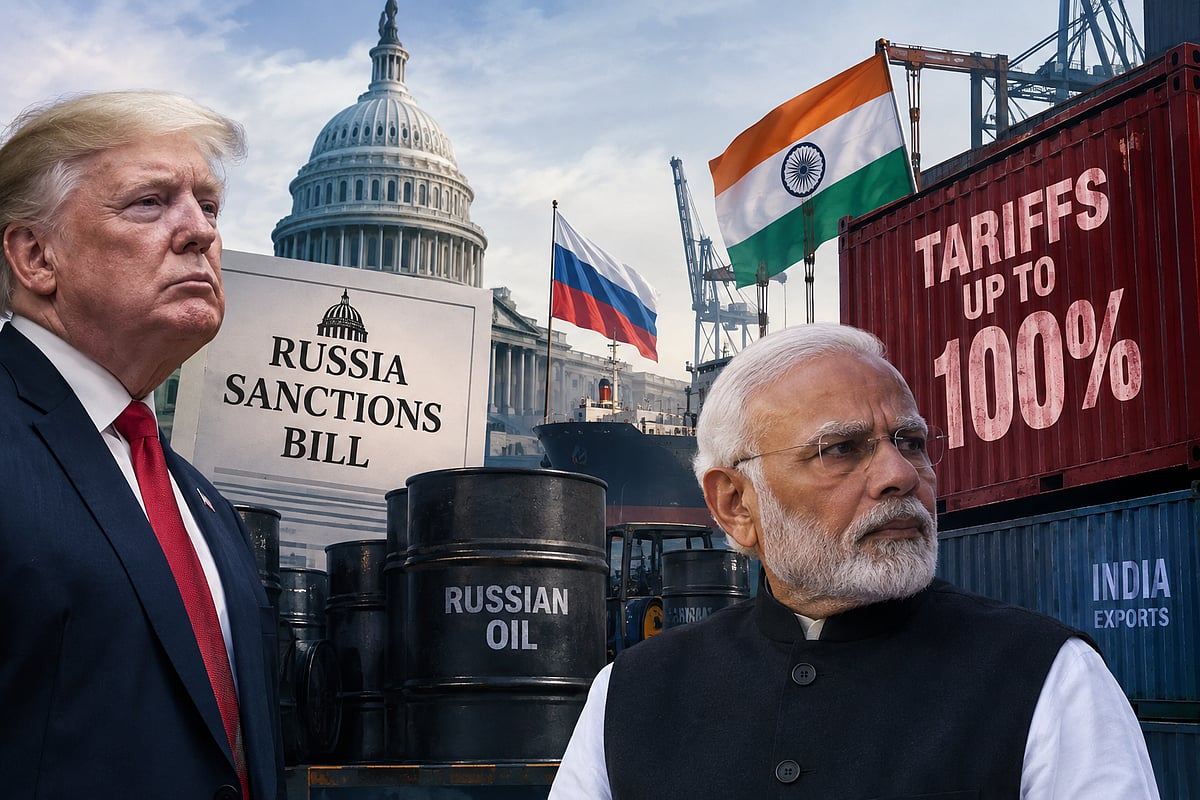
in honor of the late South Carolina Republican senator who introduced the framework in April 2025, the legislation heads directly to President Donald Trump for his expected signature. The bill aims to restrict Moscow’s military funding by targeting its energy exports and financial networks, while simultaneously granting the executive branch discretionary authority to impose tariffs of up to 100 per cent on major foreign buyers of Russian oil and gas.
Legislative Mechanics and the 100 Per Cent Tariff Threat
The newly advanced sanctions package targets several layers of Russia’s wartime economy, including its banking institutions, state officials, and the shadow fleet
of maritime tankers utilized to transport discounted oil beneath established market caps. Under the primary provisions approved by the US House of Representatives, the legislation establishes a statutory pathway for the executive branch to levy secondary tariffs of up to 100 per cent on top importers of Russian petroleum and natural gas. An earlier version passed by the US Senate on August 8, 2026, referenced the five largest importers by volume, whereas a proposed amendment in the House by Democratic Representative Steny Hoyer explicitly listed ten nations eligible for the secondary duties, including India, China, Turkiye, Azerbaijan, Hungary, the Slovak Republic, the United Arab Emirates, Singapore, Kazakhstan, and the Kyrgyz Republic.
Despite the broad authority granted by the package, the legislation does not automatically trigger penalties against importing nations. The implementation of any duties depends entirely on whether the Trump administration chooses to invoke the new statutory powers. The bill also extends existing US sanctions on Iran for an additional five years, a provision incorporated to broaden bipartisan backing among lawmakers.
New Delhi’s Energy Position and Trade Volumes
India emerged as a major buyer of discounted Russian crude oil following Western sanctions that disrupted traditional supply chains after the invasion of Ukraine in February 2022. According to a monthly analysis published by the Centre for Research on Energy and Clean Air, India’s imports of Russian crude reached a record high in June 2026, climbing 34 per cent month-on-month to total EUR 4.5 bn. Total Russian hydrocarbon imports into India reached EUR 5.5 bn that month, positioning New Delhi as the second-largest fossil-fuel consumer of Russian energy globally behind China.
Data compiled across recent months indicates shifts in purchasing volumes. While seaborne crude imports surged during mid-2026, Indian refiners reduced purchases by 24 per cent in August compared to July levels, importing EUR 4.1 billion in crude oil out of EUR 4.8 billion in total Russian hydrocarbons. Key domestic facilities such as the Jamnagar refinery operated by Reliance in Gujarat and the Vadinar refinery operated by Nayara Energy anchor these supply lines, alongside specialized shipments such as jet fuel delivered under existing UK exemptions.
Government Response and Bilateral Diplomacy
Responding to the congressional vote, the Ministry of External Affairs issued an official statement outlining New Delhi’s position on energy independence and trade preservation.
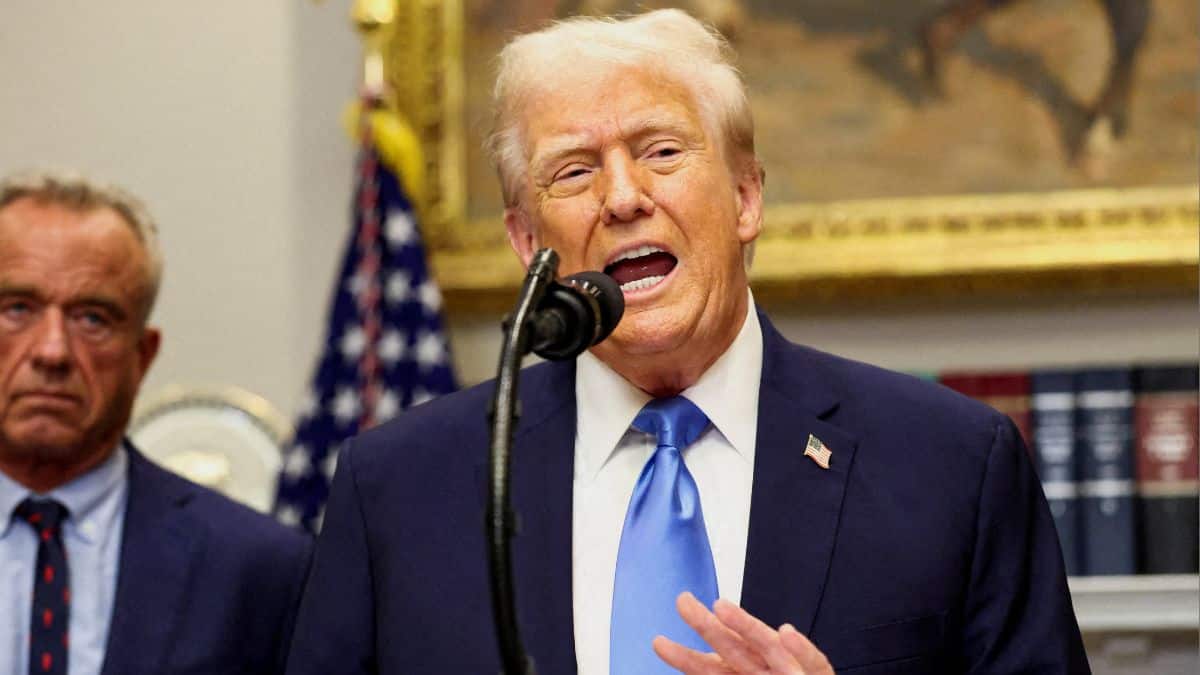
The government noted that this issue has been discussed at high levels in recent months with American interlocutors, where Indian officials articulated the potential fallout for both bilateral relations and international energy markets. Officials added that trade authorities will work closely with domestic industry bodies to manage the implications of the new US law as it awaits presidential action.
Worth a look

Ethiopian Airlines Adds Nacala to Mozambique Network
Ethiopian Airlines is expanding its Mozambique network by launching thrice-weekly passenger service to Nacala starting October 27, 2026.

Macklemore Pledges $1 Million Ed Sheeran Tour Salary to Palestine Relief
American rapper Macklemore has announced that he will donate his entire $1 million salary earned as an opening...

Rachida Dati and Carlos Ghosn Face Trial in Paris Over Renault Payments
Former French culture minister Rachida Dati went on trial in Paris alongside fugitive former executive Carlos Ghosn, facing...

NBC4 News Helicopter Crashes in Chatsworth Killing Three
Three people were killed when a news helicopter used by NBC4 and Telemundo affiliates crashed and burst into...