
Residents across Cheyenne, Wyoming, flooded emergency lines on Tuesday after a strong rotten-egg-like odor filled the city, triggering evacuations at several public and commercial buildings.
The intense smell did not come from an actual natural gas leak, according to Black Hills Energy, but rather from an accidental release of mercaptan during routine equipment maintenance at the utility’s south Cheyenne border station near College Drive and Parsley Boulevard.
Natural gas is entirely odorless in its raw state, so utilities routinely add mercaptan as a safety additive that lets everyday consumers detect leaks immediately by smell. That precise warning mechanism is what caught residents off guard when the odorant escaped into the wind.
“We started to receive gas leak calls through our call center about 10 a.m. as we started responding to them, we realized we had not a gas leak, but an odorant spill at our south asset,” said Rachael Sisneros, Wyoming Operations General Manager, in an interview with Wyoming News Now.
Equipment Decommissioning Triggers Citywide Response
The accidental release happened while work crews were taking an old mercaptan pot out of service for upgrades. While emptying the final remnants of the chemical, the odorant spilled.
Although mercaptan can cause eye and skin irritation in large quantities, it remains generally harmless in the tiny doses typically added to fuel supplies. Strong winds quickly carried the potent fumes across the asset area, stretching as far as Downtown Cheyenne and beyond.

The utility company received about 75 calls reporting potential leaks. To manage the surge, Black Hills Energy brought in extra trained workers from across the state to handle emergency responses.
“We respond to them very quickly and treat them as an emergency. So we actually utilized other trained workers throughout the state to come and help us respond, so that people got a response very quickly and were ensured to remain safe and stay safe,” Sisneros told Wyoming News Now.
Local Businesses and Public Offices Evacuated
Downtown businesses and government facilities reacted swiftly to the sudden fumes. At the Laramie County Governmental Complex, officials ordered an evacuation out of an abundance of caution, though operations returned to normal by Wednesday, November 18, 2026.
Manager Ann Wallace was working nearby at a Cheyenne Cup 2 location when the smell reached the shop around 11:30 a.m., prompting her to shut off the oven immediately.
“I was afraid that because there’s some workers outside and I was afraid that maybe they hit a gas line and that the building was going to fill up with gas, my main concern was just to get all the appliances off because this is kind of a dangerous spot,” Wallace told Wyoming News Now.
A Laramie County Sheriff’s Office deputy soon arrived to order an evacuation of the building due to the strong odor. Wallace was sent home by her boss, Eloy Martinez, around noon.
Trainee Ireland Johnson worked at the coffee shop’s second location a couple of blocks away. Martinez called that branch after visiting the courthouse.
“My boss, Eloy, went down to the courthouse and he told us that right when he opened the door, like it was just a huge whiff of gas, like an insane smell of gas, it was pretty scary hearing that,” Johnson told Wyoming News Now.
“I was fearful of everyone that was working here and especially just down the street, like you never know what’s going to happen. So I was pretty terrified,” Johnson added.
Black Hills Energy traces its origins to the 1883 founding of the Black Hills Electric Light Company in Deadwood, South Dakota. The modern corporation grew through a series of major acquisitions, including the 2004 purchase of Cheyenne Light from Xcel Energy and the 2015 acquisition of SourceGas for $1.89 billion, which expanded its customer base across Arkansas, Colorado, Nebraska, and Wyoming.
Spill Cleaned up as Investigation Continues
Black Hills Energy confirmed that the spill has been properly cleaned up and that the odorant dissipates into the air over time. The utility continues to investigate the exact mechanical cause of the spill to prevent similar accidents during future infrastructure upgrades.
Iowa Attorney Jefferson Fink Focuses on Administrative Law Defense
A letter from an Iowa state agency—whether it arrives as an investigation notice, a records request, or a...

RJ Luis Jr. Makes LSU Debut Amid NCAA, SEC Legal Battle
“He played well for not having practiced in a while,” LSU coach Will Wade said after RJ Luis...
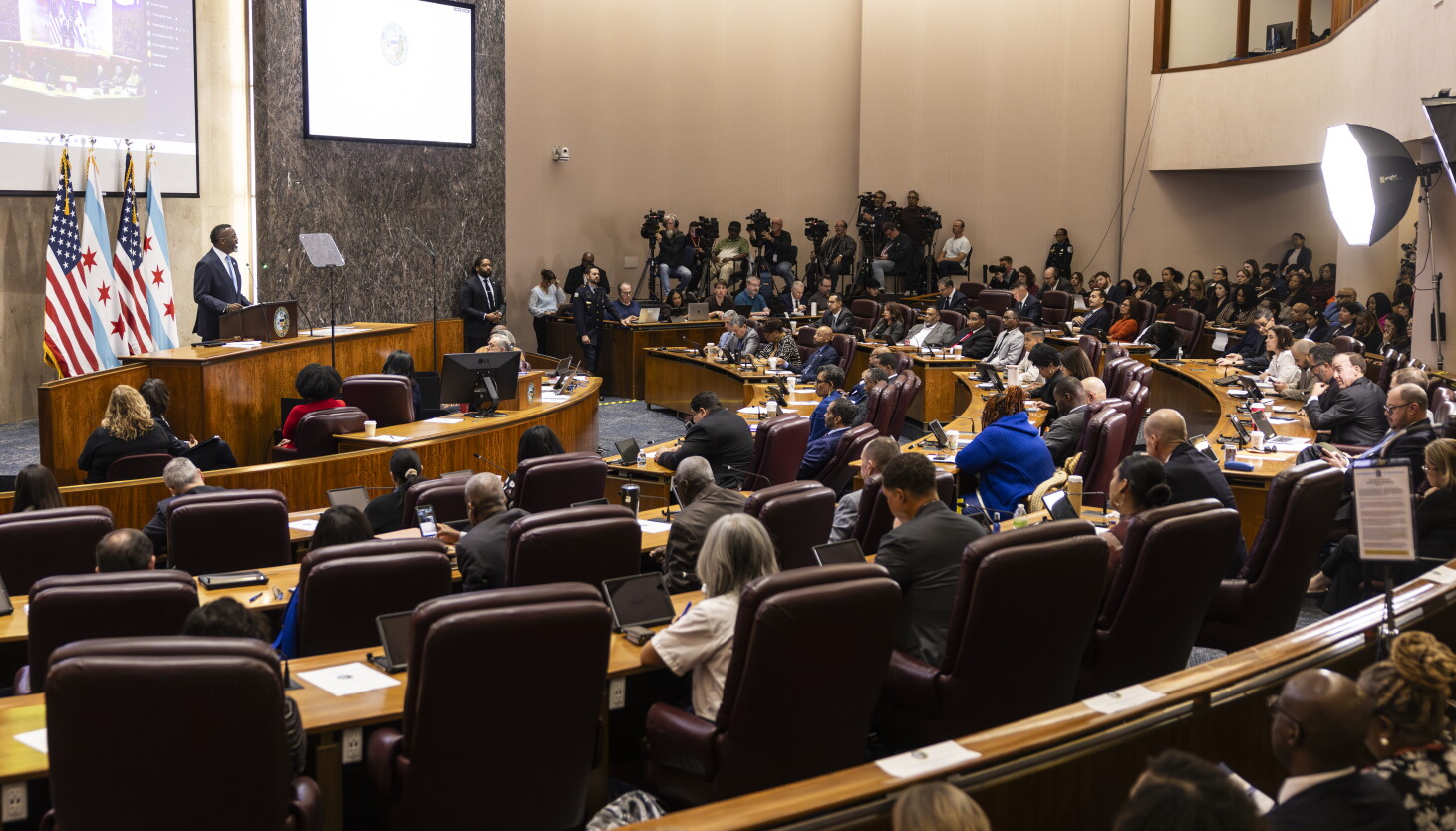
Chicago Council Unanimously Backs Millionaire Tax Resolution Amid Hypocrisy Claims
Facing claims of political double standards, the Chicago City Council passed a resolution unanimously on Wednesday that calls...

Colts at Texans TNF: Daniel Jones Leads QB Depth Chart, How to Watch on DAZN
The Indianapolis Colts travel to Reliant Stadium to face the Houston Texans on Thursday for an AFC South...