
Alabama executed Michael Shannon Taylor by lethal injection at the William C. Holman Correctional Facility in Atmore, concluding a legal case that spanned three and a half decades. A physician pronounced Taylor dead at 6:10 p.m. Central time, according to the Alabama Department of Corrections.
Attorney General Steve Marshall cleared the execution to begin at 5:47 p.m. after Gov. Kay Ivey declined to grant clemency. Earlier in the day, Ivey informed Corrections Commissioner Greg Lovelace that she would not exercise her clemency powers and directed him to carry out the sentence.
Thirty-five years ago yesterday, Ivan and Lucille Moore kindly opened their home to Michael Taylor,
Ivey said in a statement released by her office. Mr. Taylor repaid the Moores by beating them to death with a metal bar, all to rob them for money to buy clothing and jewelry.
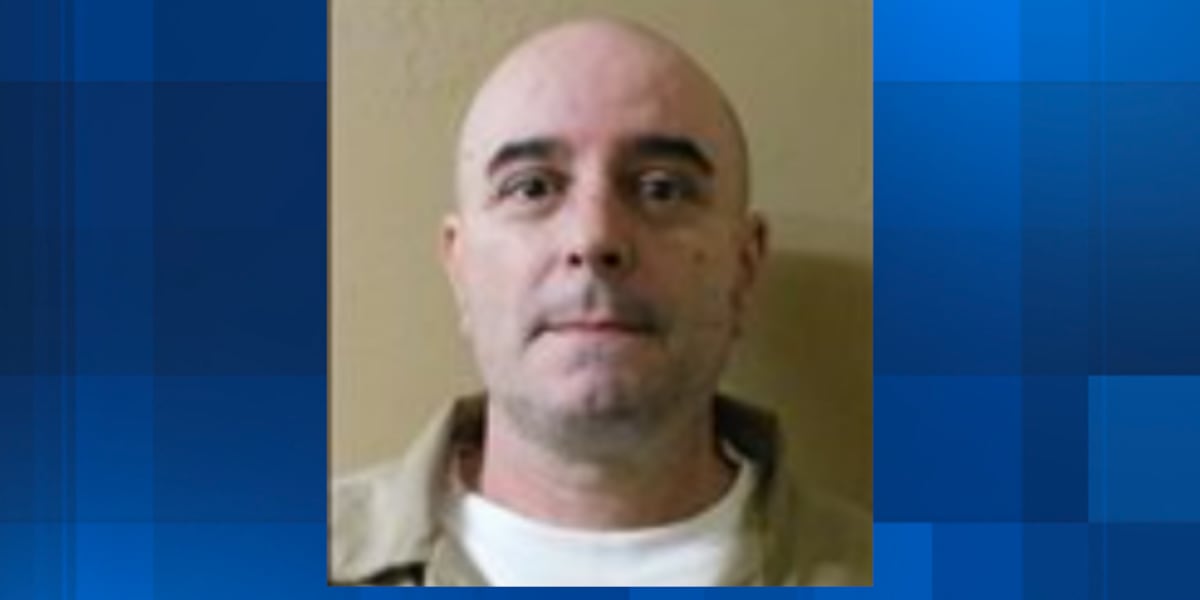
Media witnesses reported no complications during the lethal injection procedure. According to the Alabama Reflector, Taylor’s eyes were initially open and looked in various directions before he spoke softly to his spiritual advisor and attorney. At 5:53 p.m., his breathing became labored, his eyes closed, and his feet moved briefly at 5:56 p.m. before death was pronounced at 6:10 p.m.
Taylor Murdered Elderly Couple in Etowah County
The capital murders occurred in Etowah County in November 1991. Taylor was 19 years old at the time and in Gadsden while absent without leave from the U.S. Navy, according to court documents. He obtained a ride to the home of Ivan Moore, 83, and Lucille Moore, 79, whom he already knew.
After leaving a duffel bag outside, Taylor asked to use the telephone. Ivan Moore offered him a snack, and Lucille Moore briefly entered the room before stepping away. During that brief window, Taylor retrieved a barbell from his duffel bag and hid it inside his shirt.
When Ivan Moore turned toward the refrigerator to offer more food, Taylor struck him in the head with the barbell. Lucille Moore returned, found her husband on the kitchen floor, and was repeatedly struck by Taylor as she attempted to help him and pleaded for her life.
Taylor stole Ivan Moore’s wallet, Lucille Moore’s purse, a checkbook, and the couple’s 1986 Cadillac. He drove to Birmingham, cashing checks totaling $1,500 and purchasing clothing and jewelry over the following five days. A neighbor discovered the victims on Nov. 6. Ivan Moore died on the kitchen floor, while Lucille Moore remained unconscious and died from her injuries four days later on Nov. 10. Law enforcement arrested Taylor outside the Galleria in Hoover.

Defense Filed Challenges Before State Executed Taylor
Taylor’s execution was the third carried out by the state of Alabama in 2025, following the executions of Jeremy Tremaine Williams in August and Jeffery Lee in September. In contrast, Gov. Kay Ivey commuted the death sentences of Charles “Sonny” Burton in March and Toforest Johnson in October.
In the days leading up to his execution, Taylor’s defense team filed multiple legal challenges. The Federal Defenders for the Middle District of Alabama, who represented him starting in 2017, maintained that he had undergone a profound transformation. The man we knew was not the nineteen-year-old who committed this crime in 1991,
the organization stated, describing him as a fan of trivia and sports statistics who had developed a deep faith.
Taylor also filed requests for a stay of execution with the Alabama Supreme Court and the Alabama Court of Criminal Appeals, arguing that because he previously opted into nitrogen gas executions under a 2018 law, the state was legally barred from executing him via lethal injection. Federal courts had previously issued a permanent injunction blocking Alabama’s specific nitrogen protocol after finding it violated Eighth Amendment protections in a separate case. U.S. District Court Judge Emily Marks declined to extend that injunction to lethal injection, and the Alabama Supreme Court denied Taylor’s final motion for a stay.
Following the execution, the Moore family released a statement expressing gratitude to the Alabama Attorney General’s Office and others involved in concluding the case, while voicing lingering frustration over the protracted legal timeline.
Still, it is very hard for us to understand why it took 35 years,
the family said. We know that a person has a right to appeal, but there should come a time when the jury’s decision is final. For all these years, our family has had to live with the waiting, the delays, and the uncertainty.

Things to Do in Wilmington and Southeast NC This Weekend
Port City Daily reported that the Cape Fear region's Li’l Friday lineup features dozens of weekend events across...
Juici Patties Grand Opening: Authentic Jamaican Food in Bridgeport
Juici Patties Opens First Connecticut Location in Bridgeport with Grand Opening Celebration Set for November 14 The wait...

Lakewood Police Officer Killed and Three Wounded in RTD Bus Shooting
Lakewood Police Officer Killed and Three Wounded in RTD Bus Shootout A Lakewood Police Department agent was killed...

97-Year-Old Man Dies at Birthday Party Moments After Dancing to Stayin’ Alive
A 97-Year-Old Man Dies at His Halloween Birthday Party Moments After Dancing to the Bee Gees A red...