Alaska Senate Race Upended by New York Times Investigation Into Duplicate Candidate Recruitment
A bombshell investigative report published by the New York Times just days before Election Day has revealed that Democratic candidate Mary Peltola’s campaign was involved in a behind-the-scenes effort to recruit a duplicate candidate named Dan Sullivan to Alaska’s U.S. Senate race. With early voting already underway, the revelation has ignited intense debate across the state, thrusting a complex ballot-stacking scheme into the national spotlight as one of a few races that could decide which party controls the chamber.
While some may try to write this off as just how politics works now, ballot-stacking should have no place in our electoral process. Run and win on your merits: your views, your policy ideas, and your accomplishments. By contrast, recruiting candidates to manipulate the field and…
According to the Times investigation, campaign aides instructed a Peltola staffer to find as many people as possible named Dan Sullivan in Alaska to peel votes away from the incumbent Republican Sen. Dan Sullivan. This recruitment drive ultimately led retired teacher Dan J. Sullivan of Petersburg to announce his candidacy.
Peltola has denied involvement, dismissing the story as a distraction while campaigning in Soldotna. Meanwhile, the Petersburg candidate—frequently dubbed “Decoy Dan” by Donald Trump—did not respond to requests for comment on Wednesday, though he has previously said he had no connection to Peltola.
High-Stakes Fallout and Sharp Political Condemnation
The publication has drawn immediate, scathing pushback from Alaska’s Republican leadership. U.S. Sen. Lisa Murkowski, who endorsed Sen. Sullivan but supported Peltola in a previous campaign, issued a statement calling for the truth from Peltola.

Alaskans deserve the honest truth from Mary and her campaign—what has been revealed is a pattern of lies and coverups and a culture of deception that belongs nowhere in our elections or among our elected officials.
Nate Adams, spokesman for Sen. Sullivan’s campaign, reinforced those claims by alleging that Peltola, along with her campaign team and senior leadership, conspired with the Democratic Senatorial Campaign Committee, national Democratic attorneys, and local party operatives to enlist candidates intended to intentionally mislead voters. Donald Trump demanded Peltola drop out of the race and be prosecuted, but did not explain for what crime.
Defenders of the Democratic incumbent point out the striking parallels to prior election cycles. Observers quickly pointed out that conservative committees have similarly provided financial backing to Eric Hafner, an incarcerated federal inmate in New York who emerged as the sole Democrat to make it through in Alaska’s U.S. House race, while Democrats have instead backed an independent candidate, Bill Hill.
Voter Reactions Split Between Resignation and Outrage
Among everyday Alaskans, the reaction to the Times report is remarkably fractured. Some voters view the alleged scheme as business as usual in high-stakes modern politics, while others find the tactics deeply troubling.
Keven Kleweno, a registered Republican who plans to vote for Peltola, admitted he was unsurprised by the news, given Republicans’ prior claims of Democratic involvement in Dan J. Sullivan’s campaign. He expressed his belief that Elisa Rios, who served as Peltola’s campaign manager and spoke with the Times regarding the operation’s logistics, was simply a disgruntled former staffer who Kleweno said.
For others, the strategy leaves a bitter taste. Amber McClelland, a registered Democrat and former Libertarian living in Anchorage, said she believes modern politics has crossed a line. While acknowledging that political maneuvering spans party lines, she called the deliberate recruitment of a spoiler candidate “messed up.”
Yet, many voters expressed profound frustration that national media attention is focused on a candidate rather than pressing global and domestic concerns. D.J. McBride, an independent voter living in Willow, argued that the controversy underestimates the intelligence of the Alaskan electorate. “Both sides play pretty dirty pool, and if you’re stupid enough that you can’t tell the difference between an incumbent and a non-incumbent, I don’t have any patience for you,” McBride said. “Alaskans are smarter than that.”
In Petersburg, residents who have known Dan J. Sullivan for decades found it difficult to reconcile the media narrative with their personal experiences. Erica Kludt-Painter rejected the notion that her longtime neighbor was part of a coordinated national conspiracy. “I just don’t see him being involved in a national conspiracy,” she said. “I’m sorry, I just don’t. I know him to be a man of integrity who cares about his community and the people in it.”
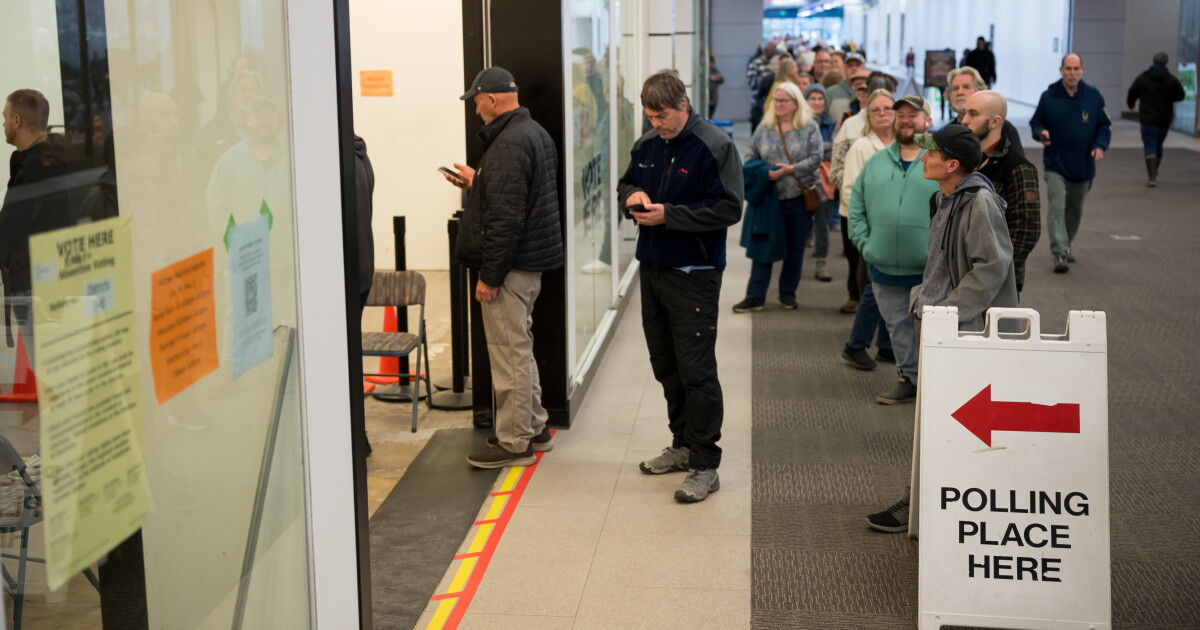
With early voting already underway and the general election just days away, the long-term impact of the ballot controversy on the balance of power in Washington remains to be seen.
Worth a look

AI-powered shoplifting detection expands in Chicago-area stores, but some raise concerns
Artificial intelligence tracks retail theft in Chicago-area stores as automated push alerts change loss prevention Artificial intelligence software...
University of Idaho POP Talks showcases research
From 3:30 to 4:30 p.m. Thursday, Nov. 5, University of Idaho experts will present findings regarding injury prevention,...

When Honolulu Police Chief David Lazar announced a plan to shift 100 officers back to street duty
Honolulu Reassigns 100 Officers to Patrol to Cut Overtime and Boost Visibility When Honolulu Police Chief David Lazar...

What early voting can – and can’t – tell us about how Georgia’s midterm election so far
Georgia Early Voting Numbers Hit Record Highs as Campaigns Sprint to Tuesday Friday marks the final day for...