
With 98% of precincts reporting across the Last Frontier, Alaskans appear to be delivering a narrow verdict on one of the state’s most contentious political experiments: “No” on Ballot Measure 2 is leading with nearly 52% of the vote. If the margin holds when every last ballot is tallied, the result keeps in place the ranked choice voting system, open primaries and new campaign finance disclosure rules that Alaska has used since 2022, Alaska Public Media reported.
This is far from a settled count, and both campaigns know it. In 2024, when Alaskans faced a nearly identical ballot question on the same voting system, “Yes” led on Election Night by a comfortable margin, only to watch late-counted ballots push “No” above 50% and defeat the repeal effort by a razor-thin margin of just 743 votes. That history hangs heavy over Tuesday’s early returns, leaving campaigns on both sides bracing for the possibility that the remaining ballots could still shift the outcome in the coming days.
Ballot Measure 2, backed primarily by Republicans, sought to tear up the voting system Alaska voters approved in 2022. Proponents of the repeal argue that ranked choice voting confuses ordinary voters and creates openings for candidates and political operatives to game the system for strategic advantage. To show the system is malfunctioning, they cite Democrat Tom Begich withdrawing from the governor’s race after finishing second in the primary, plus the progress of underdog candidates to the general election ballot, such as a New York inmate and a Petersburg resident who coincidentally shares incumbent Sen. Dan Sullivan’s first and last names.
Yet here is where the debate gets complicated. Proponents and opponents alike acknowledge that the open primary component fundamentally reduces the influence of political partisans, making it significantly harder for hardcore conservatives or liberals to knock off more moderate incumbents like Republican Sen. Lisa Murkowski in primary contests. Supporters of the current system counter that these mechanics incentivize cooperation and moderation among candidates while eliminating the spoiler effect that minor-party candidates can exert in traditional single-choice races, where a third-party contender can siphon votes from a major candidate and alter the outcome.
The ballot fight also carried high stakes for transparency in campaign financing. Ballot Measure 2 would have repealed “dark money” rules, some of which are specifically designed to identify the true sources of large campaign contributions flowing into state races. Supporters of those disclosure requirements argue they give Alaskans critical insight into the outside forces and hidden funders shaping politics in the state.
That transparency fight attracted a torrent of outside cash from megadonors across the country. Campaigns on both sides brought in millions from out-of-state billionaires. Elon Musk donated $1.5 million to the Aurora Action Network, which served as the predominant funder of Repeal Now, the group leading the charge for the ballot initiative. Other major donors to the repeal campaign included Jeff Yass, Timothy Mellon and Hilcorp founder Jeffery Hildebrand. Repeal Now reported in late October that it had raised nearly $2.6 million. The opposition outraised them by a wide margin, raising $10.4 million as of late October, backed by key donations from billionaire former New York Mayor Michael Bloomberg, election reform advocate Kathryn Murdoch and Elon Musk’s brother, Kimbal Musk.
While voters weighed the future of ranked choice voting, they also approved Ballot Measure 3 by a wide margin in early returns. That measure specifies that “only” U.S. citizens are allowed to vote in Alaska elections, a requirement already enshrined in state law but which proponents, including three Republican former state legislators and GOP megadonor Richard Uihein, say would make the statute even clearer. Alaska is one of six states voting on similar citizenship measures this year, and notably, no group formed to formally oppose it.
The 2024 contest, decided by a margin of just 743 votes, remains the ghost in the room as Alaska’s final ballots are counted.
Worth a look

Democrats on track to gain six seats in Hawaii Legislature as five Republicans trail
Heading into Tuesday night, Hawaii Republicans were bracing for a difficult midterm cycle without a presidential race at...

Hartford, Sumner reject RSU 10 withdrawal despite Buckfield approval
Buckfield residents voted 599-538 on Tuesday in favor of withdrawing from Regional School Unit 10, but the effort...
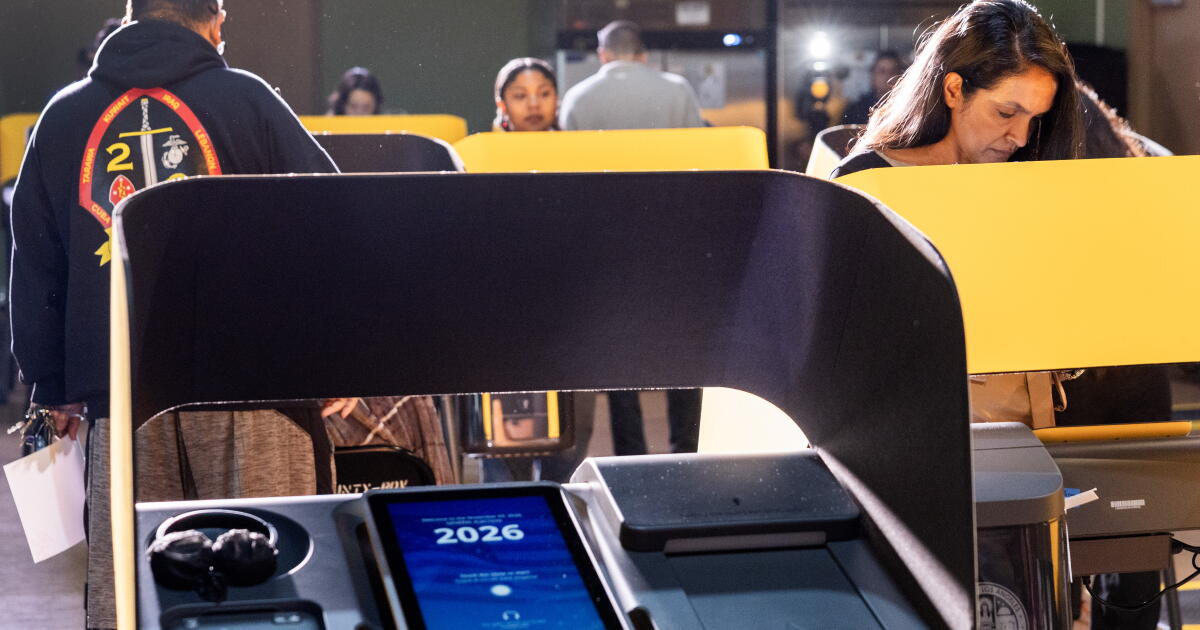
DOJ Deploys Election Monitors to Los Angeles Amid Legal Battle Over Contested Ballots
The Justice Department sent a last-minute surge of election monitors into Los Angeles on Tuesday morning, hours after...

Consuelo Redhorse Wins Colorado House District 13 Election
Consuelo Redhorse, a Democrat from Silverthorne, has won the race for Colorado House District 13, besting Republican challenger...