
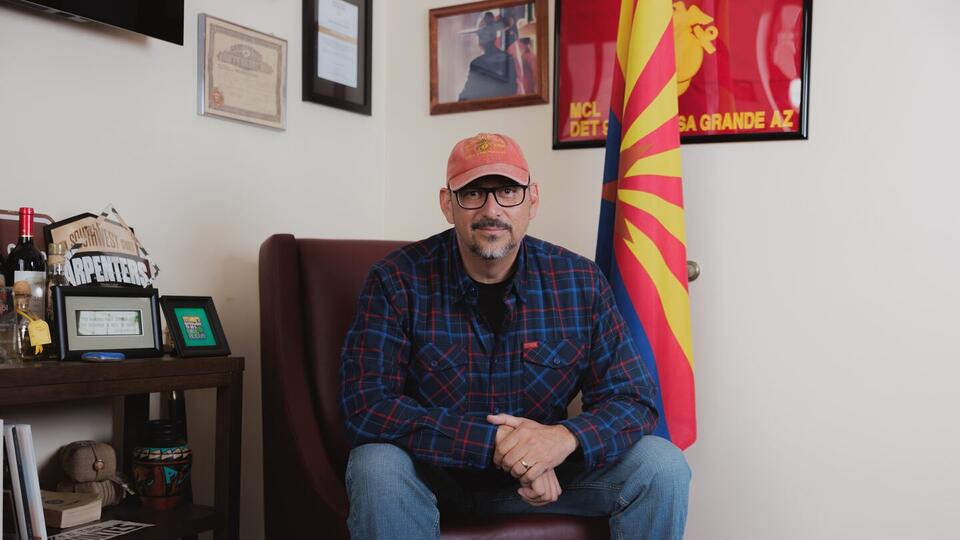
Phoenix, Friday, Nov. 13 — Arizona Secretary of State Adrian Fontes laid out an aggressive voting-rights agenda in an exclusive interview with Votebeat, setting the stage for a legislative showdown when the new Democratic trifecta convenes on Jan. 11.
Fontes, fresh off his reelection as the state’s top election official, told Votebeat he will push bills to repeal the state’s proof-of-residency requirement for new voters, walk back a ban on private funding for election administration, adopt a full vote-by-mail system, mandate statewide vote centers and repeal the state’s ballot-collection ban.
He also wants funding for a new voter-registration database that would enable automatic voter registration, Votebeat reported.
The proposals amount to a systematic dismantling of Republican-backed election laws enacted over the past several years.
“What I want to do is set the tone,” Fontes told Votebeat, adding that his proposals weren’t “new, radical, progressive ideas” and that the state was previously moving toward a more accessible voting system before pro-Trump Republicans took power. “This is getting us back to where we were on that slow march that we had.”
Fontes cast the 2026 election results as a clear mandate. “The rejection of Trumpism is the rejection of the election denialist lie,” he said. “Arizona very, very clearly, in my mind, said: ‘We don’t believe that bullshit anymore.’”
The infrastructure problem underneath the policy
Fontes acknowledged a practical constraint: the state’s aging voter-registration database cannot currently handle some of the proposals likely to top his party’s priority list. He said part of his job is ensuring eager lawmakers don’t accidentally create election chaos, a concern he raised during the Votebeat interview.
That technical reality tempers the political momentum. While Fontes and returning Democratic lawmakers expected to sit on key election committees appear aligned on priorities like vote centers and automatic mail ballots, the database upgrade requires legislative appropriation and time — commodities that are never guaranteed in a first session.
Lobbyists arrive with bigger ideas
Since the election, Fontes said he has been fielding calls and meeting requests from lobbyists pitching ideas like compulsory voting and all-party primaries, in which all voters would get ballots listing all candidates regardless of affiliation. Those concepts sit outside Fontes’ stated “low-hanging fruit” strategy for the upcoming session, but they signal the breadth of the policy window Democrats now perceive.
A history of vetoes and court fights
Fontes proposed similar changes in previous sessions, but most died quickly under a GOP legislative majority. He also sought to influence voting processes via the state’s elections manual, which his office authors subject to review by the governor and attorney general. That approach led to court showdowns with former legislative leaders.
The new trifecta — Democratic control of the governor’s office, the Senate and the House — marks the first time in six decades the party has held unified power in Arizona. As electionlawblog.org observed, six decades ago the Democratic Party bore little resemblance to its current iteration.
Fontes was born and raised in Nogales, Arizona, where his family has lived in southern Arizona for more than 300 years, even before Arizona became a state. He served in the United States Marine Corps from 1992 to 1996 and worked as a prosecutor in the Denver District Attorney’s Office, the Maricopa County Attorney’s Office and the Arizona Attorney General’s Office before entering elected office.
In 2016, he became the first Democrat in over 50 years to win the Maricopa County Recorder post, unseating a 28-year incumbent after a presidential primary marred by long lines and polling-place reductions. As recorder, he piloted the countywide vote-center model he now wants to take statewide.
What happens next
The Legislature convenes Jan. 11. Fontes' office has posted a summary of proposed changes to the state's voting rules.
Keep reading
Utah Driver Faces Trial Over Honking at Protest, Testing First Amendment Limits
Jack Hoopes will stand trial Nov. 24 in St. George Justice Court over a $50 citation for tapping...

Texas Regulators Permit 2.6 GW Gas Plant for OpenAI; 5 GW Greenlit Since Pause Lifted
Texas regulators permitted a 2.6 GW gas plant for OpenAI, raising the statewide total of behind-the-meter gas capacity...

Hilbert Group Agrees in Principle to Extend SEK 48.9M Notes to 2028
Hilbert Group has bought itself another year of runway after striking a deal with its largest convertible-note holder,...

Lane Kiffin Returns to Knoxville With Unpaid $14 Haircut Debt
Lane Kiffin returns to Neyland Stadium on Saturday for the first time since 2009, carrying a $14 debt...