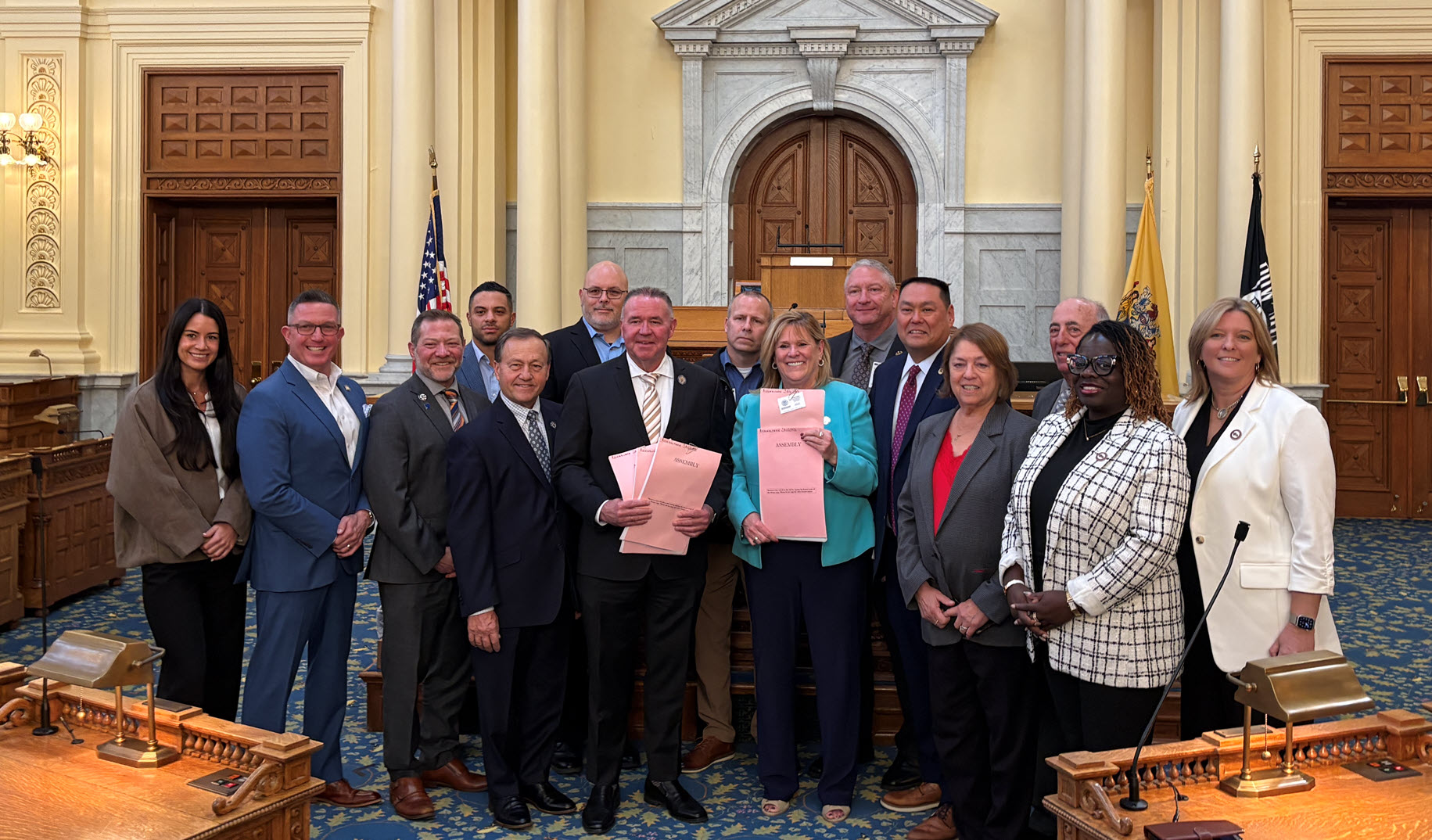
New Jersey public-sector retirees could see their first meaningful pension increase in over a decade under a bipartisan bill package introduced Monday by Assemblyman Alex Sauickie.
The legislation, backed by the New Jersey Education Association, would deliver monthly stipends of $200 to $450 depending on years in retirement, a targeted response to the cost-of-living adjustment frozen in 2011 under Chapter 78. That law tied the COLA’s return to an 80 percent pension funding threshold — a benchmark the state is not projected to hit until at least 2043, even after seven straight years of full actuarial payments.
“Retirees have waited long enough for relief,” said Sean Spiller, president of the NJEA. “These bills don’t restore the COLA, but they are a critical first step toward recognizing the erosion of fixed incomes that has gone on for fourteen years.”
Sauickie, a Republican representing the 12th Legislative District, is joined as prime sponsor by Assemblywoman Carol Murphy, a Democrat from the 7th District. Their partnership signals the cross-aisle support likely needed to move the measures through the Assembly and Senate before they reach Gov. Mikie Sherrill’s desk.
The five-bill package covers retirees in both the Teachers’ Pension and Annuity Fund and the Public Employees’ Retirement System. Increases would be funded through the annual state budget rather than the pension trusts themselves, a structural choice designed to avoid further stress on the funds’ actuarial health.
Under the tiered formula, a retiree with ten years of service would receive an additional $200 per month. That figure rises to $300 after fifteen years and $450 for those with twenty or more years in retirement. The payments would begin the month after the governor signs the legislation into law.
Chapter 78, enacted under former Gov. Chris Christie, suspended the automatic COLA and raised employee contributions while promising the adjustment would return once the system reached 80 percent funded. The state’s latest actuarial valuation places the combined funded ratio well below that mark, and the Division of Pension and Benefits has consistently projected the threshold remains decades away without extraordinary investment returns.
The NJEA emphasized that the bills are a floor, not a ceiling. The union plans to mobilize active and retired members to lobby legislative leadership for a floor vote before the current session ends in January. If the measures stall, sponsors have pledged to reintroduce them in the new Legislature.
Next action is expected in the Assembly Appropriations Committee, where the fiscal note will be debated. A hearing date has not been set.
Worth a look

Stanford WBB Opens Historic 7-Game Road Swing at No. 16 Washington as Hailee Swain Leads Youth Movement
Stanford women's basketball opens a historic seven-game road swing Friday night at No. 16 Washington, the program's longest...

Northumberland Senior Tawny Bowis Presents Tangier Microplastics Baseline at Virginia Sea Grant Conference
Northumberland High School senior Tawny Bowis presented the first baseline study of microplastic pollution on Tangier Island to...

Vermont Takes Valcour Offline After Vendor Notifies of Possible Security Incident
Vermont took its statewide police records and dispatch platform offline Tuesday after the system’s vendor reported a potential...

Utah Lt. Gov. Deidre Henderson Discusses Faith, Voter Roll Standoff on ‘Mormon Land’ Podcast
Utah Lieutenant Governor Deidre Henderson refused a federal demand for the state's complete voter rolls, triggering lawsuits and...