
New Mexico Gov.-elect Deb Haaland will inherit the fourth slot on the Democratic presidential calendar, a promotion that turns the border state into the first true test of a candidate’s rural and Latino appeal.
The shift places New Mexico behind only South Carolina, Nevada and New Hampshire. For Haaland, the former Interior Secretary and first Native American woman elected governor, the new calendar is a tool to gain advantage.
“I would love to endorse, but I’ll wait and see who throws their hat in the ring,” she told POLITICO’s Erin Doherty during an onstage interview at the National Governors Association’s New Governors Leadership Forum in Utah.
The border-state primer
Haaland’s advice to the 2028 field is blunt: learn the map. “New Mexico is the fifth largest state, and we are largely rural,” she said. “There are far more rural communities than there are large cities in our state, and so this will be important for New Mexicans to really understand or to really know that any presidential candidate understands the challenges that they’re facing.”

Immigration, she added, “is going to be a top issue with the 2028 presidential election… New Mexico is an early primary state, and it happens that we’re a border state, too.” The incoming governor said she is “anxious” to see how contenders address it.
“Immigration is going to be a top issue with the 2028 presidential election. New Mexico is an early primary state, and it happens that we’re a border state, too.”
— Deb Haaland, New Mexico Governor-elect, speaking to POLITICO
Latino electorate, rural reality
New Mexico ranks first nationally in the share of Latino residents. The primary calendar change was designed partly to force earlier engagement with that bloc. But Haaland’s emphasis on rural voters — often overlooked in a state defined by Albuquerque and Santa Fe — signals a two-track test: candidates must navigate border policy and the water, broadband and health-care gaps that define life in places like Mora or Lordsburg.
POLITICO reported that potential contenders are already scouting the terrain. Former Chicago Rahm Emanuel “did quite a bit of traveling around” the state, Haaland said. Sens. Ben Ray Luján hosted a gathering in Albuquerque in October that drew several Senate colleagues.
Former Transportation Secretary Pete Buttigieg visited in September. “Whether all of them are running for president, I can’t tell you, but I am really anxious to see who does,” she said.
Affordability mandate at home
Before she can shape a national primary, Haaland must govern. She said she was “swept into office with a historic number of fellow Democrats across the country on a mandate to deliver on affordability.” The “biggest issue” in New Mexico, she said, is cost of living, and her first legislative priority will be expanding health-care access.
“Right now we’re talking with some of the leaders in the legislature about health care, a public option for people in New Mexico,” Haaland said. “Health care is a top priority.”
What the calendar change actually tests
Moving New Mexico up compresses the window for retail politics. In 2020, the state voted on Super Tuesday, long after the field had narrowed.
In 2028, a candidate who stumbles in the state’s vast rural counties or misreads the border dynamic could lose momentum before the race reaches larger delegations. The DNC’s theory: an early, diverse, rural-heavy primary produces a nominee battle-tested for the general election. Haaland’s early endorsement — if she makes one — could shortcut that test for a favored contender.
The National Governors Association forum in Utah was Haaland’s first major national appearance since the November election.
- Stanford WBB Opens Historic 7-Game Road Swing at No. 16 Washington as Hailee Swain Leads Youth Movement
- Northumberland Senior Tawny Bowis Presents Tangier Microplastics Baseline at Virginia Sea Grant Conference
- Mary Peltola defeats Dan Sullivan to flip Alaska Senate seat for Democrats (newsarchyuk.com)

Stanford WBB Opens Historic 7-Game Road Swing at No. 16 Washington as Hailee Swain Leads Youth Movement
Stanford women's basketball opens a historic seven-game road swing Friday night at No. 16 Washington, the program's longest...
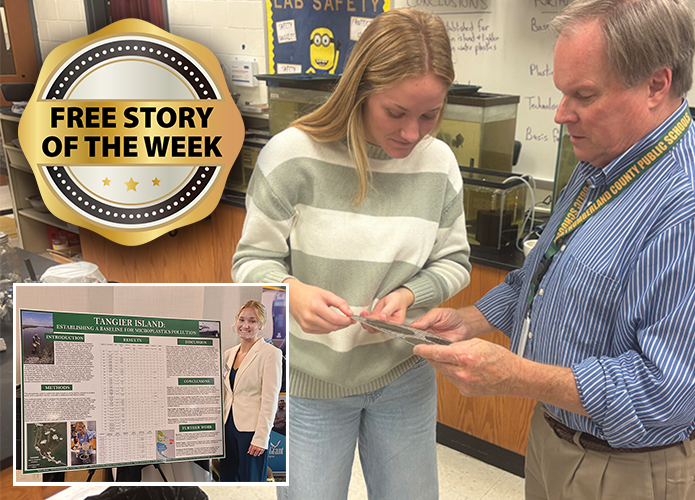
Northumberland Senior Tawny Bowis Presents Tangier Microplastics Baseline at Virginia Sea Grant Conference
Northumberland High School senior Tawny Bowis presented the first baseline study of microplastic pollution on Tangier Island to...

Vermont Takes Valcour Offline After Vendor Notifies of Possible Security Incident
Vermont took its statewide police records and dispatch platform offline Tuesday after the system’s vendor reported a potential...

Utah Lt. Gov. Deidre Henderson Discusses Faith, Voter Roll Standoff on ‘Mormon Land’ Podcast
Utah Lieutenant Governor Deidre Henderson refused a federal demand for the state's complete voter rolls, triggering lawsuits and...