
Senator Sanders Reclaims Committee Leadership
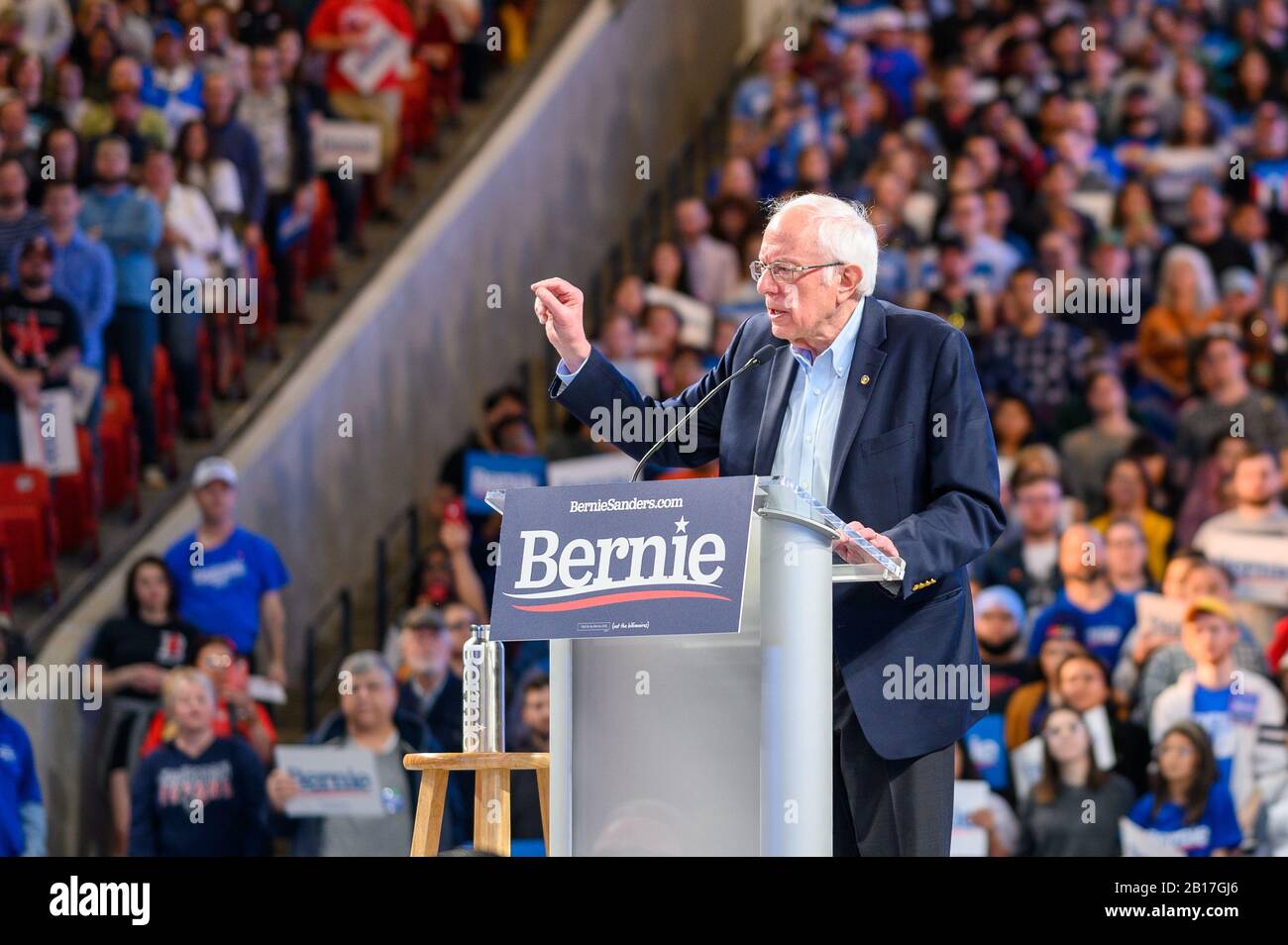
Following a decisive election that handed Democrats control of both chambers of Congress, U.S. Sen. Bernie Sanders, I-Vt., is set to reclaim the chairmanship of the Senate Health, Education, Labor and Pensions (HELP) Committee.
This transition, which returns the Vermont senator to a post he held two years ago, positions him to drive a legislative agenda centered on aggressive healthcare expansion and labor reform as the new Congress prepares to convene in January.
The stakes for this committee assignment are high, particularly for families facing the current economic climate.
According to reporting from VTDigger, Sanders intends to utilize his position to challenge provisions within President Donald Trump’s “One Big Beautiful Bill Act,” which are currently slated to reduce Medicaid eligibility for millions of Americans. Beyond defensive maneuvers, Sanders wants to restore enhanced Affordable Care Act subsidies that Congress allowed to lapse last year.
I’m happy to announce that Starbucks CEO Howard Schultz has finally agreed to testify before the Senate HELP Committee. I look forward to hearing from him as to when he intends to end his illegal anti-union activities and begin signing fair first contracts with the unions. pic.twitter.com/PuDOyGGhBu
Healthcare as a Human Right
Sanders’ stated ambition for the HELP Committee is to pivot toward the implementation of “Medicare for All.” His rhetoric remains focused on international comparisons, asserting that the United States should guarantee healthcare as a universal right. This move comes at a time when voters have expressed deep anxiety regarding the affordability of basic necessities, including food and energy.
“We’re going to move to do what every other major country does: guarantee healthcare to all people as a human right,” Sanders said.
The senator’s agenda also extends to the workforce. He plans to prioritize the PRO Act, a piece of legislation designed to streamline the unionization process and strengthen collective bargaining rights.
While the bill previously cleared the House in 2020 and 2021, it has faced consistent roadblocks in the Senate. Sanders further advocates for raising the federal minimum wage to $20 per hour and implementing new tax structures on billionaires to fund early childhood education and daycare services nationwide.
A Divided Congressional Mandate
While Democrats are projected to control at least 54 seats in the Senate and 253 in the House, the party’s leadership is tempering expectations. U.S. Sen. Peter Welch, D-Vt., recently noted on VTDigger’s Vermont Conversation podcast that the election results should not be interpreted as a broad mandate for the Democratic platform. Instead, Welch characterized the outcome as an opportunity for the party to earn the public’s trust through disciplined governance.
The delegation from Vermont is also looking beyond domestic policy. Both Sanders and U.S. Rep. Becca Balint, D-Vt., have criticized the current administration’s foreign policy, specifically the ongoing war in Iran and military aid provided to the Israeli government.
Representative Balint has identified the removal of Secretary of Defense Pete Hegseth as a primary objective for the new Congress, noting that Rep. Thomas Massie, R-Ky., intends to introduce articles of impeachment if Hegseth does not resign.
Economic Reforms and Corporate Oversight
Representative Balint is also sharpening her focus on housing and corporate consolidation. She plans to build upon a bipartisan housing law enacted earlier this year, aiming to introduce reforms that address the unique needs of rural communities. Her proposed agenda includes:
- Streamlining environmental reviews for housing projects.
- Removing barriers to the construction of manufactured homes.
- Expanding access to small-dollar mortgages.
- Limiting the volume of single-family homes held by private equity firms.
Balint’s legislative strategy also targets corporate monopolies across several sectors, including grocery retail, fertilizer production, and even the manufacturing of fire trucks. She maintains that the legislative environment is “target-rich” and requires a high degree of discipline from the incoming Democratic majority.
As the transition approaches, the question remains whether the new Congress can balance oversight with tangible economic relief.
Sanders emphasized that the legislature must be capable of “walking and chewing bubblegum at the same time.” While he insists that the Trump administration must be held accountable for its actions, he acknowledges that failure to address the immediate financial pain of working families would result in a failed legislative term.
The path forward depends on whether Democrats can successfully bridge the gap between political accountability and the everyday needs of the electorate.
Worth a look

SEC Football Power Rankings Week 11: Georgia Remains No. 1 After Dominating Ole Miss
The Georgia Bulldogs remain the undisputed team to beat in the SEC following a dominant 42-7 road victory...

Egypt’s Industrial Development Bank Hits EGP 1bn Net Profit in 2025
Egypt’s Industrial Development Bank (IDB) has reached a historic financial threshold, reporting a net profit of EGP 1...

Wyoming LIEAP Manager Says Heating Costs Are Rising for Families
Heating Bills Surge as Wyoming Families Face Cold Weather Costs As winter temperatures settle across the state, many...

Madison Common Council to Meet on 2027 City Budget on Nov 10
As the city prepares to finalize its financial roadmap for the coming year, Madison residents are looking toward...